Global Geography Insights: A Comprehensive Overview of Nations Starting With the Letter E and F

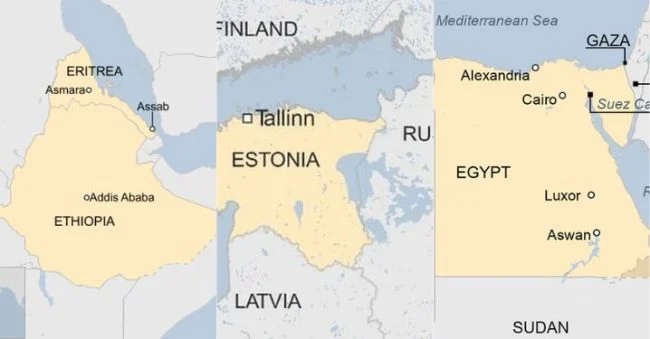
The study of global geography reveals a fascinating distribution of nations, each characterized by distinct cultural heritages, geopolitical positioning, and socio-economic frameworks. Among these, countries starting with the letter "E" represent a diverse spectrum of human development and historical narratives, spanning from the ancient civilizations of North Africa to the burgeoning economies of South America and the resilient Baltic states of Europe. This report provides an in-depth analysis of these nations, their capital cities, and their roles within the contemporary international order, while also exploring the broader context of alphabetical nomenclature in global mapping.
The Geographical and Geopolitical Landscape of E-Nations
The nomenclature of sovereign states is often rooted in centuries of colonial history, indigenous linguistic evolution, and geopolitical shifts. Nations beginning with "E" are geographically dispersed, reflecting a wide range of climates, economic models, and political structures.
1. Ecuador (Capital: Quito)
Located on the equator from which it derives its name, Ecuador is a pivotal nation in South America. Its capital, Quito, is renowned for being one of the highest altitude capitals in the world, situated in the Andean foothills. The country’s economy is heavily reliant on petroleum exports and agricultural products, including bananas and flowers. Ecuador’s unique biodiversity, particularly in the Galápagos Islands, makes it a critical subject for environmental conservation studies globally.
2. El Salvador (Capital: San Salvador)
As the smallest and most densely populated country in Central America, El Salvador faces unique developmental challenges. Its history has been marked by significant internal conflict in the late 20th century, followed by a period of reconstruction. Today, the nation is actively working to integrate into the global digital economy, notably becoming the first country to adopt Bitcoin as legal tender in 2021, an move that remains a subject of intense economic debate among international financial institutions.
3. Equatorial Guinea (Capital: Malabo)
Situated on the west coast of Central Africa, Equatorial Guinea is unique for its status as the only sovereign African state where Spanish is an official language. Since the mid-1990s, the discovery of significant oil reserves has transformed its economic trajectory. Despite high GDP per capita figures, the nation continues to navigate challenges related to wealth distribution and political infrastructure, drawing the attention of global human rights organizations and development monitors.
4. Eritrea (Capital: Asmara)
Located in the Horn of Africa, Eritrea attained independence in 1993 following a protracted war of independence. Its capital, Asmara, is a UNESCO World Heritage site recognized for its exceptional collection of modernist architecture. Eritrea’s geopolitical significance is defined by its strategic location along the Red Sea, making it a focal point for maritime security and regional stability in East Africa.
5. Estonia (Capital: Tallinn)
A Baltic nation known for its rapid transition into a digital powerhouse, Estonia serves as a model for e-governance. Since regaining independence from the Soviet Union in 1991, Estonia has integrated deeply into the European Union and NATO. Its focus on cybersecurity and digital infrastructure has made it a leader in the global technological sector, often referred to as the "Silicon Valley of Europe."

6. Eswatini (Capital: Mbabane)
Formerly known as Swaziland, the Kingdom of Eswatini is one of the few remaining absolute monarchies in the world. Landlocked within South Africa and Mozambique, the nation’s economy is deeply intertwined with its neighbors. The renaming of the country in 2018 was a significant historical milestone, aimed at shedding colonial-era nomenclature and reclaiming indigenous cultural identity.
7. Ethiopia (Capital: Addis Ababa)
As the only African nation that was never effectively colonized, Ethiopia holds a unique position in global history. It serves as the headquarters for the African Union, underscoring its role as a diplomatic hub for the continent. Ethiopia’s recent economic development has been among the fastest in Africa, driven by industrialization and massive infrastructure projects, including the Grand Ethiopian Renaissance Dam.
8. Egypt (Capital: Kairo)
Egypt stands as a bridge between Africa and the Middle East, with a history spanning over 5,000 years. The nation’s strategic control over the Suez Canal makes it a vital artery for global maritime trade. Cairo, its capital, is a massive urban center that continues to be a focal point for cultural, religious, and political discourse in the Arab world.
Comparative Analysis: The Role of F-Nations
To provide a broader understanding of how nomenclature influences our perception of global geography, it is pertinent to examine nations starting with the letter "F." While fewer in number than those beginning with "E," these countries offer their own unique contributions to the global stage:

- Fiji (Capital: Suva): A prominent Pacific island nation, Fiji is a leader in environmental advocacy, particularly concerning climate change and rising sea levels, which pose existential threats to Pacific island states.
- Finland (Capital: Helsinki): Consistently ranked as one of the world’s happiest nations, Finland is a global leader in education, social welfare, and sustainable forestry practices.
- France (Capital: Paris): A permanent member of the United Nations Security Council and a founding member of the European Union, France remains a global heavyweight in politics, arts, and diplomatic relations.
- Gabon (formerly French-influenced territory, though often categorized by its own name): While the list of "F" countries is concise, each nation plays a role in regional stability. For instance, Federated States of Micronesia (Capital: Palikir) represents the strategic interests of Oceania.
Economic and Geopolitical Implications
The distribution of nations globally is not merely a linguistic exercise but a reflection of how power and resources are concentrated. Countries like Estonia represent the shift toward digital-first economies, while Egypt and Ethiopia highlight the importance of historical legacy and geographical positioning in modern international relations.
Data from the World Bank and the International Monetary Fund consistently show that nations with diverse trade partnerships—such as those categorized above—are better equipped to handle global economic shocks. The "E" and "F" groupings, while arbitrary in their alphabetical selection, allow geographers and policy analysts to categorize complex data points into digestible segments, facilitating better education and diplomatic engagement.
Chronological Evolution of Nationhood
The modern map is a product of shifting borders and political transformations. The timeline of these nations is diverse:
- 19th/20th Century Decolonization: Countries like Eritrea and Eswatini emerged or reclaimed their identities through post-colonial movements.
- Post-Cold War Realignment: Estonia’s transition in the early 1990s reflects the broader restructuring of the European map following the dissolution of the Soviet Union.
- Ancient Continuity: Egypt remains one of the world’s oldest continuous civilizations, providing a baseline for historical studies on statehood.
Conclusion and Broader Impact
The study of nations beginning with specific letters—such as E and F—serves as a gateway to understanding the vast complexity of the modern world. From the high-altitude commerce of Quito to the digital governance of Tallinn and the diplomatic centrality of Addis Ababa, each nation offers a unique narrative of resilience and development.

As global connectivity increases, the importance of geographical literacy becomes paramount. By recognizing the individual contributions and challenges faced by these nations, the global community can foster better cooperation, informed policy-making, and a more profound appreciation for the diverse tapestry of the human experience. Whether through the lens of economic trade, environmental sustainability, or historical preservation, these countries remain central to the ongoing evolution of the international order. Future geopolitical shifts will undoubtedly continue to alter the map, ensuring that the study of world geography remains an essential, ever-changing pursuit for researchers and citizens alike.