Menteri Agama Nasaruddin Umar Membuka Olimpiade Agama, Sains, dan Riset OASE III PTKIN 2026 di UIN Sunan Kalijaga Yogyakarta

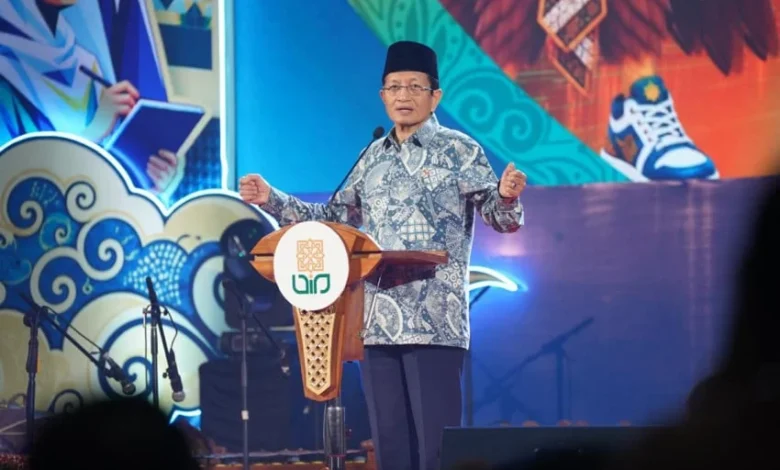
Yogyakarta, Indonesia – In a significant move aimed at bridging the gap between theological scholarship and modern technological advancement, Minister of Religious Affairs Nasaruddin Umar officially inaugurated the third iteration of the Olimpiade Agama, Sains, dan Riset (OASE) 2026. The event, held at the State Islamic University (UIN) Sunan Kalijaga in Yogyakarta on Wednesday, November 4, 2026, serves as a premier national platform for students from 54 State Islamic Religious Higher Education Institutions (PTKIN) to showcase their intellectual prowess, research capabilities, and innovative solutions to contemporary global challenges.
The opening ceremony, marked by a call to reinvigorate the golden age of Islamic science, emphasized the critical necessity for religious scholars to master the fields of technology and innovation. Minister Nasaruddin Umar’s address resonated with a vision of a modern, scientifically literate Islamic intelligentsia capable of integrating ethical frameworks with technical proficiency.
Reclaiming the Golden Age of Islamic Science
Minister Nasaruddin Umar framed the event within the broader historical context of Islamic civilization. He reminded the audience that the historical "Golden Age" of Islam was not built merely on theological dogma, but on a robust foundation of inquiry, experimentation, and scientific discovery. During the medieval period, scholars such as Al-Khwarizmi, Ibn Sina, and Alhazen revolutionized mathematics, medicine, and optics, respectively, by treating scientific observation as a divine duty to understand the universe.
"If we desire to reclaim the glory of scientific advancement in Islamic history, we must master modern knowledge," the Minister stated during his keynote address. "The mastery of science and technology is not optional; it is a fundamental requirement for the progress of the Ummah."
The Minister highlighted that the historical integration of religious piety and scientific research was a hallmark of Islamic intellectualism. He urged the current generation of PTKIN students to emulate this tradition by identifying societal needs—ranging from water management and agricultural efficiency to advanced medical services—and applying rigorous research to solve them.
The Evolution of OASE: A Chronology of Academic Excellence
The OASE competition has evolved significantly since its inception, moving from a localized academic showcase to a national benchmark for PTKIN research quality.
- 2023: The inaugural OASE was launched as a pilot program to stimulate research interest among PTKIN students, focusing on basic scientific inquiries and religious studies.
- 2024–2025: The second iteration saw a substantial increase in participation and the introduction of categories such as artificial intelligence, renewable energy, and sustainable development, reflecting the global shift toward digitalization.
- 2026: The third OASE at UIN Sunan Kalijaga marks the maturation of the program. With participants representing 54 institutions across the archipelago, the 2026 edition features expanded categories including nanotechnology, socio-economic research, and ethical technology policy, highlighting the interdisciplinary nature of modern higher education.
The event is designed to foster a competitive yet collaborative environment. By facilitating an exchange of ideas between students from diverse geographical and academic backgrounds, OASE acts as a catalyst for networking, professional development, and the formation of cross-institutional research consortiums.
Integrating Theology and Technology: The PTKIN Strategic Shift
For years, State Islamic Religious Higher Education Institutions were perceived primarily as centers for jurisprudence, theology, and Islamic history. However, the current mandate from the Ministry of Religious Affairs suggests a decisive pivot. The inclusion of "Science and Research" in the OASE title is a strategic move to reposition PTKIN as centers of innovation that can compete with secular technological institutes.
Supporting data from the Ministry of Religious Affairs indicates that interest in PTKIN has surged over the last half-decade. Increased funding for research laboratories, digital libraries, and collaborative research grants has attracted students who are interested in the intersection of faith and the empirical sciences. According to academic analysts, this shift is essential for the nation’s human capital development, as it produces graduates who possess both the moral integrity derived from religious studies and the analytical skills required by the modern labor market.
Potential for Industrial Impact and Technology Downstreaming
A pivotal theme of the Minister’s speech was the role of higher education in Indonesia’s "hilirisasi" or industrial downstreaming policy. As the Indonesian government pushes to move up the value chain by processing raw materials domestically, the Minister emphasized that PTKIN must not remain isolated in the ivory tower of academia.
"PTKIN has a significant opportunity to participate in the downstreaming of technology," Nasaruddin Umar noted. He argued that Islamic universities possess unique strengths in the social sciences and ethics, which are crucial for assessing the environmental and social impacts of industrial development. By aligning research agendas with national economic goals, PTKIN can contribute to the creation of technology that is not only efficient but also sustainable and equitable.
Implications for the Future of Religious Education
The implications of the OASE 2026 event are far-reaching. By encouraging a "tradition of asking" (critical inquiry) and "courage to research," the Ministry is promoting a culture of intellectual independence. This is expected to have several long-term outcomes:
- Innovation-Led Growth: By focusing on practical applications—such as clean water solutions or agricultural technology—PTKIN students are being trained to contribute directly to the national economy.
- Moral Technology Standards: The integration of religious ethics with scientific advancement provides a framework for the responsible use of technologies like Artificial Intelligence and biotechnology, areas where ethical oversight is increasingly demanded.
- National Integration: Bringing together students from 54 institutions fosters a national identity that values academic rigor as a form of service to the country.
Observers note that while the challenge remains to provide these students with the necessary infrastructure—such as high-level laboratory equipment and international research partnerships—the institutional will is clearly present. The success of the OASE 2026 event will be measured not just by the trophies awarded, but by the number of patents, research papers, and startups that emerge from the participant pool in the coming years.
Official Responses and Academic Outlook
Academic leaders present at the opening ceremony lauded the Minister’s vision. A representative from the organizing committee at UIN Sunan Kalijaga stated that the event is intended to be more than a competition; it is a laboratory for the future. "We are seeing a new generation of scholars who are comfortable navigating both the Quran and the laboratory manual," the representative observed.
Students interviewed during the event expressed enthusiasm for the platform, noting that it provides them with the visibility and feedback needed to refine their research projects. For many, the opportunity to present findings before national leaders and academic peers serves as a validation of their dedication to academic excellence.
As the OASE 2026 progresses, the focus will shift from the opening ceremonies to the technical evaluations of the various research entries. The judging criteria for this year have been tightened to reflect international standards, ensuring that the innovations presented are not only novel but also scalable and impactful.
Conclusion: A New Horizon for PTKIN
The OASE III PTKIN 2026 is a milestone in the ongoing transformation of Indonesia’s Islamic higher education system. By anchoring scientific development within a moral and historical framework, Minister Nasaruddin Umar is setting a clear trajectory for the future: one where the pursuit of knowledge is seen as a holistic endeavor.
As the participants compete, the true winner is the broader national intellectual ecosystem, which stands to benefit from a new cohort of researchers who are equipped to tackle the complexities of the 21st century. With the continued support of the Ministry and the integration of research into the core of the academic experience, PTKIN is poised to become a vital engine of innovation, proving that the pursuit of technological progress and the maintenance of religious values are not only compatible but mutually reinforcing.
The event, which concludes later this week, is expected to produce a series of policy recommendations and research roadmaps that will guide the Ministry’s agenda for the next several years, ensuring that the momentum generated in Yogyakarta continues to ripple across the nation’s academic landscape.