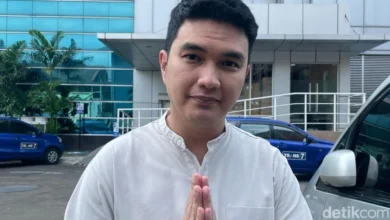
Actor Dude Harlino Returns Rp 5.2 Billion in PT Dana Syariah Indonesia Investment Fraud Case Amidst Ongoing Legal Proceedings


Jakarta witnessed a significant development in the unfolding PT Dana Syariah Indonesia (DSI) investment fraud case, as prominent actor Dude Harlino took a proactive step by returning approximately Rp 5.2 billion (equivalent to US$350,000 based on a notional exchange rate) to investigators. This substantial sum represents the honorariums he and his wife, actress Alyssa Soebandono, received for their roles as brand ambassadors for the allegedly fraudulent investment company. The move, announced on Thursday, July 23, 2026, underscores the complex ethical and legal considerations faced by public figures whose endorsements may inadvertently lend credibility to deceptive schemes.
The revelation came to light as public prosecutors from the Depok District Attorney’s Office (Kejari Depok) formally presented their indictment against three defendants implicated in the embezzlement scheme within PT DSI. The legal document explicitly referenced the involvement of Dude Harlino and Alyssa Soebandono, detailing how their public image was leveraged to promote the company’s offerings. Kasi Intel Kejari Depok, Barkah Dwi Hatmoko, confirmed Harlino and Soebandono’s status as witnesses in the ongoing investigation, emphasizing their connection to the case primarily through their capacity as brand ambassadors for PT DSI.
Unraveling the PT Dana Syariah Indonesia Fraud
The PT Dana Syariah Indonesia case has emerged as one of the more prominent financial scandals in recent years, drawing attention to the vulnerabilities within the investment sector and the powerful influence of celebrity endorsements. PT DSI, which marketed itself as a sharia-compliant investment platform, allegedly engaged in a sophisticated scheme of investment fraud and embezzlement, leading to significant financial losses for numerous investors across Indonesia. While the exact number of victims and the total scale of losses are still being meticulously calculated by authorities, preliminary estimates suggest hundreds of individuals may have been impacted, with cumulative losses potentially running into hundreds of billions of rupiah.
The modus operandi of PT DSI, as outlined in the ongoing investigation, involved soliciting funds from the public with promises of high, consistent returns, often exceeding market averages. These returns were purportedly generated through various sharia-compliant business ventures, though investigators now suspect a significant portion of investor funds were either misappropriated by company executives or used to pay earlier investors, characteristic of a Ponzi scheme. The sharia label was likely used to attract a specific demographic of investors seeking ethical investment opportunities, adding another layer of deception to the scheme. The three defendants currently facing charges are believed to be key figures within the company’s management, responsible for orchestrating the fraudulent activities and diverting investor capital for personal gain. Their indictment marks a critical phase in the legal battle to bring justice to the affected victims and hold the perpetrators accountable.
Dude Harlino and Alyssa Soebandono’s Endorsement Journey
Dude Harlino and Alyssa Soebandono, a highly respected and popular celebrity couple in Indonesia, became brand ambassadors for PT DSI, lending their faces and credibility to the company’s promotional materials from 2022 through 2025. Their images prominently featured in digital marketing campaigns, advertisements, and promotional events, undoubtedly contributing to the perceived legitimacy of PT DSI in the eyes of potential investors. The indictment revealed a crucial detail regarding the nature of their payments: "Pembayaran kepada brand ambassador dibuat seolah-olah sebagai lender pada rekening PT Multiguna Cipta Mandiri atas nama saksi Dude Harlino dan saksi Anindya Alyssa Soebandono. Masing-masing disebut menerima dana dengan akumulasi Rp 750.030.000." This implies that the payments for their endorsement services were disguised as loans or investments made by the couple into an affiliated company, PT Multiguna Cipta Mandiri, effectively making them appear as active participants or lenders within the DSI ecosystem, rather than mere endorsers. This deceptive accounting practice raises questions about the transparency of PT DSI’s operations from the outset.
The initial payment cited in the indictment, Rp 750,030,000 for each, is part of the total Rp 5.25 billion that Harlino later returned, indicating that the cumulative earnings from their ambassadorial roles over the years were significantly higher. While Harlino and Soebandono were not directly involved in the operational fraud or alleged embezzlement, their association, however unwitting, placed them in a challenging position once the fraudulent nature of PT DSI came to light. Their status as witnesses underscores that they are not accused of criminal wrongdoing but are crucial to understanding how the company presented itself to the public.
The Decision to Return the Funds: A Chronology of Conscience
The decision by Dude Harlino to return the substantial sum of Rp 5.2 billion was a carefully considered move, undertaken after extensive discussions with his legal counsel, Haris Azhar. On Thursday, July 23, 2026, Harlino, accompanied by Azhar, visited the Bareskrim Polri (National Police Criminal Investigation Department) in Jakarta Selatan to formally hand over the funds to investigators from the Dittipideksus (Directorate of Special Economic Crimes).
Harlino articulated his motivations behind this unprecedented action, stating, "Sebenarnya saya sudah lama berdiskusi sama Bang Haris, tapi memang pelaksanaan memang secara teknis kita butuh waktu. Butuh waktu untuk mempersiapkan dan lain sebagainya." This statement suggests a prolonged period of introspection and strategic planning to ensure the return was executed properly and transparently. He expressed profound empathy for the victims of the fraud, stating, "Ya kalau saya secara pribadi ini bagian dari apa namanya ya, empatilah kepada para korban itu ya dan saya berharap proses ini berjalan dengan baik, sesuai dengan aturan yang berlaku." This sentiment highlights a moral obligation he felt towards those who suffered losses, acknowledging the role his public image might have played, however inadvertently, in influencing their investment decisions.
Furthermore, Harlino viewed the return of funds as a "consequence of work," stating, "Buat saya secara pribadi ini bagian konsekuensi pekerjaanlah ya yang saya harus jalani dan saya harus apa namanya, patuhi apapun aturan yang sudah ditetapkan gitu." This perspective indicates a strong sense of personal accountability and a commitment to uphold ethical standards, even when not legally compelled to do so as a mere witness. His lawyer, Haris Azhar, further clarified the exact amount and its nature: "Penyerahan uang dari Dude Harlino, uang yang jumlahnya adalah senilai dengan jasa, jasa brand ambassador Dude dengan istrinya dari DSI. Nah, itu sebesar 5,2 setengah m (miliar), Rp 5 miliar 250 juta." This confirmation solidifies that the returned funds precisely correspond to the earnings from their brand ambassadorial duties.
Legal and Ethical Implications for Public Figures
Dude Harlino’s decision sets a significant precedent in Indonesia, particularly concerning the responsibilities of public figures in endorsing financial products. While Indonesian law does not explicitly mandate brand ambassadors to return earnings from companies that later prove fraudulent, Harlino’s action can be interpreted as a strategic legal move to mitigate further reputational damage and demonstrate good faith. It also reflects a growing awareness of the ethical dimensions of celebrity endorsements, especially in sensitive sectors like investment.
The legal framework typically holds company executives accountable for fraud. However, public figures, by virtue of their influence, carry an inherent moral responsibility. Their endorsements can significantly sway public perception and trust. When a company they represent is exposed as fraudulent, their credibility is inevitably questioned, and they may face public backlash, even without direct involvement in the criminal acts. Harlino’s proactive return of funds is a powerful message of ethical conduct, potentially pre-empting any future civil claims or public pressure to contribute to victim restitution. It also serves as a form of due diligence after the fact, acknowledging the harm caused, even if unintentionally.
This incident is likely to spark renewed discussions within the legal and regulatory circles about the need for clearer guidelines or even legislation regarding celebrity endorsements, particularly for high-risk products like investments. There is a growing argument that public figures should conduct more rigorous due diligence before agreeing to endorse financial entities, perhaps even requiring independent audits or regulatory checks on the companies they represent. The concept of "good faith" in endorsements is complex; while an endorser may genuinely believe in a product at the time, the fallout from subsequent fraud can be devastating for consumers.
Reactions from Stakeholders and Broader Impact
The return of funds by Dude Harlino has elicited varied reactions from key stakeholders. From the perspective of the Depok District Attorney’s Office, the returned money is a welcome development. Kasi Intel Barkah Dwi Hatmoko confirmed that the funds would be secured as part of the evidence in the ongoing investigation and would ultimately be considered for victim restitution. This significant sum will undoubtedly aid in compensating at least some of the affected investors, though it is likely only a fraction of the total losses. The prosecutor’s office will view this as a positive step that strengthens the case against the primary defendants by demonstrating the flow of funds and the scale of the operation.
Haris Azhar, Dude Harlino’s lawyer, reiterated that his client’s action was a voluntary gesture driven by empathy and a strong sense of responsibility, not an admission of guilt or legal culpability. He emphasized that Harlino and Soebandono were victims of circumstances, having been misled by PT DSI just like the investors. The return, he explained, was a way for Harlino to contribute to a just resolution and move forward with a clear conscience. This narrative aims to protect the couple’s reputation while demonstrating their commitment to ethical behavior.
Victim advocacy groups and the affected investors are likely to view Harlino’s action with mixed emotions. While appreciative of the financial contribution, it also serves as a painful reminder of the trust they placed in the company, partly due to the celebrity endorsements. The return of funds offers a glimmer of hope for partial recovery but also underscores the long and arduous journey ahead for full restitution. Their primary focus remains on holding the main perpetrators accountable and recovering the maximum possible amount of their lost investments.
The broader impact of this event extends to the Indonesian entertainment and marketing industries. It serves as a stark warning to other public figures, influencers, and their management teams about the potential reputational and ethical risks associated with endorsements, especially in the financial sector. There is likely to be increased scrutiny on endorsement contracts, with a greater emphasis on background checks, financial transparency of the endorsing company, and clauses protecting the endorser in case of fraud. This incident could lead to a shift towards more cautious and rigorous due diligence practices within the celebrity endorsement landscape. Furthermore, it highlights the need for public education on financial literacy, empowering individuals to critically evaluate investment opportunities regardless of who endorses them.
The Path to Restitution
The funds returned by Dude Harlino will now enter the complex legal process of asset recovery and victim restitution. Typically, in cases of large-scale fraud, the recovered assets are pooled, and a distribution plan is devised by the courts. This process can be lengthy, involving verification of victims, calculation of individual losses, and ensuring equitable distribution. While Rp 5.2 billion is a substantial amount, it is crucial to remember that it may represent only a fraction of the total losses suffered by potentially hundreds of investors. The ongoing investigation will continue to focus on tracing and seizing other assets belonging to the main defendants to maximize the recovery for the victims. Harlino’s contribution, however, sets a positive tone and may encourage other parties who might have benefited from PT DSI’s operations to consider similar gestures, thereby collectively increasing the funds available for restitution.
In conclusion, Dude Harlino’s decision to return Rp 5.2 billion in honorariums from PT Dana Syariah Indonesia marks a pivotal moment in the ongoing investment fraud case. It reflects a conscientious effort by a public figure to address the ethical fallout of an unwitting association with a fraudulent scheme. This action not only provides a tangible contribution towards victim restitution but also ignites a broader conversation about accountability, due diligence, and the moral responsibilities of celebrity endorsements in an increasingly complex financial landscape. The legal proceedings against the main perpetrators continue, but Harlino’s gesture adds a layer of ethical consideration that will undoubtedly resonate throughout Indonesia’s public sphere and business community.