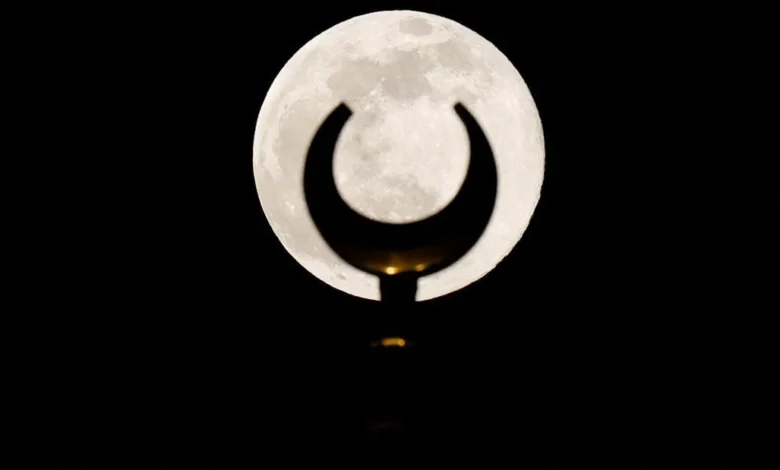
The celestial event known as the Beaver Supermoon graced the night skies across the globe on November 24 and 25, 2026, offering observers a rare and visually arresting astronomical spectacle. As the moon reached its perigee—the point in its elliptical orbit closest to Earth—it appeared significantly larger and brighter than a standard full moon, casting a luminous glow over iconic architectural landmarks from the Middle East to the Americas. This convergence of orbital mechanics and lunar phases provided a moment of shared human experience, drawing crowds of stargazers, photographers, and casual observers to elevated vantage points to witness the radiant lunar disk.
Understanding the Beaver Supermoon: A Scientific Context
The term "Beaver Moon" is a traditional moniker for the full moon occurring in November. According to the Old Farmer’s Almanac, the name originates from the historical behavior of beavers, which become particularly active during this time of year as they prepare their dams and lodges for the onset of winter. When this seasonal full moon coincides with the moon’s perigee, the phenomenon is classified as a "Supermoon."
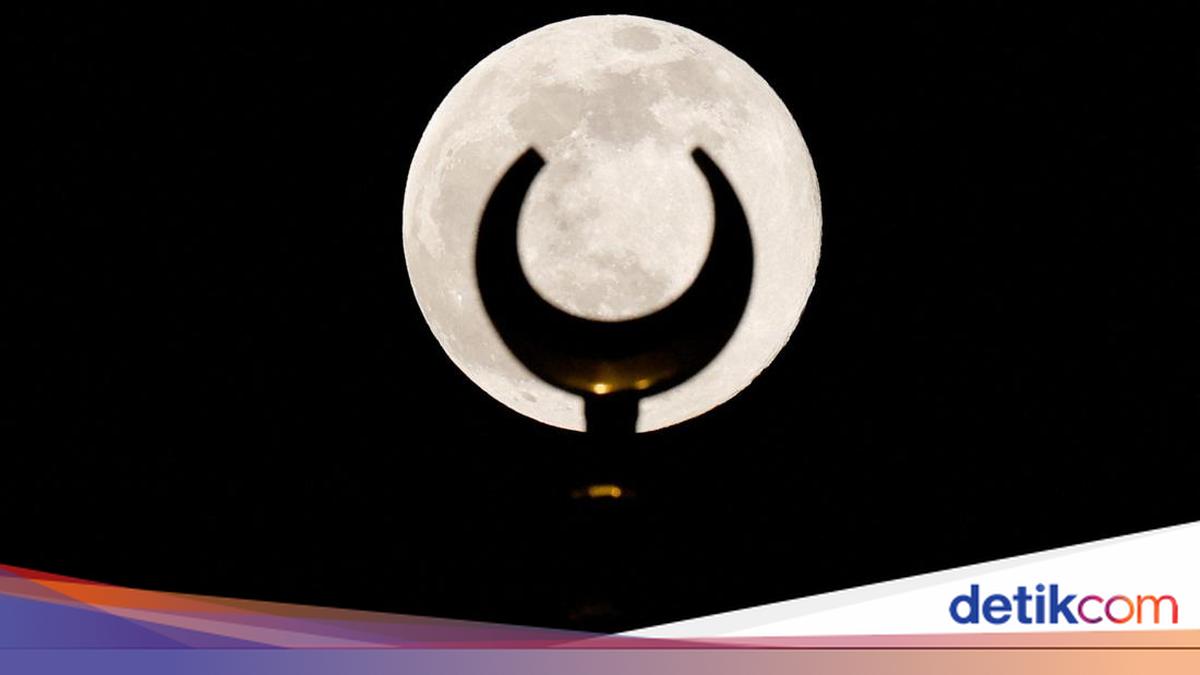
From a scientific perspective, a supermoon occurs when the moon is at or near its closest approach to Earth while in its full phase. At this point, the moon can appear up to 14 percent larger and 30 percent brighter than it does at its farthest point, known as apogee. The combination of the moon’s proximity and the atmospheric conditions on November 24th and 25th resulted in a visual phenomenon that was magnified by the contrast against urban skylines, creating an optical illusion often referred to as the "moon illusion," where the moon appears even larger when situated near the horizon relative to terrestrial objects.
Chronology of the 2026 Lunar Spectacle
The global visibility of the event spanned approximately 48 hours as the Earth rotated, bringing different regions into the line of sight of the celestial body.
In the Middle East, the spectacle began in the holy city of Mecca, Saudi Arabia, where the moon was captured rising behind the intricate architectural details of minarets. The juxtaposition of the ancient religious geometry and the modern supermoon served as a focal point for global media coverage.
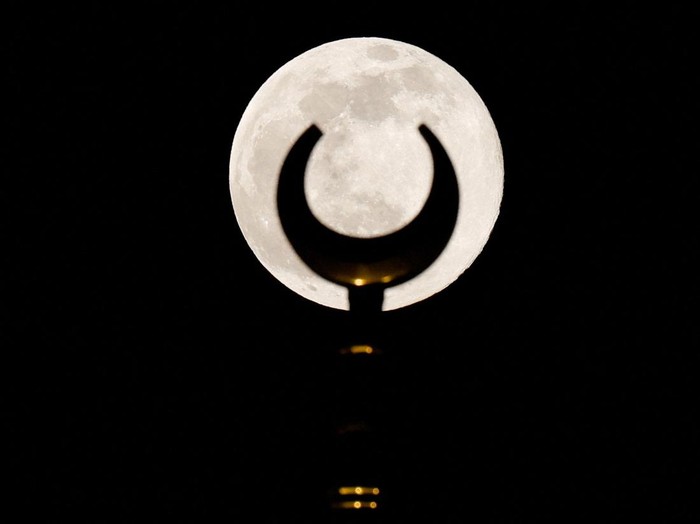
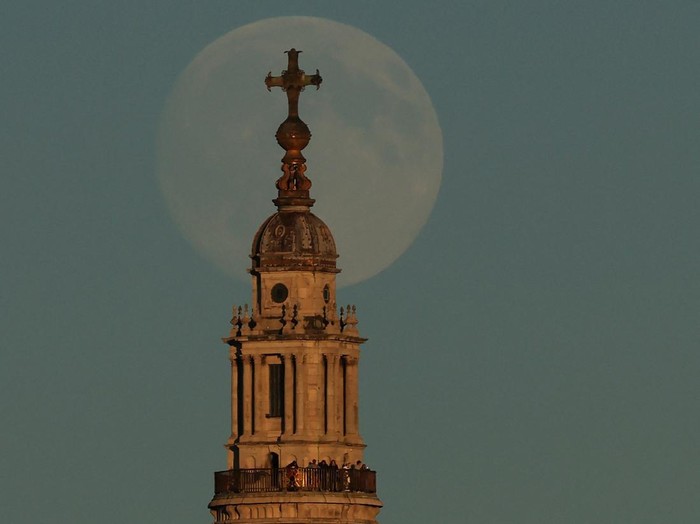
As the timeline shifted westward, the observation moved to the European continent. In London, United Kingdom, the moon rose behind the historic dome of St. Paul’s Cathedral. Observations from the city’s various galleries captured the moon’s ascent, marking a stark contrast between the city’s Victorian and modern architecture.
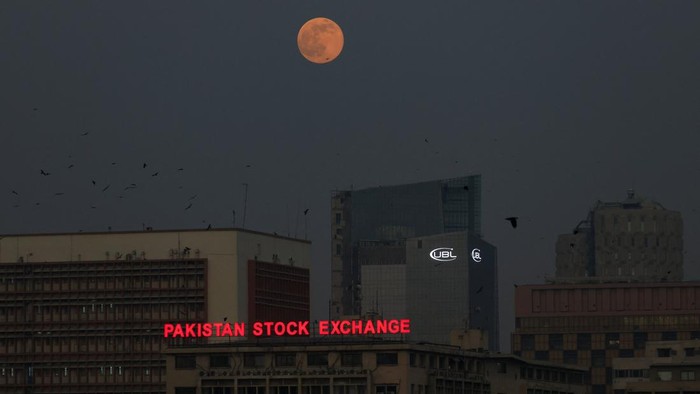
By the time the moon reached the skies over Asia, the hue of the light had shifted. In Karachi, Pakistan, observers reported the moon taking on a warm, orange-tinged glow as it climbed above the horizon near the Pakistan Stock Exchange. This atmospheric scattering is common when the moon is low in the sky, as the light must travel through a thicker layer of Earth’s atmosphere, which filters out the blue wavelengths and allows the warmer red and orange hues to pass through.
The event reached its climax across the Atlantic. In New York City, the moon provided a dramatic backdrop for the Manhattan skyline, perfectly framing the spires of the Empire State and Chrysler Buildings. In Dubai, the density of the city’s skyscrapers allowed for a unique perspective, as residents and tourists utilized high-end mobile optics to document the moon as it moved through the vertical "canyons" of the metropolis.
The Role of Citizen Science and Public Engagement
The 2026 Beaver Supermoon underscored a growing trend in public engagement with amateur astronomy. With the ubiquity of high-resolution smartphone cameras and social media platforms, the event became a decentralized, global photography project. Astronomers noted that such events are crucial for fostering public interest in space sciences.
"When people see a supermoon, it serves as a gateway," explained Dr. Elena Vance, an astrophysicist specializing in planetary motion. "It prompts questions about orbits, the distance between Earth and the moon, and the mechanics of the solar system. While this is not a rare occurrence in terms of frequency, the psychological impact of seeing the moon ‘close up’ is profound. It reminds us of our position in the universe."
Public observatories and planetariums reported a surge in interest during the days leading up to the event, with many institutions hosting "Moon Watch" sessions. These gatherings allowed the public to view the moon through high-powered telescopes, revealing details such as the lunar maria—the ancient, dark basaltic plains formed by volcanic eruptions—which are usually invisible to the naked eye.
Analytical Implications: Lunar Influence and Environmental Factors
While the Supermoon is primarily a visual event, it also carries minor physical implications for Earth. The gravitational pull of the moon is strongest during perigee, which naturally influences the planet’s tidal cycles. Coastal regions experienced higher-than-average "perigean spring tides" during this period. Marine scientists and coastal engineers often monitor these events to study the potential for increased flooding in vulnerable low-lying areas, although the 2026 event did not result in significant infrastructure damage.
From a meteorological standpoint, the timing of the 2026 Beaver Supermoon was fortuitous for many regions. Favorable cloud cover conditions in the Northern Hemisphere allowed for high-visibility observation across major metropolitan hubs. However, in regions where weather patterns remained turbulent, the impact of the moon’s light on the atmosphere—and conversely, the atmosphere’s effect on the moon’s appearance—provided data for atmospheric physicists studying light refraction and aerosol density.
Historical and Cultural Significance
The naming of the moon remains a bridge between indigenous North American traditions and modern secular society. The cultural persistence of terms like "Beaver Moon" reflects a historical necessity to track time through the natural world. In an era dominated by digital calendars and precise atomic clocks, the return of the full moon serves as a reminder of the ancient rhythms that once dictated human survival.

Cultural historians point out that the global fascination with the 2026 Beaver Supermoon demonstrates a universal human impulse to connect with the cosmos. Unlike other scientific phenomena that require specialized equipment to detect—such as solar flares or distant gravitational waves—the supermoon is democratic. It requires no telescope, no training, and no membership; it is accessible to anyone with a clear sky and the willingness to look upward.
Looking Ahead: Future Astronomical Events
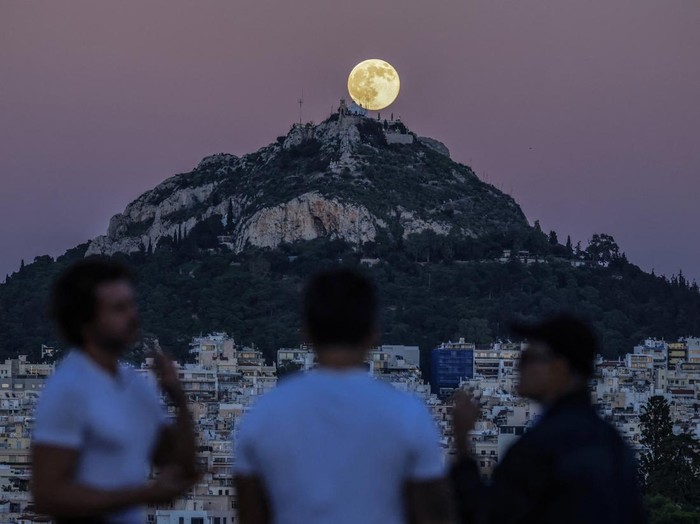
The 2026 Beaver Supermoon serves as a precursor to a series of upcoming lunar events that astronomers are already tracking. The predictability of these cycles allows for long-term planning, not only for researchers but for the tourism industry, which has increasingly capitalized on "astro-tourism." Hotels in cities like Dubai, New York, and Athens reported increased bookings for rooms with clear northern or eastern orientations, signaling the economic value of celestial events.
As humanity moves toward renewed lunar exploration through various international space agencies, public interest in the moon has reached a multi-decade high. The visibility of the Beaver Supermoon has acted as a catalyst for renewed discussions regarding the Artemis program and other lunar missions, which aim to return humans to the lunar surface.
In conclusion, the 2026 Beaver Supermoon was more than just a fleeting moment of beauty; it was a global synchronization point. It highlighted the intersection of history, science, and technology, providing a rare opportunity for the global population to pause and observe the mechanics of the heavens. As the moon continues its transit, the data gathered from this event—ranging from photographic archives to tidal measurements—will continue to serve the scientific community, while the memory of the luminous sky remains etched in the collective consciousness of those who witnessed it. The success of this observation underscores the importance of maintaining dark-sky initiatives in urban areas, ensuring that future generations can continue to witness the splendor of the lunar cycles that have guided humanity for millennia.
Related posts: