A Comprehensive Overview of Nations Starting with the Letter E and Their Global Geographical Significance

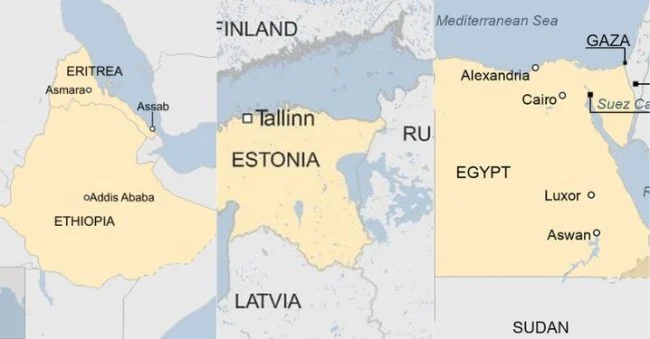
Geographical literacy remains a cornerstone of international relations and cultural education, providing the framework through which global citizens understand the distribution of power, resources, and history across the world’s continents. Among the various classification methods used by cartographers and educators, categorizing nations by their nomenclature—specifically by their initial letter—offers a unique lens through which to observe the diversity of sovereign states. From the high-altitude landscapes of the Andes to the ancient river valleys of North Africa and the emerging digital economies of Northern Europe, countries beginning with the letter "E" represent a cross-section of global development, political history, and geopolitical positioning.
The list of nations starting with "E" comprises eight officially recognized sovereign states: Ecuador, El Salvador, Equatorial Guinea, Eritrea, Estonia, Eswatini, Ethiopia, and Egypt. While these nations are separated by thousands of miles and distinct cultural spheres, they share a commonality in their strategic importance within their respective regions.
Historical Context and Geographical Distribution
The geographical distribution of these eight nations spans four continents: South America, Africa, Europe, and Central America. This dispersal highlights the varying stages of economic development and historical legacies that define these regions.
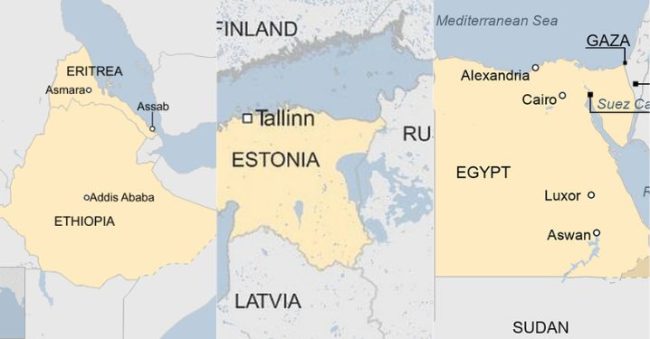
Egypt, for instance, serves as a cornerstone of the Middle East and North Africa (MENA) region. With a history spanning millennia, the nation serves as a primary link between Africa and Asia via the Suez Canal, a critical maritime artery for global trade. Conversely, Estonia, located in Northern Europe, represents a post-Soviet success story, having transitioned into a highly digitized, technology-driven economy that serves as a model for modern governance within the European Union.
In Africa, Ethiopia stands as one of the world’s oldest civilizations and a rare nation that largely escaped formal European colonization, maintaining a distinct cultural and political identity. Meanwhile, Eswatini, a landlocked kingdom in Southern Africa, maintains a unique constitutional monarchy, providing a contrast to the republican frameworks seen in nations like Ecuador or El Salvador.
Detailed Profiles of Nations Starting with E
To understand the global impact of these nations, one must look at their individual socio-political frameworks.
1. Egypt (Capital: Cairo)
Egypt is a geopolitical heavyweight. Its influence is anchored by the Nile River and its control over the Suez Canal, through which approximately 12% of global trade passes. Recent efforts by the Egyptian government to modernize its infrastructure, including the construction of the New Administrative Capital, reflect a strategic attempt to alleviate population density in Cairo and stimulate economic growth.

2. Ethiopia (Capital: Addis Ababa)
As the seat of the African Union, Ethiopia plays a pivotal role in continental diplomacy. Economically, the nation has experienced significant growth over the last two decades, driven by state-led development initiatives and investments in infrastructure, such as the Grand Ethiopian Renaissance Dam (GERD). This project, while a source of regional tension regarding water rights, underscores the nation’s focus on energy independence.
3. Estonia (Capital: Tallinn)
Estonia is globally recognized for its "e-Estonia" initiative, which has digitized almost all public services. As a member of NATO and the EU, it acts as a critical security partner on the Baltic flank. Its technological infrastructure has made it a hub for cybersecurity expertise, particularly following its historical experiences with large-scale cyber warfare.
4. Ecuador (Capital: Quito)
Situated on the equator, from which it derives its name, Ecuador is a vital player in global biodiversity and commodities. It is a major exporter of petroleum, bananas, and flowers. The nation’s economy is uniquely characterized by its adoption of the U.S. Dollar as its official currency, a decision made in 2000 to stabilize the economy after a period of hyperinflation.
5. El Salvador (Capital: San Salvador)
Located in Central America, El Salvador has recently garnered international attention for its bold, albeit controversial, economic policies, including the adoption of Bitcoin as legal tender. The nation is currently focused on internal security reform and attracting foreign investment to revitalize its industrial sector.

6. Eritrea (Capital: Asmara)
Eritrea occupies a strategic location on the Red Sea. Its coastal position provides access to one of the world’s busiest shipping lanes. Historically, its struggle for independence from Ethiopia has defined its foreign policy, which has remained largely isolationist for several decades, though recent efforts at regional rapprochement are being closely watched by international observers.
7. Equatorial Guinea (Capital: Malabo)
This Central African nation possesses significant oil and natural gas reserves. As one of the wealthiest countries in Africa in terms of GDP per capita, it faces the ongoing challenge of diversifying its economy away from hydrocarbon dependency and improving human development indicators for its population.
8. Eswatini (Capital: Mbabane)
Formerly known as Swaziland, Eswatini is one of the few remaining absolute monarchies in the world. Its economy is deeply integrated with South Africa’s, and it relies heavily on agriculture and textile exports. The nation continues to navigate the complexities of regional economic fluctuations and health-related development goals.
Economic and Diplomatic Implications
The inclusion of these eight nations in global dialogues—whether through the United Nations, the African Union, or regional trade blocs—illustrates the diverse challenges facing the modern world. For instance, Egypt and Ethiopia are currently central to negotiations concerning water security and sustainable development in the Nile Basin. Similarly, the digital prowess of Estonia offers a roadmap for nations looking to enhance transparency and efficiency in government through technology.

From an economic perspective, the "E" nations present a mix of commodity-dependent economies (Ecuador, Equatorial Guinea) and those shifting toward service-based or high-tech sectors (Estonia). The volatility of global oil prices, as observed in recent years, directly impacts the fiscal health of Egypt, Ecuador, and Equatorial Guinea, forcing these governments to implement stringent fiscal reforms and seek international financial assistance to maintain stability.
Chronology of Modern Developments
- 2000: Ecuador officially adopts the U.S. Dollar to combat economic instability.
- 2002: The African Union is established, with Ethiopia serving as the permanent headquarters.
- 2004: Estonia joins the European Union, marking its full integration into Western economic and security structures.
- 2018: Ethiopia and Eritrea sign a historic peace agreement, ending two decades of border conflict.
- 2021: El Salvador becomes the first country in the world to adopt Bitcoin as legal tender.
- 2023-2024: Egypt accelerates the relocation of ministries to the New Administrative Capital, signaling a major shift in urban management.
Analytical Perspectives
Geopolitical analysts often point to the "E" group as a microcosm of global disparity. While Estonia ranks highly in the Human Development Index (HDI) and digital connectivity, other nations on this list are actively working to improve their rankings in education, healthcare, and democratic institutions. The trajectory of these nations suggests that geography is not destiny; rather, strategic governance and the adoption of modern administrative tools are the primary determinants of a nation’s success in the 21st century.
For global policymakers, understanding the specific context of these eight nations—ranging from the maritime importance of Egypt to the security significance of the Baltic states—is essential. These countries are not merely names on a map; they are active participants in a rapidly evolving global order. Whether through the regulation of international shipping lanes, the management of transboundary water resources, or the implementation of groundbreaking digital policies, these nations are integral to the contemporary global landscape.
In conclusion, the study of nations starting with the letter "E" provides more than just a trivia exercise; it offers a comprehensive view of the challenges and triumphs of modern statehood. By analyzing their diverse paths—from the ancient foundations of Egypt and Ethiopia to the technological advancements of Estonia—observers can gain a clearer understanding of how geography and policy intersect to shape the future of our interconnected world. As these nations continue to adapt to global economic shifts and internal demographic changes, their roles on the international stage will undoubtedly continue to evolve, reinforcing the importance of maintaining an informed, global perspective.