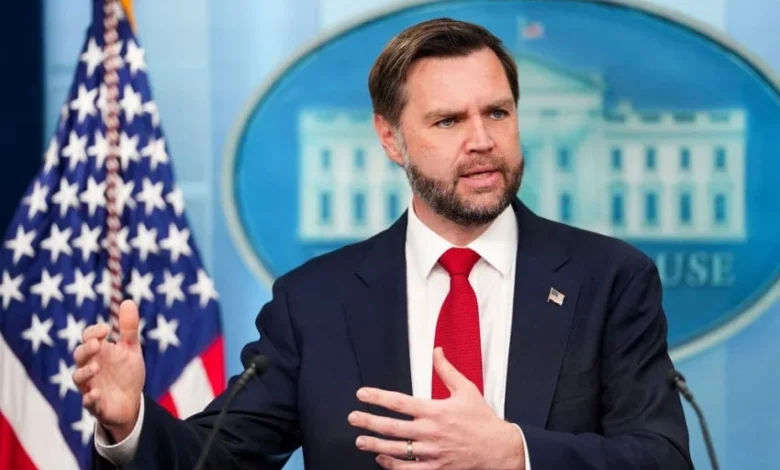
The political trajectory of Vice President JD Vance, once viewed as the heir apparent to the MAGA movement, faces significant turbulence following a disastrous showing by the Republican Party in the recent midterm elections. As the GOP grapples with the fallout of losing seven key Senate seats—including the very seat previously held by Vance in Ohio—the internal calculus regarding the 2028 presidential race has shifted dramatically. Once considered the frontrunner to secure the party’s nomination, Vance now finds his path to the White House increasingly narrow as influential donors and party strategists openly reconsider their allegiances.
Reports surfacing in the wake of the electoral defeat suggest that the Vice President is currently engaged in a period of intense self-reflection. According to sources close to his inner circle, Vance has not yet formalized a decision regarding a potential bid for the presidency in 2028. This ambiguity, however, is being interpreted by many within the Republican establishment as a sign of dwindling confidence, particularly as the coalition that propelled the current administration to power shows signs of severe fracture.
A Chronology of Electoral Setbacks
The current crisis traces its roots to the unexpected results of the midterm elections, which served as a referendum on the administration’s policy priorities and its populist messaging. The Republican Party, which had entered the election cycle with high expectations of a "red wave," instead found itself in a defensive posture.
- The Lead-Up: During the campaign, Vance campaigned extensively on a platform of economic nationalism and cultural traditionalism, mirroring the rhetoric of the current executive branch. He positioned himself as the primary defender of the administration’s legacy, betting that a strong performance in key battleground states would cement his status as the natural successor.
- The Election Night Shock: The results were stark. The loss of seven Senate seats effectively handed the legislative advantage to the Democratic Party. Most alarmingly for Vance, the loss of his former seat in Ohio signaled that his influence, even in states he previously carried, might be waning.
- The Aftermath: Within 24 hours of the polls closing, the mood among the party’s financial elite turned sour. High-level fundraisers in major financial hubs, including New York, began reporting a surge in donor skepticism. The narrative shifted from "Vance in 2028" to an urgent search for alternative candidates who could distance themselves from the baggage of the current administration’s performance.
The Erosion of Financial Support
Political campaigns at the presidential level are engines that run on capital, and the current donor environment is perhaps the most significant indicator of Vance’s waning influence. In the American political landscape, the donor class acts as an early warning system for a candidate’s viability. When major contributors begin to hedge their bets, it often signals a terminal decline in a candidate’s ability to build a national coalition.
Industry reports indicate that many of the donors who previously supported Vance are now actively exploring alternatives, most notably Florida Governor Ron DeSantis. The reasoning provided by these financiers is multi-faceted:
- Association with Failure: Donors are concerned that the branding of the current administration is now irrevocably linked to the midterms’ electoral losses. For a future candidate, this creates a "tainted brand" that could prove difficult to rehabilitate in a general election.
- The "Trump Shadow": There is a growing consensus among the GOP donor base that a candidate who is too closely tethered to the current administration’s specific brand of populism may struggle to recapture suburban voters or moderate independents—demographics that are essential for a victory in 2028.
- The Quest for Stability: Having witnessed the electoral volatility of the current cycle, many deep-pocketed donors are now favoring candidates who offer a more traditional or disciplined governing style, viewing the populist fervor of the current term as a political liability.
Policy Challenges and the "Iran Factor"
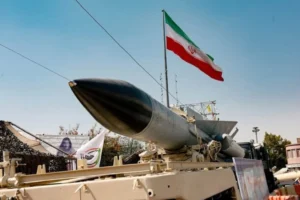
Beyond electoral losses, the administration’s handling of foreign policy has provided ammunition for Vance’s detractors. Specifically, the geopolitical instability involving Iran has become a central point of contention. Vance has attempted to frame the current administration’s foreign policy as a complex series of pressures, yet critics within his own party argue that the handling of the Iran situation has been a strategic failure.
In his briefings to allies, Vance has attempted to justify the recent diplomatic and military frictions as a necessary byproduct of a bold, assertive foreign policy. However, this argument has gained little traction among the party’s hawkish wing, which views the administration’s approach as having alienated traditional allies while failing to achieve substantive containment of Iranian influence in the region.
This foreign policy vulnerability is compounded by the economic repercussions of the current administration’s agenda. Inflationary pressures, persistent supply chain issues, and the perceived lack of a coherent response to energy price volatility have allowed political rivals to paint the administration—and by extension, Vance—as out of touch with the concerns of working-class families.
Implications for the 2028 GOP Primaries
The shift in donor sentiment and the electoral losses have fundamentally altered the landscape for the 2028 cycle. If Vance chooses to move forward with a campaign, he will face a primary contest that is no longer defined by a coronation, but by a survival battle.
The emergence of other contenders, such as Ron DeSantis, indicates that the Republican Party is undergoing a period of intense ideological recalibration. The party is effectively caught between two futures: one that doubles down on the populist fervor of the current era, and one that seeks to return to a more traditional form of conservative governance that emphasizes institutional stability and economic orthodoxy.
For Vance, the challenge is twofold. First, he must reconcile his role as a loyalist to the current administration with the need to craft a distinct, forward-looking vision that appeals to a broader base of the electorate. Second, he must demonstrate that the midterm losses were an anomaly rather than a structural failure of his political ideology.
Data-Driven Analysis of the Current Crisis
Statistical analysis of the midterms shows that the "enthusiasm gap" was a major contributor to the GOP’s underperformance. In states where Vance was heavily involved in campaigning, turnout among critical demographics—such as independent voters and moderate women—failed to meet the benchmarks set by historical Republican performance.
Furthermore, the loss of gubernatorial races in traditional Republican strongholds like Texas and Georgia suggests that the party’s reach has been hampered by a strategy that prioritizes base mobilization over coalition building. For a presidential candidate, this data is damning. The Electoral College map requires a broad appeal that spans rural, suburban, and urban demographics. If the current political infrastructure is unable to secure victory in states that should be safely Republican, the path to 270 electoral votes in 2028 appears mathematically daunting.
Official Responses and the Road Ahead
While the White House and the Vice President’s office have maintained a public stance of unity, the internal frustration is palpable. Official responses have focused on the need for "party introspection" and "re-evaluating communication strategies." However, these statements have largely been dismissed by analysts as standard political boilerplate designed to stabilize the party during a period of transition.
As the political calendar inches closer to the next election cycle, the pressure on Vance to define his future will only intensify. His allies remain split; some advise a period of relative silence to allow the political storm to subside, while others suggest that he must immediately launch a series of policy initiatives to distance himself from the recent election results and reassert his leadership.
Ultimately, the viability of JD Vance’s 2028 ambitions will depend on his ability to convince the Republican base that the recent failures were not a reflection of his own capabilities, but a temporary hurdle. However, in the unforgiving world of national politics, momentum is a difficult thing to regain once it has been lost. With donors looking elsewhere and the party’s electoral coalition showing clear signs of decay, the Vice President finds himself at a critical juncture. Whether he can pivot to a winning strategy or whether his aspirations have been permanently sidelined by the midterms remains the most significant question hanging over the future of the Republican Party.
As 2025 approaches, the political world will be watching closely to see if the Vice President can navigate this period of adversity. The loss of his home state’s influence and the withdrawal of major donor support are not merely logistical problems; they are existential threats to a campaign that was built on the promise of national dominance. The road to 2028 is long, but for JD Vance, the climb has just become significantly steeper.
Related posts: