Tragic Helicopter Crash in Barito Kuala Claims Life of Crew Member During Critical Forest Fire Suppression Mission

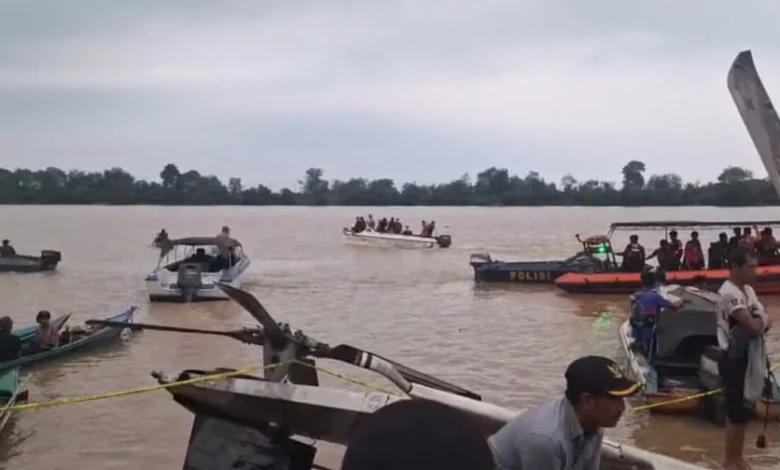
A joint search and rescue operation successfully recovered the body of Yayan Supyansuri, a crew member aboard the Super Puma H-255 helicopter (registration VH-HGM), which crashed into the waters of the Barito River near Desa Tabatan, Kuripan District, Barito Kuala Regency, South Kalimantan, on Sunday, November 8, 2026. The incident, which occurred during a high-stakes aerial operation to combat persistent forest and land fires (karhutla), has prompted an immediate investigation by aviation authorities and disaster management agencies into the mechanical and environmental factors that may have contributed to the tragedy.
Yayan Supyansuri, an Indonesian national serving as the Helicopter Landing Officer (HLO), was confirmed deceased by officials from the National Disaster Management Agency (BNPB). His recovery marks the conclusion of the initial search phase, though the site remains a focal point for investigators tasked with determining the sequence of events that led to the catastrophic failure of the aircraft.
Chronology of the Incident
The flight was part of an ongoing regional effort to mitigate the impact of seasonal forest fires, which often reach critical levels in Kalimantan during the latter part of the year. On Sunday, November 8, 2026, the Super Puma H-255 was deployed to conduct water-bombing operations in the remote, swampy terrain of Barito Kuala.
According to preliminary reports, the helicopter lost contact with ground control shortly after executing a maneuver over the Barito River. Witnesses in the vicinity of Desa Tabatan reported hearing an unusual engine noise followed by a sharp descent. Emergency protocols were activated immediately, with a joint task force consisting of the National Search and Rescue Agency (Basarnas), local police, military personnel, and BNPB volunteers dispatched to the site.
By late Sunday evening, rescuers faced significant challenges due to the dense vegetation and the challenging aquatic environment of the Barito River. It was not until the early hours of Monday, November 9, 2026, that the wreckage was identified and the victim’s remains were located. The body of Yayan Supyansuri was transported to the Jenamas Community Health Center (Puskesmas) in Barito Selatan, Central Kalimantan, for initial post-mortem procedures, before being transferred to Banjarbaru, South Kalimantan, for further forensic examination and repatriation to his family.
Official Statements and Disaster Management Response
Berton SP Panjaitan, Acting Head of the Center for Data, Information, and Disaster Communication at BNPB, issued a formal statement on Monday morning addressing the incident. He expressed the agency’s condolences to the family of the deceased and confirmed that the agency is cooperating fully with the National Transportation Safety Committee (KNKT) to analyze the flight data recorder (FDR) and cockpit voice recorder (CVR) if recovered.
"The loss of a team member in the line of duty is a profound blow to our disaster response capabilities," Panjaitan stated. "Yayan Supyansuri was a vital part of our aerial operations team. We are currently ensuring that all logistical support is provided for the family and that the investigation into the mechanical status of the VH-HGM aircraft is conducted with total transparency."
The local government of South Kalimantan has also pledged its support for the ongoing investigation. The regional administration noted that the Super Puma had been instrumental in keeping the fires under control in the peatland areas surrounding the river, highlighting the inherent risks that aircrews face when navigating through smoke, variable wind conditions, and hazardous terrain.
Technical Context and Operational Risks
The Super Puma H-255 is widely regarded as a reliable workhorse for heavy-lift and firefighting missions. However, operations in the Kalimantan region present unique challenges that test the limits of even the most robust aircraft. The combination of high ambient temperatures, high humidity, and the necessity of flying at low altitudes to accurately drop water payloads creates a high-stress environment for both pilots and machines.
Aviation safety experts note that firefighting missions involve frequent load-cycling—the process of picking up water and releasing it—which places significant strain on the airframe and engines. While the exact cause of the crash remains under investigation, experts emphasize that factors such as "brownout" conditions (caused by dust or debris) or sudden downdrafts in forested regions are common contributors to aviation accidents in these scenarios.
The VH-HGM registration falls under the jurisdiction of regional aviation oversight. Investigations will likely focus on whether there were any reported maintenance irregularities or if environmental factors played a primary role in the loss of control. The recovered wreckage will be subjected to a rigorous forensic teardown to determine if there was a component failure, such as a rotor malfunction or engine flameout, prior to the impact.
Broader Implications for Forest Fire Suppression
The crash serves as a stark reminder of the perils involved in the nation’s annual battle against forest and land fires. As climate patterns become more erratic, the demand for aerial firefighting has increased, pushing crews to operate under tighter deadlines and more intense fire conditions.
Following the accident, questions have been raised regarding the safety protocols governing private and state-contracted helicopters used for humanitarian and environmental missions. The incident is expected to trigger a review of safety standards for all aircraft currently engaged in the regional fire suppression program. This may include stricter mandates for pilot fatigue management, more frequent airworthiness inspections, and potentially, the deployment of more advanced terrain-avoidance technology on helicopters tasked with low-altitude operations.
Furthermore, the loss of a specialized HLO like Yayan Supyansuri highlights the shortage of skilled personnel in specialized disaster response roles. The HLO is a critical position; the individual is responsible for the safety of ground operations, ensuring that landing zones are secure, and coordinating the logistics of water replenishment. Replacing such personnel requires extensive training and experience, meaning the operational capacity of the regional firefighting task force may be temporarily hampered while the investigation continues.
Moving Forward: Investigation and Accountability
As of mid-week, the recovery of the remaining wreckage components from the riverbed is ongoing. The KNKT has established a field office in Banjarbaru to coordinate the evidence collection process. The agency is expected to issue a preliminary report within 30 days, which will outline the factual findings of the incident without assigning immediate blame.
The aviation industry in Indonesia has been under pressure to improve safety records following several high-profile incidents in recent years. This tragedy will likely serve as a catalyst for a national dialogue on the necessity of modernizing the aerial fleet used for environmental protection and ensuring that the men and women who risk their lives to protect the country’s natural resources are equipped with the safest possible technology.
For the family of Yayan Supyansuri, the focus remains on the grieving process and the logistical arrangements for his final resting place. For the wider community, the crash is a sobering testament to the high cost of environmental preservation. As the smoke continues to rise from fires across the region, the aerial firefighting teams continue their work, albeit with the heavy burden of having lost a comrade in the pursuit of a safer, more protected landscape.
The tragedy in Barito Kuala will be documented in the annals of national disaster management as a critical turning point for safety protocols, forcing a re-evaluation of how aerial missions are executed in the challenging, volatile environments of Indonesia’s peatlands. The final outcome of the investigation will be watched closely by stakeholders, regulatory bodies, and the public alike, as the nation seeks to balance the urgent need for environmental protection with the absolute priority of human life.