How to Recreate the Iconic Street-Side Indonesian Fried Rice at Home with Authentic Cart-Style Flavor Profiles

The aroma of smoky spices drifting through the evening air is a sensory marker deeply embedded in the cultural fabric of urban Indonesia. As dusk settles, the rhythmic clanging of a metal spatula against a seasoned wajan, or iron wok, signals the arrival of the local abang nasi goreng—the itinerant street-side fried rice vendor. For millions of residents across the archipelago, this humble dish represents more than a convenient nocturnal meal; it is a culinary institution. However, when late-night cravings strike and venturing outdoors becomes unappealing, mastering the craft of making street-style fried rice in a domestic kitchen offers a rewarding alternative. By breaking down the foundational elements of street vendor techniques—specifically the preparation of a versatile base spice paste and the precise control of high-heat cooking—home cooks can successfully emulate the distinct savory profile of traditional cart vendors without requiring commercial-grade kitchen equipment.
The Cultural Phenomenon and Evolution of Indonesian
Street Food
Street food occupies a central position in Southeast Asian gastronomy, serving as both an economic lifeline for micro-entrepreneurs and an egalitarian equalizer for urban populations. Nasi goreng, frequently cited alongside gado-gado and sate as a national dish of Indonesia, traces its origins deep into the history of culinary adaptation. Historically influenced by Chinese stir-frying techniques brought over by early immigrants, local populations modified the method to utilize leftover cooked rice, preserving grain integrity while infusing it with indigenous spices such as shallots, garlic, chili, and sweet soy sauce (kecap manis).
Over generations, the mobile food cart—locally known as a gerobak—became the primary vehicle for this culinary tradition. Pushed by vendors through residential neighborhoods and commercial districts, these carts are equipped with portable charcoal burners or high-pressure gas stoves capable of generating intense thermal energy. This high heat is crucial for producing bau gosong or smoky aroma, a characteristic trait imparted by the rapid caramelization of sugars in the sweet soy sauce and the vaporization of moisture from the rice grains. Analyzing the mechanics of street-side preparation reveals that the secret to authentic flavor is not merely the ingredients themselves, but the systematic sequence of flavor extraction and thermal processing.
The Foundation: Crafting and Storing the Master Spice Paste
At the heart of every successful abang-style nasi goreng is the bumbu halus, a meticulously blended aromatic paste that replaces individual chopping during the fast-paced cooking process. Street vendors typically prepare this paste in large batches to maintain consistency and efficiency throughout long operating hours. Replicating this foundation in a home kitchen requires a careful balance of alliums, aromatics, and fats.
To create a master bumbu halus that yields professional results and can be stored in refrigeration for up to one month, culinary practitioners utilize a specific ratio of pungent and umami-rich components.
Essential Ingredients for the Master Spice Paste:
- 150 grams of fresh shallots, peeled
- 8 to 10 cloves of garlic
- 5 to 7 candlenuts (kemiri), lightly toasted to release their natural oils and thicken the paste
- 3 to 5 dried red chilies (deseeded for milder heat, or left intact for a spicier variant)
- 1 teaspoon of fermented shrimp paste (terasi), roasted briefly to activate its complex savory compounds
- 3 tablespoons of neutral cooking oil or water to facilitate blending
Preparation Methodology:
The shallots, garlic, candlenuts, and chilies are coarsely chopped before being transferred to a traditional stone mortar and pestle (ulekan) or a modern food processor. While electric blenders offer speed, traditional practitioners argue that mechanical grinding breaks down cell walls unevenly, whereas the crushing action of a stone mortar releases essential oils more effectively. The toasted terasi is incorporated toward the end of the grinding process, ensuring its potent aroma integrates thoroughly with the other alliums. Once a smooth, homogeneous paste is achieved, it is sautéed in a skillet with a moderate amount of cooking oil over medium heat until the raw pungent notes dissipate, the color deepens to a golden amber, and the oil separates from the solids. This preliminary cooking step, known locally as menumis bumbu, stabilizes the paste, allowing it to be stored safely in an airtight glass container inside a domestic refrigerator for up to thirty days without losing its aromatic potency.

Assembling the Components for Cart-Style Nasi Goreng
Once the foundational bumbu halus is prepared, assembling the final dish requires gathering fresh, accessible ingredients that mimic the standard inventory found on a typical street vendor’s pushcart. Street-style nasi goreng relies heavily on pantry staples and readily available proteins and vegetables, ensuring that home preparation remains cost-effective and straightforward.
Required Ingredients List:
- 2 to 3 plates of white rice, preferably cooked a day prior and thoroughly chilled in the refrigerator to reduce moisture content
- 2 to 3 tablespoons of the prepared master bumbu halus
- 2 free-range eggs
- 100 grams of chicken breast, boiled and shredded, or alternatively, traditional beef meatballs (bakso) sliced into thin rounds
- 2 stalks of scallions or green onions, finely sliced
- 1 bunch of choy sum (caisim) or crisp white cabbage, washed and chopped into bite-sized segments
- 2 to 3 tablespoons of sweet soy sauce (kecap manis)
- 1 tablespoon of fish sauce or savory soy sauce for salt balance
- 1 teaspoon of chicken bouillon powder or salt to taste
- Cooking oil for sautéing
The Science of Stale Rice and Moisture Control
A common pitfall for home cooks attempting to recreate restaurant-quality fried rice is the use of freshly cooked, hot, and high-moisture rice. When freshly steamed rice is introduced directly into a hot wok, the excess water trapped within the grains converts to steam, causing the rice to break down into a sticky, porridge-like consistency rather than individual, separated grains.
Culinary experts and experienced street vendors emphasize the necessity of using day-old or aged cooked rice that has been thoroughly chilled. Refrigeration retrogrades the starch molecules within the rice grain, firming up the exterior and reducing internal moisture content. Furthermore, breaking apart any clumps of rice by hand prior to cooking ensures that each individual grain can be coated uniformly by the oil, spices, and sauces during the rapid stir-frying phase.
Step-by-Step Execution: The Cooking Process
Executing nasi goreng ala abang gerobak requires speed, precise heat management, and adherence to a strict sequence of ingredient introduction. Because the cooking process occurs over high heat, all components must be measured, chopped, and placed within arm’s reach before the flame is ignited.
-
Protein and Egg Integration:
Place a seasoned wok or heavy-bottomed skillet over high heat and add two tablespoons of cooking oil. Crack the eggs directly into the hot oil. Using a spatula, vigorously scramble the eggs, breaking them into small, irregular pieces as they set. Push the scrambled eggs to the side of the wok. If utilizing sliced bakso or shredded chicken, add them to the exposed center of the wok and sauté briefly until they develop a light sear. -
Activating the Aromatics:
Add two to three tablespoons of the pre-prepared bumbu halus directly into the wok alongside the protein and eggs. Stir continuously, allowing the intense heat to reactivate the fried shallots, garlic, and toasted terasi within the paste. This step should take approximately 45 to 60 seconds until the spices release a rich, savory aroma and take on a deeper, roasted hue. -
Introducing the Rice:
Incorporate the chilled, pre-separated white rice into the wok. Turn the heat to its highest setting. Using the edge of the spatula, press down on any remaining clumps of rice while tossing the mixture vigorously from the bottom up. This mechanical action ensures that every grain of rice absorbs the aromatic oil and spices evenly without crushing the delicate structure of the grains.
-
Seasoning and Color Development:
Drizzle the sweet soy sauce (kecap manis) and fish sauce along the scorching inner perimeter of the wok rather than directly onto the rice. This technique allows the sugars in the soy sauce to caramelize instantly upon contact with the hot metal, imparting the signature smoky, slightly charred undertone characteristic of street-side preparations. Add the chicken bouillon powder or salt. Continue to toss and stir-fry the mixture energetically for another two to three minutes until the rice grains are uniformly coated in a glossy, dark caramel sheen. -
Vegetable Incorporation:
In the final minute of cooking, introduce the chopped choy sum or cabbage and sliced scallions. Stir them rapidly into the rice mixture. The objective is to heat the vegetables through and soften them slightly while preserving their vibrant green color and crisp textural crunch. -
Final Taste Test and Plating:
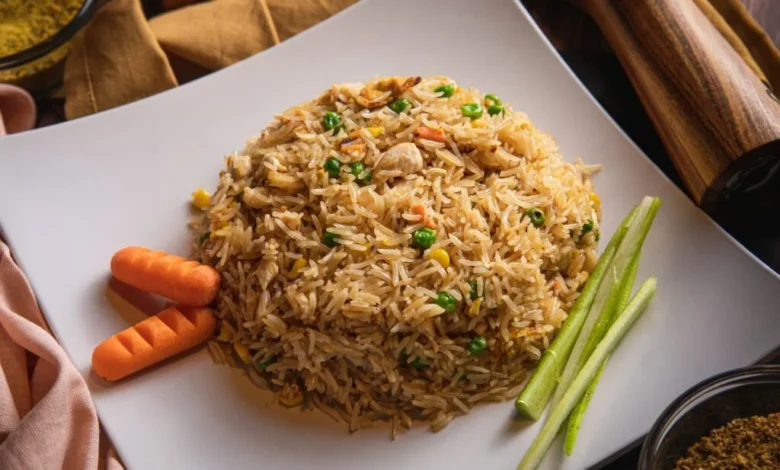
Adjust the seasoning with additional salt or soy sauce if necessary. Remove the wok from the heat source immediately to prevent overcooking the vegetables. Transfer the hot fried rice onto a serving plate.
Accompaniments and Sensory Presentation
In traditional Indonesian street culture, the experience of consuming nasi goreng is significantly enhanced by its accompaniments. To fully replicate the ambiance of dining at a roadside cart, the dish should be served hot, garnished with a generous handful of crisp fried shallots (bawang goreng) sprinkled over the top to add textural contrast.
Side accompaniments play a vital role in balancing the rich, sweet, and savory flavor profile of the fried rice. Standard garnishes include:
- Fresh cucumber slices, which provide a cooling, high-water-content crunch to counteract the warmth and richness of the dish.
- Tomato wedges, adding a touch of natural acidity.
- Prawn crackers (kerupuk udang), offering an airy, crisp textural element that is traditionally crushed over the rice or used as an edible scoop.
- Homemade sambal oelek or sliced fresh bird’s eye chilies (cabai rawit) served on the side for diners seeking an elevated level of heat.
Economic and Culinary Implications of Home Preparation
The resurgence of interest in recreating traditional street foods within domestic environments reflects broader shifts in modern consumer behavior. While urban migration and fast-paced lifestyles have historically driven reliance on street vendors and food delivery services, economic fluctuations and a growing appreciation for culinary self-sufficiency have inspired urban residents to master foundational cooking techniques.
From a nutritional and economic standpoint, preparing street-style fried rice at home offers distinct advantages. Home cooks retain complete control over ingredient quality, sodium levels, and oil types, allowing for dietary modifications without sacrificing authentic flavor profiles. Furthermore, the practice of batch-cooking foundational components—such as the master bumbu halus—streamlines meal preparation, transforming a labor-intensive dish into a rapid, accessible option for weeknight dinners or late-night study sessions.
Ultimately, mastering the art of the abang-gerobak-style nasi goreng bridges the gap between commercial street food culture and domestic culinary traditions. By respecting the fundamental principles of spice blending, moisture control, and high-heat technique, anyone with a wok and a stovetop can recreate a cherished piece of Indonesian culinary heritage within the comfort of their own kitchen.