The Evolution of Customer Support in the Digital Age
The shift toward automated customer service began in earnest during the late 2010s, as companies sought to reduce operational overhead. By deploying Large Language Models (LLMs) and rule-based chatbots, corporations aimed to resolve common inquiries—such as password resets, shipping updates, and billing queries—without human intervention. According to a 2023 report by Gartner, approximately 80% of customer service organizations have implemented some form of generative AI or automated support to manage high inquiry volumes.
While the efficiency gains for businesses are measurable, the user experience metrics tell a different story. Research from the Harvard Business Review indicates that customer satisfaction scores (CSAT) often plummet when a consumer feels trapped in an "automated loop." This phenomenon occurs when a bot, unable to process complex or sensitive information, continues to offer generic solutions or unrelated prompts, effectively alienating the individual seeking help.
Chronology of Service Failures
The incidents documented in recent online forums, such as Bored Panda, highlight a repetitive pattern of communication failure. These interactions typically follow a distinct, frustrating chronology:
- The Initial Inquiry: The customer presents a specific, often time-sensitive or emotionally charged issue.
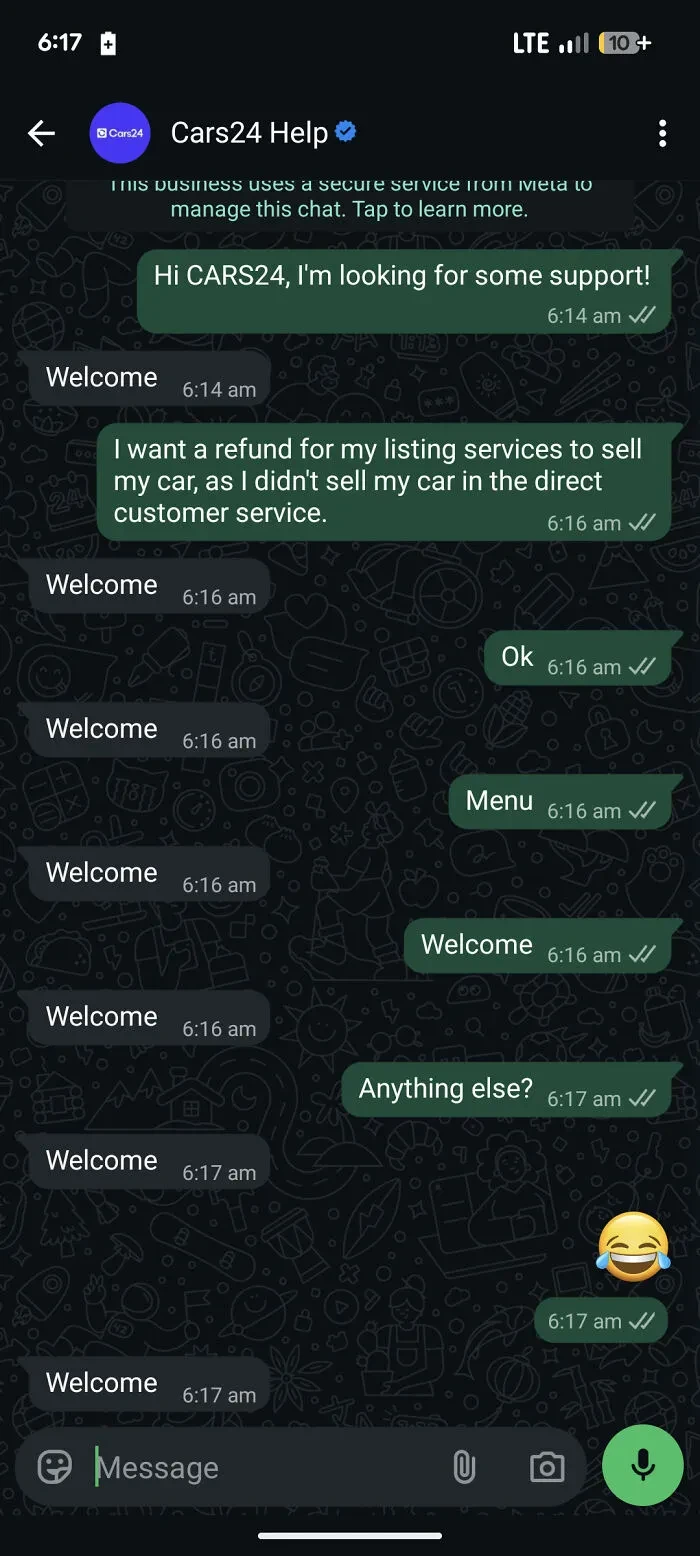
- The Automated Gatekeeper: The system responds with generic greetings, failing to acknowledge the context of the user’s message.
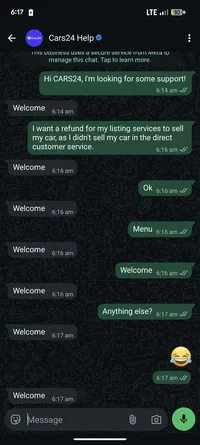
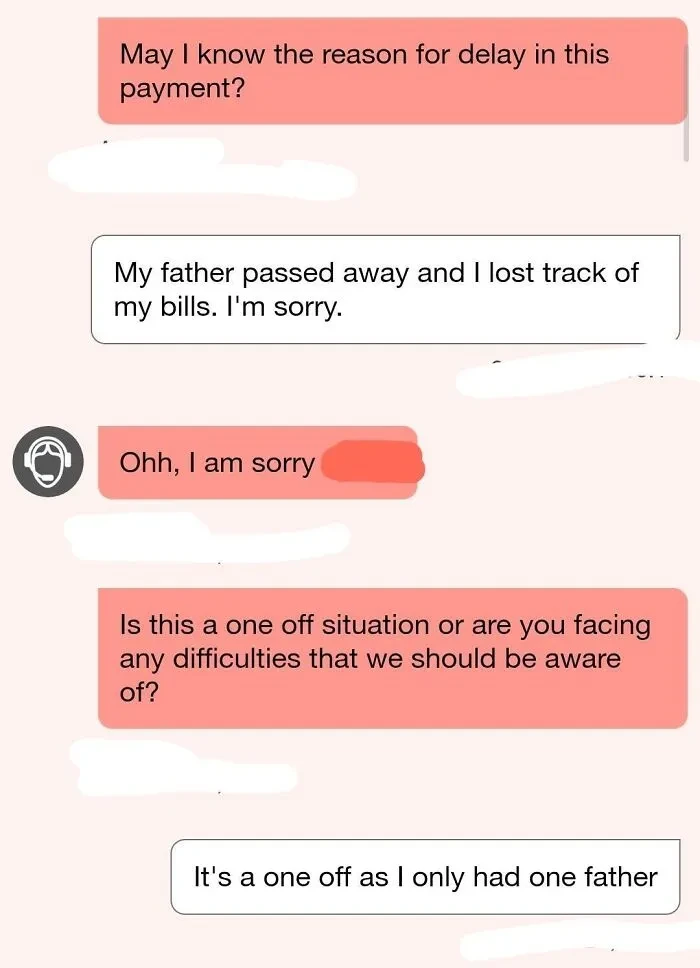
- The Cognitive Gap: When the user provides additional, vital context (e.g., the death of a family member or a technical impossibility), the automated system fails to pivot, continuing with pre-programmed scripts that appear tone-deaf or nonsensical.
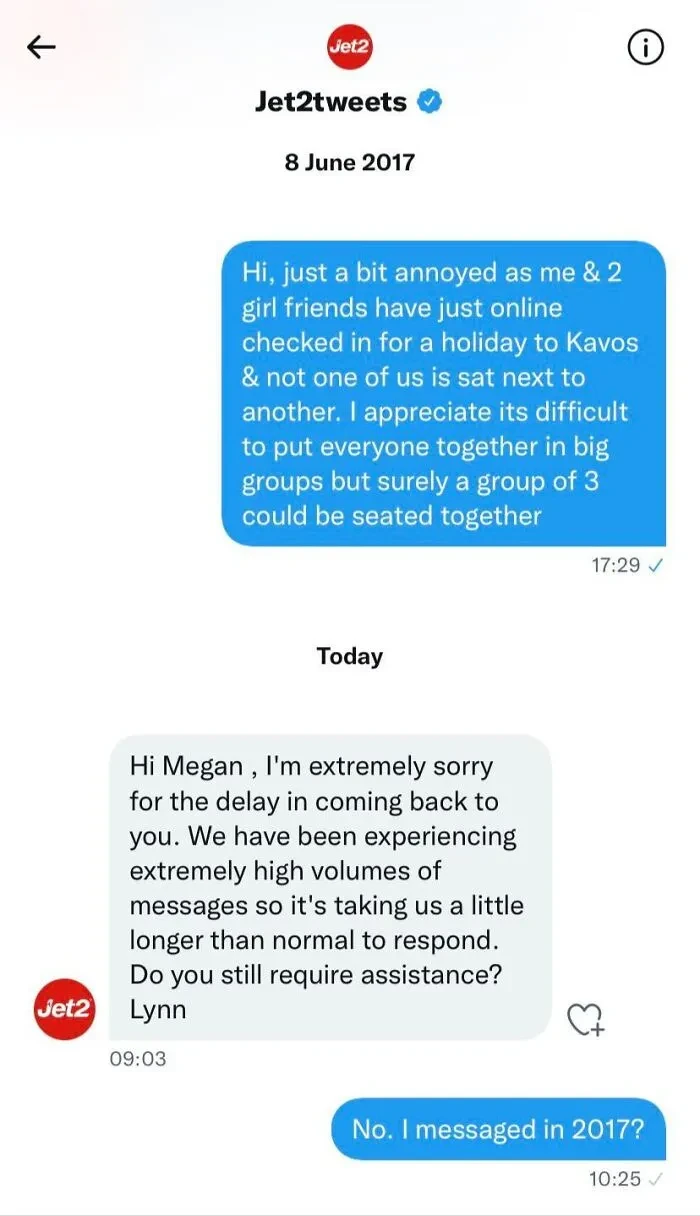
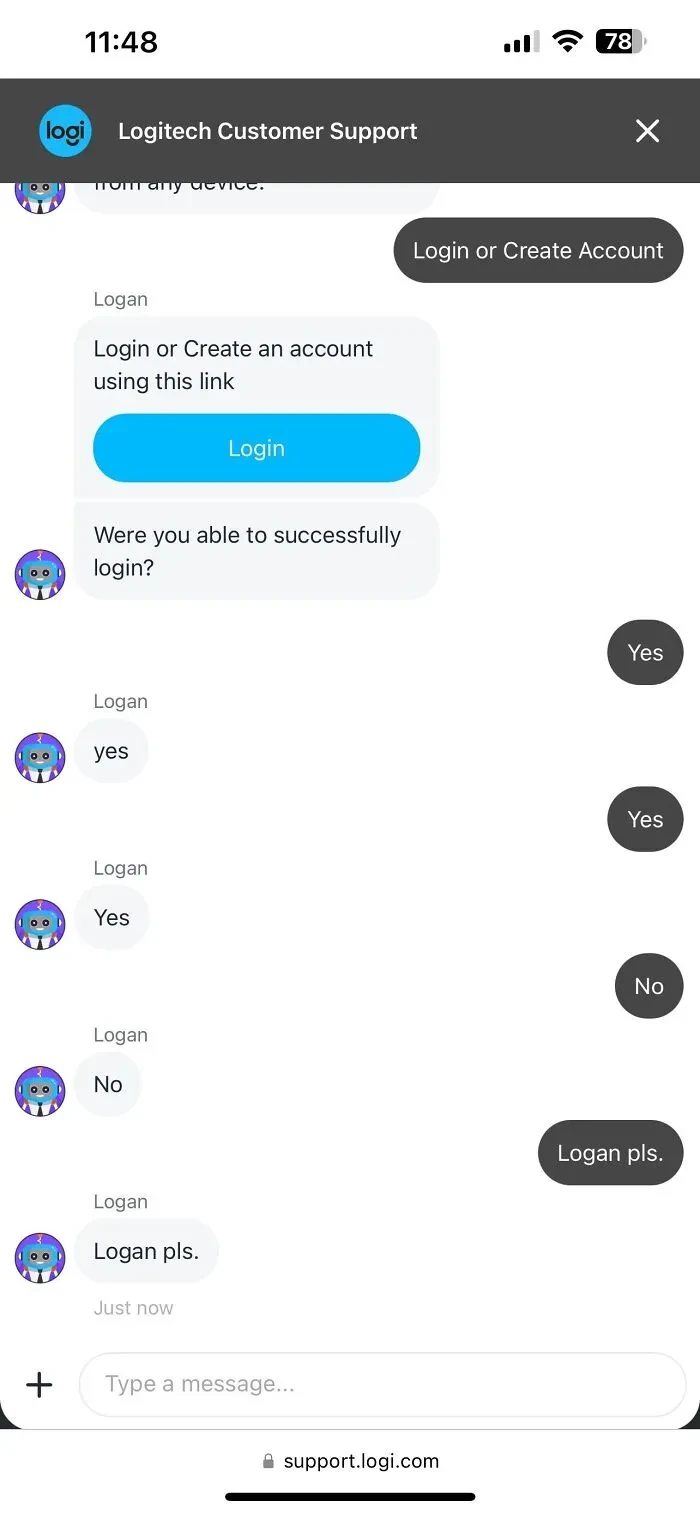
- The Escalation of Absurdity: The bot or the disinterested representative continues to offer responses that lack logic—such as offering a refund for a long-past service or failing to provide a solution after hours of waiting.
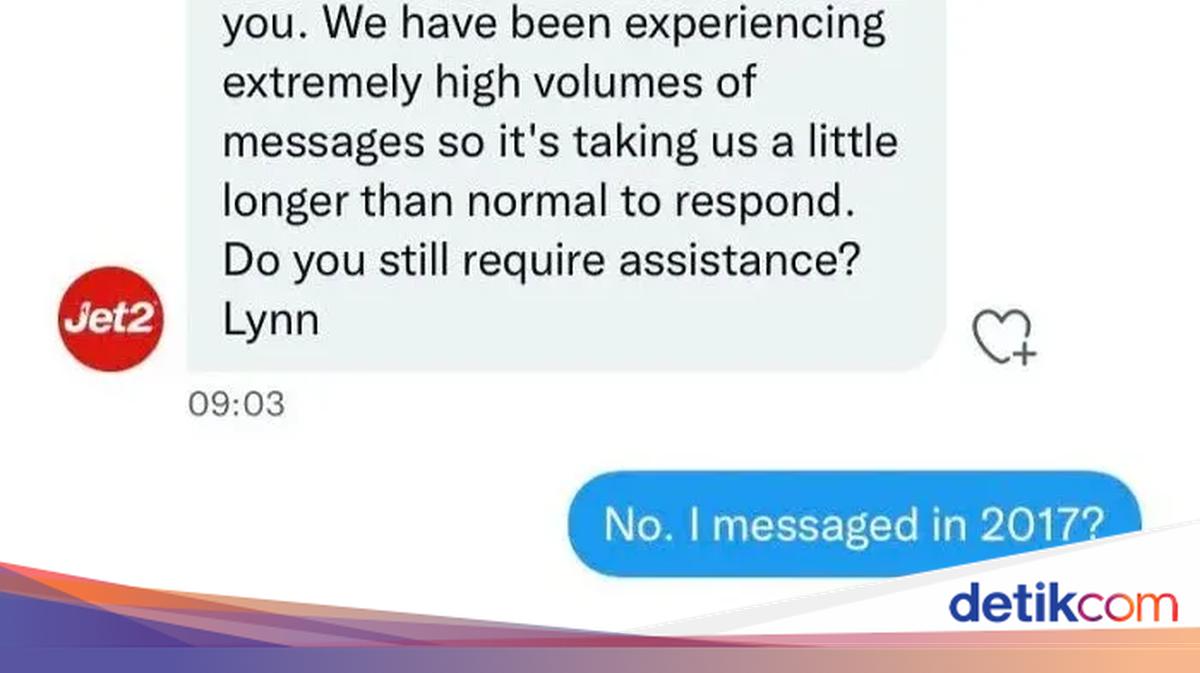
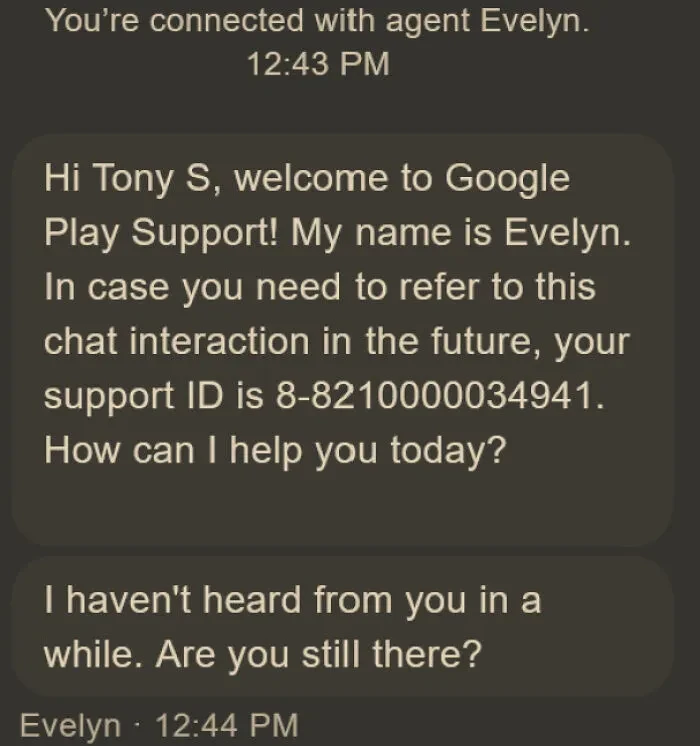
- Termination: The interaction ends abruptly, often initiated by the support agent due to inactivity, even if the agent themselves was the source of the delay.
Analyzing the "Tone-Deaf" Interaction
One of the most frequent points of contention in these exchanges is the lack of "empathetic intelligence." When a user reports a sensitive event—such as a death in the family—the response often defaults to an automated "Welcome" or a generic, scripted prompt. This creates a psychological disconnect. Psychologically, humans expect a degree of reciprocal empathy during communication. When that expectation is met with a cold, repetitive, and unrelated script, the result is "communicative dissonance."
The data provided by these user-reported screenshots shows a recurring trend of "time-gating." Agents, whether human or automated, often pressure the user for a response within a 60-second window, yet they frequently take several minutes to respond themselves. This power imbalance—where the institution dictates the terms of engagement while providing minimal value—is a significant driver of the "emotional-amusement" hybrid reaction observed in consumers.
Supporting Data and Industry Trends
To understand why these failures persist, one must examine the metrics that dictate modern call center operations. Customer Service Representatives (CSRs) are often evaluated on Average Handling Time (AHT) and First Contact Resolution (FCR). In a high-pressure environment, an agent might prioritize closing a chat window to meet an AHT target, even if the issue remains unresolved.
Furthermore, the integration of AI has created a "False Proficiency" trap. Companies often implement AI systems that are not yet capable of handling edge cases. When an AI hits a roadblock, it often defaults to its most basic, pre-programmed responses to avoid giving an incorrect answer, which leads to the "Welcome" messages or irrelevant prompts that users find so aggravating.

Broader Impact on Brand Loyalty
The implications of these failures extend far beyond a single disgruntled customer. In the age of social media, these screenshots do not remain private. They are frequently shared on platforms like X (formerly Twitter), Reddit, and Instagram, where they can reach millions of people. A viral post featuring a tone-deaf customer service interaction can cause irreparable damage to a brand’s reputation.
Brand equity is increasingly tied to the "humanity" of a company. When a customer feels that a company is using technology to intentionally obfuscate or avoid accountability, the relationship shifts from one of partnership to one of antagonism. According to a study by Salesforce, 76% of customers expect companies to understand their needs and expectations, yet only 51% feel that companies are doing so.
Official Responses and the Future of Support
Industry leaders have begun to recognize this friction. Many major corporations are now experimenting with "Human-in-the-Loop" (HITL) architectures. This approach mandates that if an AI system fails to provide a satisfactory answer after two consecutive attempts, the conversation is automatically transferred to a human supervisor.
However, the cost of staffing high-quality human support remains a significant hurdle for many mid-to-large enterprises. As a result, the "middle ground" of customer support remains a chaotic space where users are forced to navigate the limitations of current technology. Experts suggest that the future of customer service lies in "Augmented Intelligence"—where AI acts as a tool to help human agents find information faster, rather than replacing the human element entirely.
Implications for the Consumer
For the average consumer, these interactions serve as a reminder of the limitations of our current digital infrastructure. While convenience is the primary driver of technological adoption, the trade-off is often a reduction in the quality of service. When an issue requires nuance, empathy, or complex reasoning, automated systems are currently ill-equipped to handle the load.
The humor found in these viral exchanges is, in many ways, a defense mechanism. By laughing at the absurdity of a bot responding to a tragedy with a generic welcome, the consumer reclaims a sense of agency. They recognize the failure for what it is—a systemic glitch rather than a personal slight—and share the experience to warn others or simply to find solidarity in the shared frustration of the modern digital experience.
Conclusion
The evolution of customer service is a balancing act between speed and quality. As companies push further into the integration of artificial intelligence, they must prioritize the development of systems that are not only efficient but also context-aware and inherently respectful of the human experience. Until such time as these systems are refined, the gap between consumer expectation and corporate delivery will continue to produce the kind of bizarre, infuriating, and often hilarious interactions that serve as a cautionary tale for the digital age. For now, the best strategy for consumers remains one of patience, clear documentation of issues, and the understanding that when technology fails, the human response is often to laugh at the absurdity of it all.