Queen Suthida of Thailand Makes History as the First Queen in the World to Solo Pilot a Gripen Fighter Jet

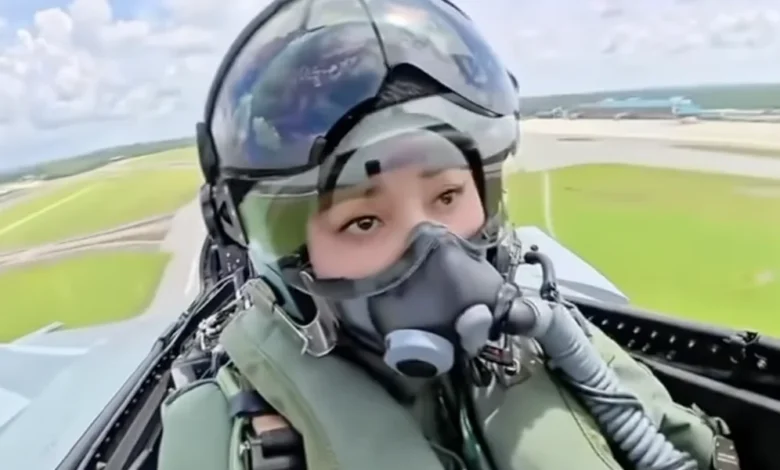
Queen Suthida of Thailand has etched her name into global aviation and royal history by becoming the first reigning queen in the world to pilot a supersonic fighter jet entirely on her own. In a remarkable feat of military precision and personal dedication, the 48-year-old monarch successfully flew a JAS 39C Gripen fighter aircraft solo for 41 minutes. This unprecedented achievement not only highlights her extensive training and commitment to the Royal Thai Armed Forces but also shatters long-standing gender and status barriers within military aviation.
The historic flight took place on October 8, 2026, capturing international media attention and earning widespread admiration from aviation experts, military officials, and citizens alike. Following her successful landing at a military installation, Queen Suthida was greeted warmly by her husband, King Maha Vajiralongkorn, who witnessed the landmark milestone.
This monumental event underscores a multifaceted life journey that bridges commercial aviation, rigorous military service, and royal responsibilities, establishing a new paradigm for modern leadership within monarchies.
Main Facts and Historic Milestone
The core of this historic event centers on the technical complexity and prestige of operating a JAS 39C Gripen, a lightweight single-engine multirole fighter jet developed by the Swedish aerospace company Saab. Known for its advanced avionics, Mach 2 capabilities, and rigorous operational demands, the Gripen is among the most sophisticated fighter aircraft in modern military arsenals.
By piloting the aircraft solo for 41 minutes, Queen Suthida demonstrated exceptional proficiency, spatial awareness, and adherence to stringent military flight protocols. According to reports from The Telegraph and military observers, this achievement also marks another significant milestone: she is recognized as the first female pilot in Thailand to successfully fly the Gripen platform.
The public reception of the event has been overwhelmingly positive. Defense analysts and royal commentators have noted that Queen Suthida’s active participation in high-risk military operations serves to strengthen the public bond between the Thai monarchy and the nation’s armed forces.
Chronology of Queen Suthida’s Aviation and Military Career
Queen Suthida’s path to the cockpit of a fighter jet is the culmination of decades of disciplined professional development, spanning commercial aviation, military hierarchy, and royal duties.
The timeline of her career illustrates a steady progression of leadership and skill acquisition:
- Early 2000s (2000–2003): Suthida initiated her professional life in the commercial aviation sector, working as a flight attendant for Japan Airlines after completing her higher education.
- Mid-2000s (2003–2008): She transitioned to Thai Airways International, continuing her career in commercial aviation and gaining invaluable exposure to international aviation standards and passenger operations.
- 2010: Her deep-seated interest in military aviation manifested when she began training on a Cessna T-41D military trainer aircraft in Bangkok, laying the technical foundation for her future military career.
- 2016: Suthida entered official military service within the royal security apparatus, ascending rapidly through the ranks to achieve the status of general. That same year, she was appointed as the deputy commander of the Royal Security Command.
- May 2019: On May 1, she married King Maha Vajiralongkorn. Days later, during the official coronation ceremonies held on May 4, she was formally proclaimed as the Queen of Thailand.
- September 2026: Demonstrating her dual role as a royal consort and a qualified aviator, Queen Suthida served as a co-pilot alongside King Maha Vajiralongkorn during an official state visit to Vietnam.
- October 8, 2026: She achieved global distinction by solo piloting the JAS 39C Gripen fighter jet for 41 minutes, cementing her status as a pioneering aviator.
Supporting Data and Aviation Credentials
To fully appreciate the gravity of Queen Suthida’s recent flight, one must examine her extensive background in aviation, which extends far beyond ceremonial participation.
Queen Suthida is an academic graduate of Assumption University in Bangkok, where she earned a bachelor’s degree in communication arts. However, her true passion gravitated toward the skies. Over the course of nearly two decades, she has accumulated significant credentials that rival those of professional commercial and military pilots:
- Total Flight Hours: By October 2026, her cumulative flight hours across multiple aircraft platforms had exceeded 1,188 hours.
- Commercial Expertise: She holds a valid commercial pilot license and possesses specific operational qualifications for the Boeing 737 family of aircraft.
- Boeing 737 Experience: Out of her total flight time, she has logged more than 450 hours specifically piloting the Boeing 737-800, demonstrating high-level competency in managing complex civil transport aircraft.
- Military Training: Her training regimen has encompassed both domestic facilities in Thailand and specialized instruction abroad, allowing her to transition seamlessly from commercial airliners to military trainers and, ultimately, supersonic fighter jets.
This robust data illustrates that the Queen’s recent flight was not a symbolic photo opportunity, but the logical culmination of rigorous, multi-year flight training that meets the strict safety and operational standards of modern air forces.
Official Responses and Public Reaction
While direct statements from the Royal Palace regarding the internal mechanics of the training program remain measured—in accordance with royal protocol—the symbolic impact of the event has resonated widely across official channels and international media.
Military officials within the Royal Thai Air Force (RTAF) have privately and publicly acknowledged the dedication required to master a platform as demanding as the Gripen. Aviation safety experts have praised the transparency and adherence to protocol that accompanied the flight, noting that military authorities would not permit such an operation without absolute confidence in the pilot’s technical competence.
Domestically, the reaction among the Thai populace has been one of immense pride. State media and official social media channels, including the verified @thairoyalfamily Instagram account, documented the historic landing and the celebratory exchange between the King and Queen. Commentators have emphasized that Queen Suthida’s hands-on approach to military readiness provides a modern, dynamic image of the monarchy—one that actively participates in the nation’s defense capabilities.
Internationally, major news outlets have highlighted the novelty of a reigning queen operating a front-line combat aircraft. Aviation forums and global defense publications have analyzed the event from a technical standpoint, noting the rarity of non-career military personnel—let alone members of reigning royal families—achieving solo certification on modern fourth-generation fighter jets.
Broader Impact and Implications
The implications of Queen Suthida’s historic flight extend across several domains, influencing perceptions of gender roles in the military, the evolving nature of modern monarchies, and civil-military relations.
First, the achievement serves as a powerful milestone for women in aviation and military service. By commanding a supersonic fighter jet—a domain historically dominated by men—Queen Suthida sets a compelling precedent for female aviators globally. In countries across Southeast Asia and beyond, her success is expected to inspire greater participation of women in STEM (Science, Technology, Engineering, and Mathematics) fields, aerospace engineering, and defense careers.
Second, the event redefines the traditional archetype of a royal consort. Rather than remaining purely a figurehead focused on charitable and cultural engagements, Queen Suthida has demonstrated physical vigor, technical aptitude, and direct engagement with national defense assets. This duality strengthens the institution of the monarchy by aligning it with values of competence, discipline, and active national service.
Finally, from a diplomatic and defense perspective, the event highlights the operational readiness and training standards of the Royal Thai Air Force. Operating advanced platforms like the JAS 39C Gripen requires world-class maintenance, tactical training, and safety infrastructure. By successfully integrating into this ecosystem, the Queen has inadvertently showcased the sophistication of Thailand’s military training programs to the international community.
As global aviation history books are updated to reflect the events of October 2026, Queen Suthida’s 41-minute flight in the skies above Thailand will be remembered not merely as a royal novelty, but as a genuine feat of aviation skill, breaking boundaries that had remained unchallenged until now.