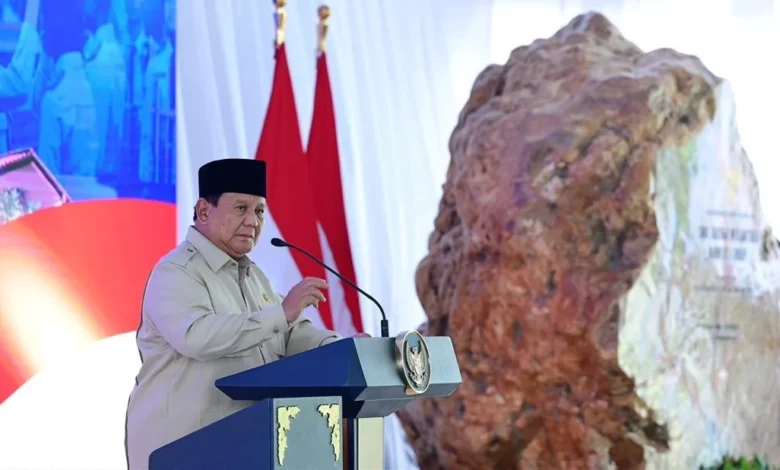
The Southeast Asia Freedom of Expression Network (SAFEnet), a prominent digital rights advocacy organization, has made a provocative entry into the national discourse surrounding the high-profile illegal wiretapping scandal involving President Prabowo Subianto. In a statement released via the platform X on Tuesday, November 3, 2026, the organization extended a formal invitation to the President to utilize its official complaint channel to report the violation of his digital privacy. Furthermore, the organization offered the same legal and advocacy support to former National Police Chief Listyo Sigit Prabowo, who has been named a primary suspect in the unfolding investigation, should he believe his own digital rights were infringed upon during the legal proceedings against him.
This ironic gesture by SAFEnet underscores a profound crisis in the integrity of Indonesia’s state-operated surveillance infrastructure. By inviting both the head of state—the purported victim—and the former police chief—the accused—to report their grievances through the same civil society portal, SAFEnet is highlighting the universal nature of the right to privacy in the digital age.
Chronology of a Security Breach
The scandal, which has sent shockwaves through the Indonesian political establishment, centers on the misuse of the Lawful Interception Management System (LIMS). According to briefings provided by the Criminal Investigation Agency of the National Police (Bareskrim Polri), the unauthorized surveillance operations were conducted over a period spanning 2025 to 2026.
Investigations led by Bareskrim Chief Commissioner General Asep Safrudin reveal that the system, which is designed for legitimate law enforcement interception, was bypassed to monitor high-ranking officials and public figures. The investigation identified that several telephone numbers were injected into the LIMS database without the mandatory verification protocols.
The timeline of the investigation accelerated in October 2026, when forensic digital analysts discovered evidence of a systematic effort to wipe the server logs associated with the illegal interceptions. This attempt to destroy evidence prompted the swift naming of three high-ranking officials as suspects: former National Police Chief Listyo Sigit Prabowo, Inspector General Ahrie Sonta Nasution, and Inspector General Eko Hadi Santoso.
The Scope of the Surveillance Network
The implications of this breach extend far beyond the Office of the President. Initial findings suggest that the scope of the surveillance was wide-reaching, targeting a diverse demographic that included journalists, political activists, civil society organizations, and prominent business leaders. The "silent monitoring" of these individuals suggests a calculated effort to gather intelligence, potentially for political leverage or economic coercion.
The use of LIMS for such purposes constitutes a major failure in institutional oversight. In a democratic framework, the use of interception technology is strictly governed by the Criminal Procedure Code and specific statutes within the Electronic Information and Transactions (ITE) Law. When these systems are weaponized without a court warrant or an active criminal investigation, the state effectively violates the constitutional right to privacy afforded to every citizen.
Digital Rights in the Spotlight
SAFEnet’s involvement provides a necessary counterbalance to the state-controlled narrative. By providing a public portal (aduan.safenet.or.id) for victims of digital rights violations, the organization has created a mechanism for transparency that is otherwise absent in cases involving state intelligence failures.
"The protection of privacy is not a privilege reserved for the political elite," stated a spokesperson for the organization. "If the President can be targeted by his own security infrastructure, the vulnerability of the average citizen is exponentially higher."
The organization’s call to action is based on the principle that if any individual, regardless of their status or their current legal standing, feels that their communications have been accessed through illegal means, they are entitled to a due process of reporting. This is particularly relevant for the accused in this case, who may argue that their rights were violated if the procedures used to gather evidence against them also bypassed established legal norms.
The Technical and Legal Dilemma
The LIMS architecture is meant to be a secure, audited, and highly regulated tool. The ability of a small group of high-ranking officials to compromise this system points to a critical lack of "checks and balances" within the police and intelligence apparatus.
Legal experts have pointed out that the current legislative framework governing surveillance in Indonesia is increasingly inadequate to address modern, sophisticated cyber-intrusions. While the ITE Law provides penalties for illegal access, it is often utilized to criminalize speech rather than to protect the integrity of digital communications. The current scandal presents a paradox: the law intended to prosecute those who commit illegal access is now being applied to the very people who were tasked with operating the state’s most powerful access tools.
Furthermore, the act of "wiping data" in October 2026 suggests a sophisticated understanding of the digital footprint left by LIMS. Forensic experts are now struggling to reconstruct the timeline of who was listening to whom, and for what purpose. The loss of this data may hinder the ability of the courts to fully prosecute the actors involved, potentially leaving many victims without a clear understanding of the extent to which their private lives were exposed.
Broader Implications for Indonesian Governance
The incident has triggered a debate regarding the reform of security agencies. There is growing public demand for a more transparent oversight mechanism for all state-sanctioned surveillance tools. Analysts suggest that the following steps are necessary to restore public trust:
- Independent Audit: An independent commission, comprised of representatives from the judiciary, academia, and civil society, must be tasked with reviewing the logs and operations of the LIMS system.
- Strict Judicial Authorization: Any future use of interception technology must be tied to a transparent, court-ordered warrant process, with a digital audit trail that cannot be deleted by the operational units.
- Legislative Review: The parliament should move to clarify the definition of "lawful" in the context of digital interception, removing vague clauses that currently allow for broad interpretations.
Assessing the Political Fallout
For President Prabowo, the situation is delicate. As the ultimate victim of the breach, his administration must now balance the need for a thorough investigation with the risk of exposing deeper systemic weaknesses within the state’s security apparatus. The involvement of a former National Police Chief as a suspect in a plot to wiretap the President signals a deep fragmentation within the upper echelons of the security sector.
Whether the President chooses to formally engage with civil society organizations like SAFEnet remains to be seen. However, the optics of the situation have already placed the issue of digital privacy at the center of the national agenda. For the public, the question is no longer just about the actions of the three suspects, but about the security of their own digital lives in an era where the state’s tools can be turned against anyone.
As the judicial process continues, the case of the "wiretapped President" will likely serve as a landmark study in the dangers of unbridled surveillance power. The call from SAFEnet, while satirical in tone, hits on a grave reality: in a world of pervasive technology, the line between law enforcement and illegal intrusion is thin, and the consequences of crossing it are profound.
The public now waits for the next phase of the investigation, which promises to shed more light on the motivations behind the surveillance and whether this breach was an isolated incident or part of a more systemic trend within the Indonesian security establishment. For now, the digital rights community continues to monitor the situation, urging for transparency, accountability, and the protection of privacy for all, regardless of their position in the corridors of power.