
5 Negara yang Paling Besar Berinvestasi di Infrastruktur Kereta Api, Juaranya Adalah China

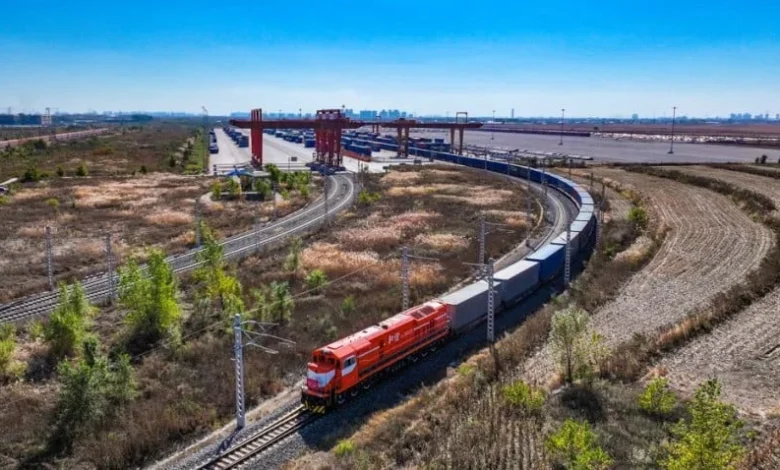
The global landscape of transportation infrastructure is currently defined by a stark divergence in capital allocation, with railway development serving as the primary benchmark for national industrial modernization. Among the various sectors of civil engineering, rail infrastructure stands as arguably the most capital-intensive undertaking a state can pursue. Data from the International Transport Forum (ITF), an intergovernmental organization operating under the auspices of the OECD, reveals a significant chasm between the world’s most prolific spenders and the rest of the international community. China, in particular, has emerged as a global hegemon in this sector, consistently outstripping its peers in fiscal commitment, technical expansion, and network integration.
This analytical overview examines the current hierarchy of global rail investment, the strategic drivers behind these expenditures, and the profound economic implications for nations that prioritize rail connectivity as a pillar of national policy.
The Global Investment Hierarchy
The ITF, which monitors infrastructure investment through surveys of its member nations, defines gross investment to include new construction, network expansion, reconstruction, modernization, and major maintenance works. While national accounting methodologies often vary, the prevailing consensus from recent peer-reviewed studies—drawing upon standardized ITF metrics—confirms that China maintains an unrivaled lead.
As of the latest comparative data for the fiscal year 2021, the top five nations by investment volume were China, Japan, the United Kingdom, France, and Germany. The scale of China’s dominance is best contextualized by the raw figures: in 2021, Beijing invested approximately €92.5 billion into its rail infrastructure. To provide perspective, the combined investment of Japan (€17.0 billion), the United Kingdom (€13.3 billion), France (€11.5 billion), and Germany (€10.1 billion) totals roughly €51.9 billion—barely more than half of China’s solitary contribution.
While nations such as India, Italy, and the United States maintain substantial rail budgets, their reporting frameworks often utilize different fiscal bases, making direct comparison complex. However, even when adjusted for parity, these nations trail the sustained, aggressive capital deployment seen in the Chinese market.
Chronology of China’s Rail Ascendancy
China’s current position is not a sudden development but the result of a multi-decade strategic master plan. The transformation began in earnest in the early 2000s, driven by the need to bridge the economic gap between the coastal manufacturing hubs and the interior provinces.
- 2008: The inauguration of the Beijing-Tianjin Intercity Railway marked the beginning of China’s high-speed rail (HSR) era, signaling a pivot toward mass transit connectivity.
- 2011-2015: The "12th Five-Year Plan" saw a massive acceleration in the construction of a high-speed backbone, connecting major provincial capitals.
- 2018: A landmark year in global rail statistics, where China accounted for 52% of the total infrastructure investment among 42 surveyed nations, investing approximately €101 billion.
- 2021-2025: A period of sustained record-breaking growth. China State Railway Group reported that total fixed-asset investment reached 901.5 billion yuan (approximately USD 128.9 billion) in 2025, representing a 6% year-on-year increase.
- 2026: The sector began a transition toward optimization. Data from the first three quarters of 2026 indicates an investment of 601.2 billion yuan (approximately USD 89 billion), suggesting a strategic move from rapid expansion to maintenance and efficiency-driven upgrades.
The Strategic Drivers of Rail Investment
The motivation behind China’s rail spending is multifaceted. Unlike many Western nations, where rail projects are frequently subjected to intense public scrutiny regarding cost-benefit ratios and environmental impact assessments, China views rail infrastructure as an essential public good and a catalyst for regional economic parity.
The "High-Speed Rail (HSR) Strategy" is designed to create a "four-vertical and four-horizontal" network that effectively integrates the country into a single, cohesive economic zone. By reducing travel time between Tier-1 and Tier-2 cities, the government has successfully stimulated the growth of satellite cities and facilitated the movement of labor and goods, effectively decentralizing the economy from hyper-congested coastal centers.
Furthermore, the integration of rail with other forms of transportation is a core objective. The ITF notes that in 2020, rail investment accounted for roughly 15% of the total combined spending on rail and road infrastructure in China. This indicates a balanced approach, where rail serves as the backbone for intercity travel while roads manage last-mile logistics.
Comparative Analysis: The Top Five
The disparity in the top five nations highlights different economic priorities:
- China (€92.5 billion): Prioritizes total coverage and speed. The network expansion between 2021 and 2025 saw the operational rail length increase from 146,300 kilometers to 165,000 kilometers, with high-speed rail alone growing from 37,900 kilometers to 50,400 kilometers.
- Japan (€17.0 billion): Focuses heavily on the maintenance and modernization of the Shinkansen network and urban rail systems in Tokyo and Osaka, emphasizing precision and reliability over rapid expansion.
- United Kingdom (€13.3 billion): Investment is largely directed toward major projects such as HS2 (High Speed 2), intended to increase capacity on the West Coast Main Line, though the project has faced significant budgetary and political challenges.
- France (€11.5 billion): Concentrates on the upkeep of the TGV network and the "Grand Paris" project, which aims to improve suburban connectivity in the capital region.
- Germany (€10.1 billion): Currently undergoing a massive "General Sanierung" (general renovation) of its existing rail network to improve punctuality and energy efficiency, acknowledging years of deferred maintenance.
Economic and Societal Implications
The implications of such massive infrastructure spending are profound. For China, the rail network serves as a macro-economic stabilizer. During periods of economic volatility, the government has historically utilized rail construction as a counter-cyclical tool to maintain employment levels and sustain GDP growth.
From an environmental perspective, the shift toward rail is consistent with China’s "Dual Carbon" goals—peaking carbon emissions by 2030 and achieving carbon neutrality by 2060. Rail travel is significantly more energy-efficient per passenger-kilometer than domestic air travel or road transport. By building the world’s largest high-speed rail network, China has effectively created a cleaner, more efficient substitute for short-to-medium-haul flights.
However, the rapid pace of development has also invited critique. International financial institutions, including the World Bank, have noted that while the high-speed network has generated significant societal benefits, the high debt levels incurred by the China State Railway Group present a long-term fiscal challenge. The sustainability of this model depends on the continued growth of passenger ridership and the ability of the network to generate secondary economic benefits through real estate development around rail hubs—a model often referred to as "Transit-Oriented Development" (TOD).
The Outlook for Global Rail Development
As of late 2026, the global trend in rail investment is beginning to shift. While China remains the undisputed leader, its spending is normalizing, reflecting a shift from the "building" phase to the "managing" phase. Other nations are slowly increasing their investment, partly as a response to climate change imperatives and the need for more resilient transportation networks.
The lessons learned from the Chinese model—specifically regarding standardized engineering, centralized planning, and the aggressive pursuit of network effect—are now being analyzed by nations in Southeast Asia, the Middle East, and Europe. Whether these nations can replicate the efficiency of the Chinese infrastructure engine remains a subject of intense debate among economists.
In conclusion, the data provided by the ITF and national railway operators paints a clear picture: rail infrastructure remains the primary vessel for national ambition in the 21st century. While China’s massive investment has set a benchmark that few are currently prepared to meet, the global trajectory of transport policy is moving steadily toward rail, driven by the dual requirements of economic integration and environmental sustainability. The coming decade will likely be defined by how well these nations can optimize their existing assets to serve an increasingly mobile and environmentally conscious global population.