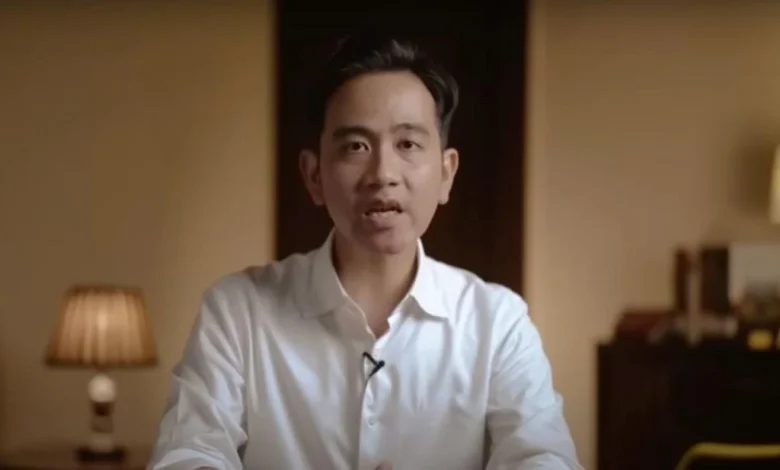
The legal saga surrounding the educational background and high school equivalency documents of Vice President Gibran Rakabuming Raka has culminated in a landmark Supreme Court decision, bringing a multi-layered controversy back into the national spotlight. Over several years, the validity of Vice President Gibran’s high school credentials has been challenged across multiple judicial forums, navigating through the civil courts, the administrative court system, the Constitutional Court, and ultimately reaching the Supreme Court of Indonesia.
The controversy specifically centers on the Surat Keterangan (SK) Penyetaraan Pendidikan SMA—an official high school education equivalency certificate—issued by the Ministry of Education. Critics and legal challengers have consistently questioned the legitimacy of these documents, which were utilized to fulfill administrative requirements during Gibran’s registration as a vice-presidential candidate for the 2024 general elections. The progressive sequence of judicial reviews provides a comprehensive window into how institutional checks and balances handle high-stakes political disputes in contemporary Indonesian jurisprudence.
The Supreme Court Breakthrough and Final Cassation Ruling
The most recent and definitive development in this protracted legal battle occurred on Friday, October 30, 2026. The Supreme Court (Mahkamah Agung – MA) officially granted a cassation appeal filed by a citizen named Subhan, marking a major turning point in the dispute over the validity of Gibran’s high school equivalency document.
According to the official Supreme Court directory, the bench—led by presiding judge Yulius alongside members Maftuh Effendi and Hari Sugiharto—nullified the previous lower court rulings and ruled entirely in favor of the plaintiff. Under case number 742 K/TUN/2026, the Supreme Court declared the educational equivalency letter issued for Gibran to be legally invalid and revoked it entirely.
"Grant the cassation. Annul the judex facti decision. Try it ourselves: grant the plaintiff’s claim in its entirety," read the official summary published on the Supreme Court’s website.
This ruling effectively overturns the previous administrative court decisions that had previously dismissed or rejected the challenges, setting a profound precedent regarding administrative accountability and the verification of credentials for high-ranking state officials.
Chronological Timeline of the Legal Challenges
To fully understand the complexity of the disputes surrounding Vice President Gibran Rakabuming Raka’s educational documentation, it is essential to trace the sequential pathway of the lawsuits filed across Indonesia’s judicial architecture.
1. The Initial Filing at the Central Jakarta District Court
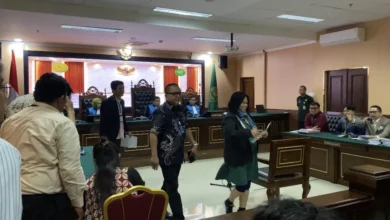
The legal journey began in August 2025 when Subhan initiated a civil lawsuit at the Central Jakarta District Court (Pengadilan Negeri Jakarta Pusat). The core of this civil suit challenged the authenticity and legal standing of the high school diploma and equivalency documents Gibran used to meet the General Election Commission’s (KPU) candidacy criteria for the 2024 presidential race.
However, the litigation hit a procedural roadblock in December 2025. The Central Jakarta District Court panel of judges granted exceptions raised by the defendants—including Gibran and the KPU—ruling that the district court lacked the absolute competence and jurisdiction to adjudicate the civil matter.
Sunoto, serving as the spokesperson for the Central Jakarta District Court, explained the legal basis for the dismissal to journalists on Monday, December 22, 2025. He stated that the court’s decision explicitly declared that the district court had no authority to try the case, thereby terminating the proceedings at the first instance of civil court while leaving open the possibility of alternative legal remedies.
2. Shifting Arena: The Jakarta State Administrative Court (PTUN)
Following the dismissal at the district court, Subhan pivoted his legal strategy toward the administrative justice system. He filed a formal lawsuit at the Jakarta State Administrative Court (PTUN Jakarta), this time targeting the Ministry of Primary and Secondary Education (Kemendikdasmen) regarding the official issuance of Gibran’s education equivalency certificate.
Within his administrative petition, Subhan formally demanded the court to:
- Grant the plaintiff’s lawsuit in its entirety.
- Declare Letter Number: 9149/D.D1/KS/2019, issued in Jakarta on August 6, 2019, by the Directorate General of Primary and Secondary Education, as legally invalid and void ab initio (canceled by law).
- Order the immediate seizure and confiscation of the said equivalency letter from the party holding it for subsequent destruction.
- Order the defendant to bear all court and administrative litigation costs.
In May 2026, the Jakarta PTUN delivered its verdict, ruling that Subhan’s lawsuit was unacceptable, legally categorized as niet ontvankelijke verklaard (NO).
3. Appellate Review at the Jakarta High State Administrative Court (PT TUN)
Undeterred by the initial setback at the administrative court of first instance, Subhan pursued an appeal at the Jakarta High State Administrative Court (PT TUN Jakarta).
On August 12, 2026, the appellate court handed down its decision, ultimately reinforcing and strengthening the previous ruling issued by the Jakarta PTUN. The appellate judges determined that the legal standing or procedural arguments presented in the appeal were insufficient to overturn the lower court’s dismissal, leaving the administrative decision intact at the appellate tier.
4. The Constitutional Court (MK) Interlude
Concurrently, parallel legal pressure was applied through the constitutional framework. Subhan, alongside prominent legal scholar Denny Indrayana and several other petitioners, brought a formal challenge before the Constitutional Court (Mahkamah Konstitusi – MK) concerning the dispute over the 2024 presidential election results.
The twelve petitioners explicitly questioned whether Gibran had legitimately met the statutory educational qualifications required of vice-presidential candidates. Because this petition was tied directly to the electoral dispute mechanism rather than standard administrative law, it was processed through the Constitutional Court.
On October 6, 2026, the Constitutional Court dismissed the petition, issuing another niet ontvankelijke verklaard (NO) ruling. The MK reasoned that the petitioners lacked the requisite legal standing (legal standing), noting they did not qualify as a contesting presidential ticket in the election.
Nevertheless, the Constitutional Court’s legal considerations generated significant public discussion. The MK noted that during its examination, it found no convincing documentary proof demonstrating that Gibran possessed a foreign high school diploma, certificate, or equivalent degree. Instead, the court highlighted that records presented only indicated a certificate of attendance, sparking widespread debate among constitutional law experts regarding the precise compliance of the candidate’s educational verification.
5. Parallel Administrative Actions Involving Corporate Litigants
Beyond Subhan’s individual campaign, the validity of Gibran’s educational equivalency paperwork also drew challenges from other entities. Notably, PT Mercy Toga Kirana lodged a separate administrative lawsuit at the Jakarta PTUN with a similar petition aimed at revoking the ministerial equivalency letter.
Although the proceedings initially progressed, the corporate plaintiff ultimately chose to withdraw the lawsuit. Representatives stated that the decision to retract the legal motion stemmed from the Ministry of Primary and Secondary Education’s alleged failure to produce and disclose the specific administrative documents requested during the discovery and trial phases.
Broader Context and Political Implications
The succession of rulings regarding Vice President Gibran Rakabuming Raka’s educational background highlights the intricate intersection between administrative bureaucracy, election law, and judicial review in Indonesia. While political contests are typically settled once election results are certified and administrations are inaugurated, questions regarding administrative compliance and the verification of credentials continue to occupy the judicial landscape.
The Supreme Court’s final decision to grant Subhan’s cassation and nullify the high school equivalency letter introduces complex questions concerning administrative governance. Legal analysts note that while the ruling directly impacts the legality of the specific ministerial certificate issued in 2019, its immediate political and constitutional consequences for an active sitting vice president remain a subject of rigorous debate among constitutional scholars.
As civil society groups and legal experts analyze the cascading effects of the Supreme Court’s verdict, the case underscores the vital importance of rigorous institutional transparency, documentary verification, and adherence to administrative standards within the highest tiers of public service.