Prabowo Bertemu 250 Pengusaha, Investasi Dalam Negeri Tembus Rp2.000 Triliun Selama 2 Tahun

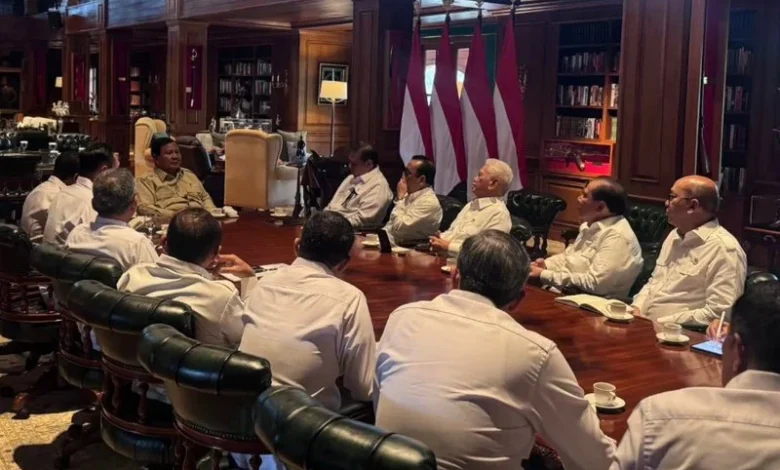
President Prabowo Subianto convened a high-level strategic meeting with 250 prominent business leaders representing the Indonesian Chamber of Commerce and Industry (Kadin) on October 31, 2026. The gathering, held at the President’s residence in Hambalang, Bogor, served as a pivotal platform to review the nation’s economic performance two years into the current administration. Beyond the engagement with the business community, the President also met with 400 participants of the Presidential Program for Future Indonesian Leaders (P3MDI), highlighting a dual focus on current economic stability and long-term human capital development.
The highlight of the meeting was the announcement by Kadin Chairman Anindya Bakrie, who reported that Domestic Direct Investment (PMDN) has surged to nearly Rp2,000 trillion over the past two years. This figure marks a significant milestone, illustrating a robust recovery and growth trajectory in the face of persistent global economic headwinds.
A Landmark Achievement in Domestic Investment
The reported Rp2,000 trillion in domestic investment represents more than just a fiscal milestone; it serves as a litmus test for the private sector’s confidence in the government’s policy framework. According to the data presented by the Kadin leadership, this surge in capital infusion is not limited to large-scale infrastructure projects but is broadly distributed across the domestic landscape, including the crucial involvement of middle-class entrepreneurs.
This influx of capital has been essential in insulating the Indonesian economy from the volatility of global markets. By diversifying the investment base—moving beyond traditional reliance on foreign capital—the administration has successfully fostered an environment where domestic players can contribute significantly to national productivity. The integration of medium-sized enterprises into the national investment ecosystem has provided a multiplier effect, creating jobs and stimulating local demand.
Chronology of Strategic Engagement
The event in Hambalang was the culmination of a series of consultative sessions held throughout 2026. Earlier in the year, the government initiated a dialogue aimed at aligning the national budget priorities with the aspirations of the private sector. The Rapimnas (National Leadership Meeting) of Kadin held in 2026 served as the foundational platform for these discussions.
The progression of this partnership can be traced through several key phases:
- Initial Policy Alignment (Q1 2026): The government focused on streamlining licensing and regulatory hurdles for domestic investors to incentivize capital rotation.
- Expansionary Fiscal Policy (Q2 2026): Tax incentives were recalibrated to favor domestic firms investing in sustainable energy and technology.
- The Hambalang Summit (October 31, 2026): The formal presentation of the two-year economic review, where the Rp2,000 trillion figure was verified and discussed alongside the P3MDI youth development initiative.
Focusing on Future-Proof Industries
During the meeting, the discourse shifted from historical performance to future-oriented industrial policy. Chairman Anindya Bakrie emphasized that the business community is fully aligned with the government’s vision to transition Indonesia into a high-value industrial hub. Specifically, the commitment revolves around three core pillars: electric vehicles (EVs), renewable energy, and data centers.
These sectors are strategic not only for their growth potential but also for their high domestic content requirements (TKDN). By prioritizing industries where local components can be utilized, the government aims to create a closed-loop economic system. This approach is intended to reduce dependency on imported raw materials and technology, thereby improving the trade balance and strengthening the Rupiah in the long run.
"We are not merely looking at the industries of today; we are positioning Indonesia to lead in the industries of tomorrow," Anindya stated. "The focus on EV supply chains, renewable energy infrastructure, and the expansion of digital data centers is consistent with the themes of our Rapimnas: people-centric economic growth and making Indonesia a global player."
Analysis: Implications for the Indonesian Economy
The milestone of Rp2,000 trillion in domestic investment holds several critical implications for Indonesia’s macroeconomic stability:
1. Resilience Against Global Uncertainty
With global markets facing inflationary pressures and geopolitical instability, reliance on domestic investment acts as a buffer. The ability to mobilize internal capital allows the government to pursue economic development without being entirely dictated by the fluctuations of international capital flows or sudden withdrawals by foreign institutional investors.
2. Strengthening the Middle Class
The explicit mention of middle-class business participation suggests a democratization of investment. If this trend continues, it will lead to a more equitable distribution of wealth. By providing the middle class with the tools and regulatory certainty to invest, the government is effectively broadening the base of the national economy.
3. Human Capital and the P3MDI Connection
The simultaneous meeting with 400 P3MDI participants was a deliberate strategic signal. President Prabowo’s administration is clearly linking the immediate investment goals with the long-term goal of fostering a new generation of leaders who can navigate the complexities of a modern, globalized economy. This integration of industrial policy and youth empowerment suggests a focus on sustainable growth that extends well beyond the current term.
Official Responses and Perspectives
While the government has yet to release a detailed breakdown of the sectoral distribution of the Rp2,000 trillion, the Ministry of Investment is expected to publish a comprehensive report in the coming weeks. Economists have largely viewed the figure as a positive indicator of policy continuity.
Market analysts suggest that the "Hambalang meeting" serves to solidify the relationship between the administration and the business elite, reducing the "wait-and-see" approach that often characterizes pre-election or transitional periods. By bringing 250 business leaders into a direct dialogue, the President has sought to minimize bureaucratic friction and align private capital with state goals.
Furthermore, the emphasis on "Indonesia Mendunia" (Indonesia Goes Global) suggests that the government intends to use this strong domestic foundation as a springboard for international trade. By proving that domestic industries—such as EV manufacturing—can meet rigorous standards, Indonesian firms are expected to be more competitive when exporting to ASEAN and beyond.
Challenges Ahead: Sustainability and Execution
Despite the optimistic figures, the path forward is not without challenges. The primary obstacle remains the execution of large-scale infrastructure projects and the consistent enforcement of regulations that favor local components. Investors will be looking for continued transparency and a stable legal environment to ensure that the momentum of the last two years is maintained.
Moreover, the transition toward renewable energy and the expansion of data centers require massive investments in electricity infrastructure and specialized human capital. The P3MDI program is clearly intended to address the latter, but the scale of the required industrial transformation will necessitate ongoing collaboration between the government, private corporations, and educational institutions.
Conclusion
The meeting at Hambalang stands as a clear articulation of the government’s economic philosophy: a blend of domestic investment-led growth, high-tech industrialization, and human capital development. With Rp2,000 trillion in investment realized in just two years, the administration has set a high benchmark for the remainder of its term.
As Indonesia moves into the next phase of its industrial roadmap, the alignment between the public sector’s policy objectives and the private sector’s capital allocation will be the decisive factor in determining whether this growth trajectory can be sustained. For now, the sentiment among the business community remains cautiously optimistic, with a shared commitment to ensuring that the domestic economy not only survives global uncertainty but thrives as a central player in the global market.
The combination of the P3MDI youth leadership initiative with the heavy-hitting investment goals indicates a forward-looking strategy that aims to solidify Indonesia’s position as a G20 economic power. The next few quarters will likely see the tangible results of these investments as new facilities for EVs and data centers begin to come online, potentially setting the stage for a new era of Indonesian industrial prowess.