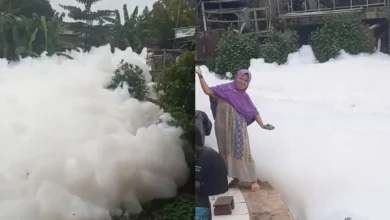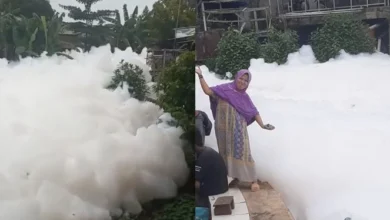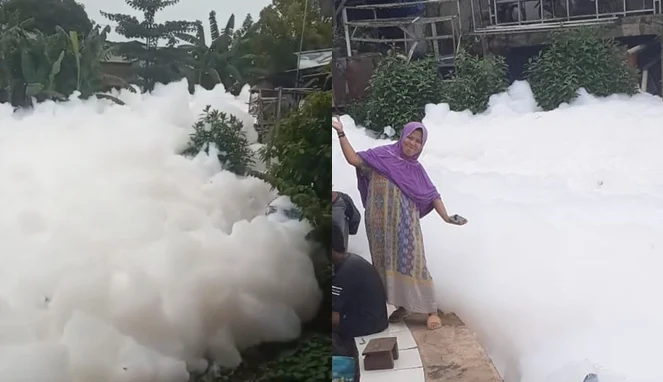
A massive accumulation of thick, white foam paralyzed a river section in Depok, West Java, triggering widespread public concern and drawing immediate attention from local environmental authorities. The incident, which was captured on video and rapidly spread across various social media platforms, highlighted ongoing vulnerabilities in urban river management, domestic waste disposal, and the acute environmental pressures faced by waterways in densely populated areas surrounding Indonesia’s capital region.
Main Facts and Location of the Incident
The phenomenon occurred at Kali Baru, located in Tugu Village, Cimanggis District, Depok City, West Java. The event came to public prominence on Monday afternoon, November 27, 2023, after residents documented the extraordinary sight of a river completely choked by towering layers of dense white foam.
According to eyewitness accounts and viral video footage, the foam was so voluminous that it entirely obscured the underlying body of water. The layer of suds rose to such heights that it spilled over the riverbanks, encroaching upon the immediate surroundings and directly affecting at least five residential homes situated near the river edge. Local residents reported a pungent, chemical-like odor emanating from the foam, which lacked the typical fragrance associated with standard household detergents, indicating a concentrated accumulation of surfactants and chemical agents. Despite the alarming scale of the pollution, the foam reportedly dissipated naturally during the evening hours of the same day.
Chronology of Events
The progression of the pollution followed a distinct timeline observed by locals and documented through digital media:
- Initial Appearance (Monday, November 27, 2023 – Early Afternoon): Residents noted that the foam did not appear instantaneously in its maximum volume. Instead, it began as a sparse layer of bubbles that rapidly multiplied and expanded as it flowed downstream.
- Peak Accumulation (Late Afternoon): By late afternoon, the volume of the foam escalated dramatically. The suds grew several feet high, completely masking the surface of Kali Baru and spilling onto adjacent land, prompting residents to record and upload footage to platforms like TikTok and Instagram.
- Social Media Viral Spread: The video gained traction within hours, capturing the attention of millions of netizens who initially mistook the unusual white mass for an abnormal weather phenomenon, such as fallen snow or low-hanging clouds, before realizing it was industrial or domestic pollution.
- Dissipation (Monday Evening): Environmental conditions caused the massive foam formation to gradually break down and disappear by nightfall, leaving behind standard murky river water, though the underlying pollutants remained suspended in the ecosystem.
- Response and Investigation (Late November 2023): The Office of Environment and Sanitation (Dinas Lingkungan Hidup dan Kebersihan – DLHK) of Depok City initiated an on-site investigation following the widespread circulation of the video.
Official Responses and Environmental Investigations
In the wake of the digital uproar, the Depok City Government through the Department of Environment and Sanitation (DLHK) mobilized inspection teams to determine the root cause of the contamination. Preliminary assessments conducted by environmental officers suggested that the phenomenon was primarily driven by a heavy concentration of domestic waste—specifically surfactants found in cleaning agents, soaps, and laundry detergents—that had accumulated in the river channel over an extended period.
Furthermore, environmental analysts pointed to seasonal factors as a catalyst for the sudden surface eruption. The incident coincided with the transition period from the dry season to the rainy season. An increase in water discharge and shifting currents stirred up settled organic and chemical pollutants, whipping them into a massive lather as the water tumbled through turbulent sections of the river channel.
As part of ongoing regulatory procedures, DLHK announced plans to conduct systematic audits of commercial establishments, local small-scale industries, and residential settlements along the Kali Baru watershed. The objective of these inspections is to trace specific discharge points and ensure compliance with wastewater management regulations. Facilities found illegally dumping untreated greywater or industrial effluent directly into public waterways face administrative sanctions and corrective mandates under Indonesian environmental law.
Broader Environmental and Public Health Implications
The severe foaming incident at Kali Baru serves as a stark symptom of broader systemic challenges facing urban river basins in Jabodetabek (Jakarta, Bogor, Depok, Tangerang, and Bekasi). Rapid urbanization, inadequate sewage infrastructure, and a lack of decentralized wastewater treatment plants mean that a significant portion of domestic greywater enters natural drainage systems untreated.
Environmental scientists emphasize that persistent surfactant pollution poses multifaceted risks to both human health and local ecosystems:
- Aquatic Biodiversity Threat: Thick layers of foam can drastically reduce oxygen transfer across the air-water interface. Coupled with high chemical loads, this suffocates aquatic life, leading to fish kills and the degradation of fragile riverine habitats.
- Public Health Hazards: Rivers heavily polluted with domestic and chemical waste often harbor pathogenic bacteria, heavy metals, and toxic compounds. Direct or indirect contact with contaminated water and airborne spray can cause skin irritations, gastrointestinal illnesses, and respiratory issues among nearby residents.
- Agricultural and Economic Impacts: Many communities and agricultural sectors downstream rely on river networks for irrigation and daily utility. When water quality deteriorates to such extreme levels, crop safety is compromised, and local farming communities suffer economic losses due to unusable irrigation sources.
The Depok foam incident underscores the urgent need for enhanced infrastructural investment in municipal sewerage networks, stricter enforcement of environmental compliance for commercial properties, and heightened public awareness regarding responsible detergent use and waste disposal habits. Without comprehensive, long-term interventions, urban waterways like Kali Baru will remain vulnerable to recurring environmental degradation.