Suzuki XL7: Redefining the Versatility of Modern Family SUVs in the Indonesian Automotive Market

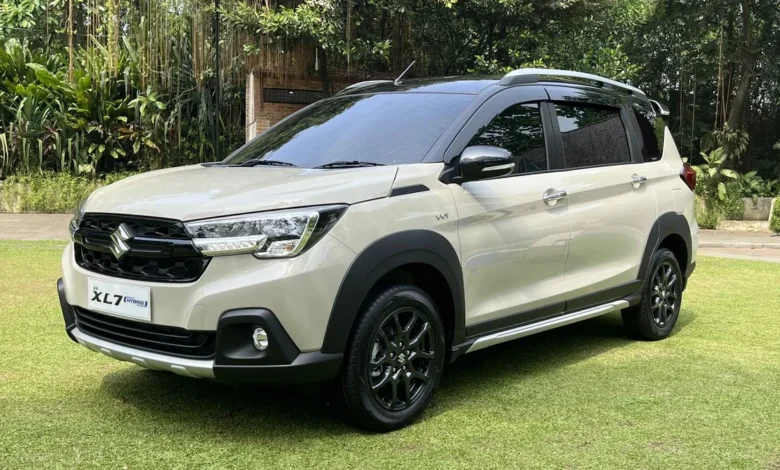
The modern family vehicle landscape in Indonesia has undergone a significant transformation, shifting from traditional Multi-Purpose Vehicles (MPVs) toward more rugged, versatile, and tech-forward Sport Utility Vehicles (SUVs). At the heart of this shift is the Suzuki XL7, a model that has successfully bridged the gap between daily urban functionality and the endurance required for long-distance family excursions. As consumer preferences evolve to demand vehicles that offer both aesthetic appeal and utilitarian capacity, the XL7 has emerged as a strategic solution for families seeking a balance between performance, efficiency, and comfort.
Historical Context and Evolution of the XL7
Suzuki introduced the XL7 to the Indonesian market with the objective of providing an "SUV-styled" MPV that did not compromise on cabin space. The evolution of this model is reflective of Suzuki’s broader global strategy to integrate hybridization into its mass-market lineup. The journey began with the standard internal combustion engine (ICE) variants, which set a benchmark for the segment’s ground clearance and cabin volume.
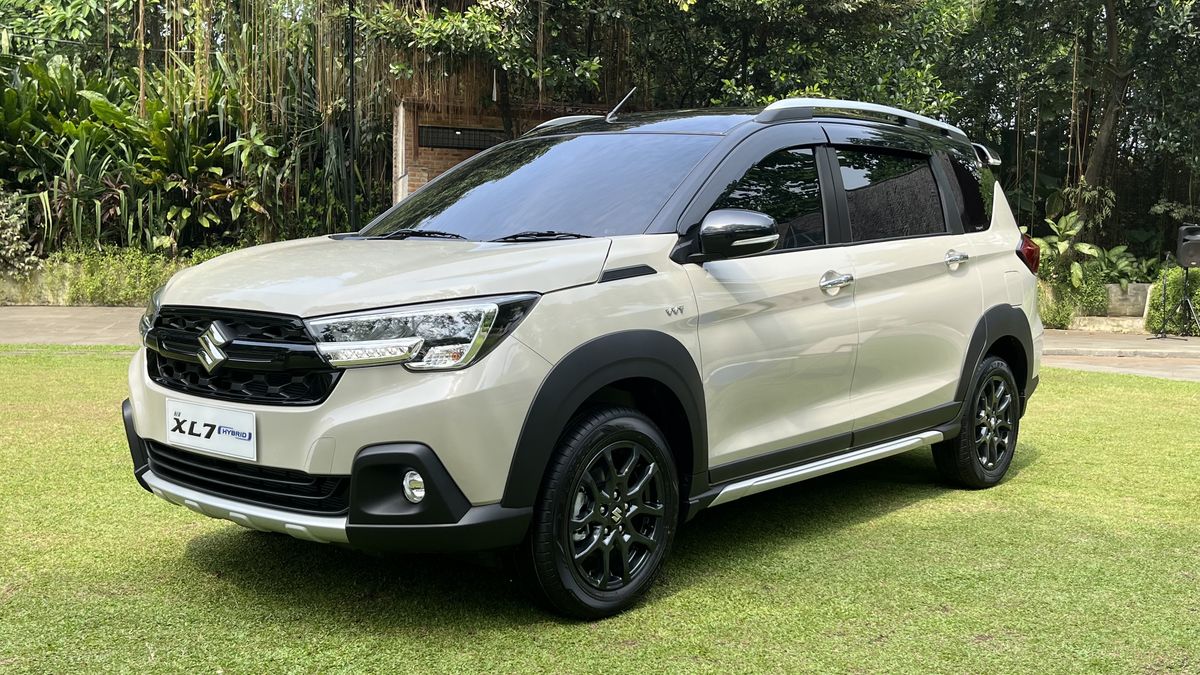
In recent years, the company expanded the lineup to include the New XL7, featuring the sophisticated Smart Hybrid Vehicle by Suzuki (SHVS) technology. This transition was not merely a cosmetic upgrade but a response to the Indonesian government’s push for greener, more fuel-efficient transportation. By offering the Alpha Hybrid, Beta Hybrid, and Zeta variants, Suzuki ensured that the XL7 remained competitive against rivals that were also pivoting toward electrification or mild-hybrid systems.
Engineering and Performance Specifications
The Suzuki XL7 is powered by the proven 1.5-liter K15B 4-cylinder engine. This powerplant generates approximately 105 PS of power and 138 Nm of peak torque. While these figures may seem modest in isolation, they are specifically calibrated for the Indonesian road environment—characterized by stop-and-go city traffic and the need for reliable mid-range torque during highway overtakes.
The integration of the SHVS technology—comprising an Integrated Starter Generator (ISG) and a compact lithium-ion battery—serves as a technical differentiator. The system performs three primary functions: assisting the engine during acceleration, managing energy through regenerative braking, and enabling the engine auto start-stop feature. The latter is particularly impactful in urban settings, as it reduces idling fuel consumption, thereby improving the overall operational efficiency of the vehicle during daily commutes.
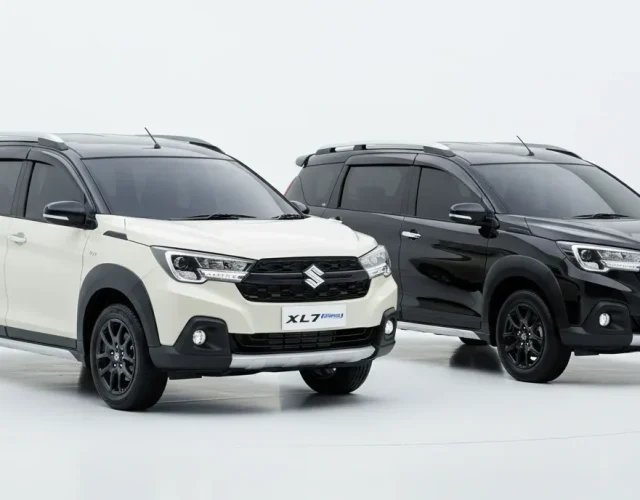
Dimensions and Practicality: A Design Analysis
The XL7’s design philosophy prioritizes a "tough" aesthetic without sacrificing the practical dimensions required for a family of seven. Measuring 4,450 mm in length, 1,775 mm in width, and 1,710 mm in height, the vehicle maintains a footprint that is maneuverable in tight city streets while providing an commanding road presence.
A critical aspect of its design is the 200 mm ground clearance. This specification is vital for the Indonesian market, where infrastructure can vary significantly. Whether navigating speed bumps, navigating uneven pavement, or traversing the approach roads to remote tourist destinations, the elevated ride height provides peace of mind. Furthermore, the inclusion of roof rails adds both to the visual ruggedness and the functional capability for those needing to mount extra cargo carriers for long-distance travel.
Interior Ergonomics and Passenger Comfort
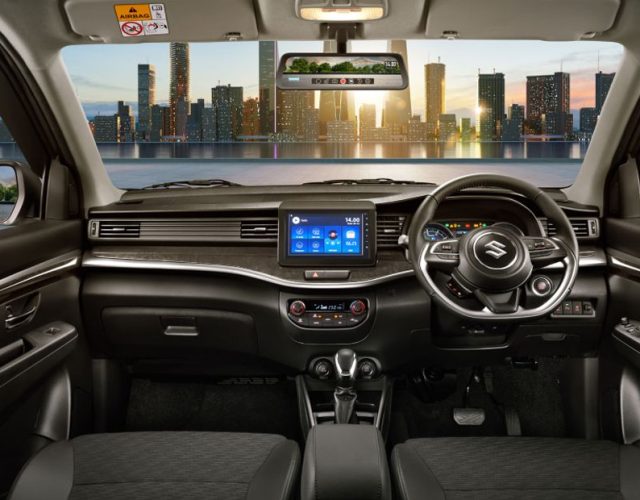
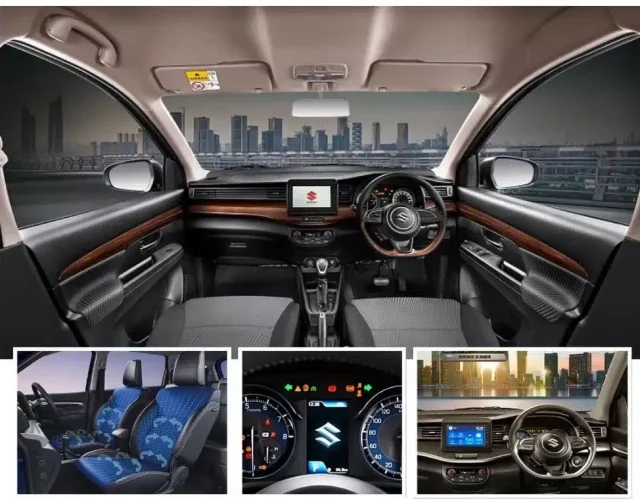
Inside the cabin, the XL7 adopts a user-centric layout. The seating configuration is designed to accommodate seven passengers, offering a modularity that is essential for growing families. With the second and third rows folded, the cargo capacity expands significantly, reaching up to 803 liters of volume. Even with all seats in use, the trunk offers 153 liters of space, sufficient for daily groceries or school bags.
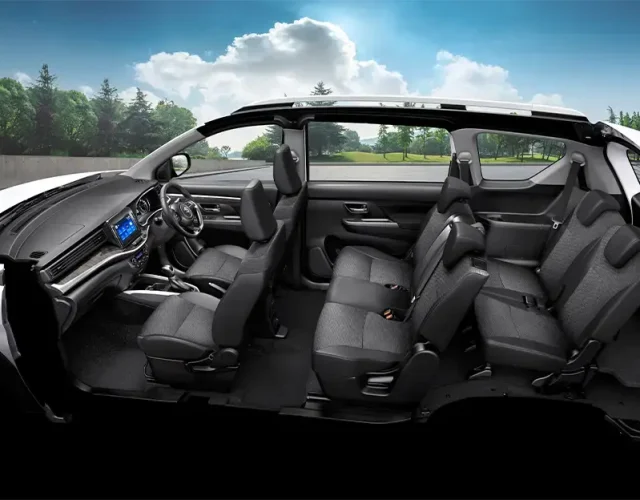
Technological inclusions within the interior cater to modern demands. The Smart Digital AC system, available on higher trims, includes an auto-climate control function that ensures cabin temperatures remain consistent regardless of the external tropical heat. Additionally, the inclusion of ventilated cup holders—a feature often reserved for premium luxury segments—demonstrates Suzuki’s focus on the small details that improve the long-distance travel experience. Armrests on the first and second rows further reduce fatigue for passengers during extended journeys, proving that the vehicle was designed with the human element as a priority.
Market Position and Competitive Landscape
The Indonesian automotive market is highly price-sensitive and utility-focused. Data from the Association of Indonesia Automotive Industries (GAIKINDO) consistently indicates that the "Low SUV" and "LMPV" segments represent the highest volume of sales in the country. By positioning the XL7 as a vehicle that offers the "SUV look" with "MPV capacity," Suzuki has captured a unique demographic.
Industry analysts observe that the shift toward hybrid technology in the mass-market segment is not just a trend but a requirement for future-proofing. As fuel prices fluctuate and environmental awareness grows among the Indonesian middle class, the hybrid variants of the XL7 offer a compelling value proposition: the reliability of a traditional gasoline engine coupled with the efficiency gains provided by the SHVS system.
Safety and Infrastructure Integration
Beyond mechanical performance, the XL7 incorporates essential safety features, including dual airbags, ABS with EBD, and ISOFIX child seat anchorages, which are non-negotiable for family-oriented vehicles. The chassis, built on Suzuki’s HEARTECT platform, is designed to be both lightweight and rigid, providing a stable foundation that enhances both fuel economy and crash safety performance.
The implications of these design choices are clear: Suzuki is aiming to provide a "one-car-does-it-all" solution. For the average Indonesian family, the cost of ownership, including maintenance and fuel consumption, is as critical as the initial purchase price. The widespread availability of Suzuki’s service centers across the archipelago adds a layer of operational security, ensuring that the XL7 remains a viable choice for families residing in both urban centers and regional hubs.
Future Outlook and Sustainability
As the automotive industry moves toward 2030, the role of mild-hybrid vehicles like the XL7 is expected to be a transitionary bridge. While the industry is eyeing full electrification, the current market infrastructure in Indonesia necessitates vehicles that can operate independently of charging grids. The XL7’s success proves that consumers are ready for electrification as long as it does not come at the cost of practicality or reliability.
The continued popularity of the XL7 serves as a barometer for the health of the Indonesian family-car market. By listening to consumer feedback—ranging from the need for a more robust suspension to the demand for modern connectivity features—Suzuki has managed to maintain the relevance of the XL7. Whether it is a daily commute to the office, a weekend school run, or a seasonal journey back to the hometown (mudik), the XL7 remains a staple of the Indonesian driveway.
In conclusion, the Suzuki XL7 represents a synthesis of engineering pragmatism and market foresight. It does not attempt to be the fastest or the most luxurious vehicle on the road; instead, it strives to be the most versatile partner for the family unit. Through its blend of a 1.5-liter engine, hybrid efficiency, and thoughtful interior design, the XL7 has secured its place as a cornerstone of the Indonesian automotive landscape, reflecting the evolving needs of families in a modern, mobile world.