Navigating the Indonesian Automotive Market: A Comprehensive Guide to Selecting New Vehicles Under IDR 200 Million

For first-time car buyers in Indonesia, the psychological and financial barrier of the IDR 200 million price point remains a critical threshold. As urban congestion intensifies and the demand for personal mobility increases, the entry-level segment—dominated by the Low Cost Green Car (LCGC) program—has evolved from offering mere basic transportation to providing sophisticated, fuel-efficient, and reliable vehicles. Navigating this market requires a strategic balance between budgetary constraints, maintenance expectations, and functional utility.
The Evolution of the Entry-Level Segment in Indonesia
The Indonesian automotive landscape was fundamentally altered in 2013 with the introduction of the LCGC policy. Designed to foster the domestic automotive industry and provide affordable vehicles for the burgeoning middle class, the program incentivized manufacturers to produce cars with high local content, efficient engines, and competitive pricing. Over the past decade, this segment has transitioned from basic, bare-bones vehicles to modern machines equipped with Continuously Variable Transmissions (CVT), advanced safety features, and refined interior aesthetics.
As of the current market cycle, the IDR 200 million ceiling acts as a definitive dividing line. While inflation and rising production costs have pressured MSRPs upward, manufacturers have successfully optimized their production lines to keep these "starter" models accessible. Industry analysts suggest that this segment accounts for nearly 25% of total annual passenger vehicle sales in Indonesia, reflecting its status as the backbone of the domestic automotive market.
Strategic Considerations for First-Time Buyers
When selecting a vehicle in this price bracket, prospective buyers must weigh three primary factors: operational cost, spatial utility, and long-term resale value.
- Operational Cost: Vehicles under the IDR 200 million threshold typically feature small-displacement engines (1.0L to 1.2L). These engines are optimized for fuel efficiency, often achieving consumption rates of 18–22 km/liter under optimal conditions. Furthermore, the standardized nature of these platforms means that spare parts are widely available and service costs remain predictable.
- Spatial Utility: Buyers must choose between the "city car" hatchback configuration, which prioritizes parking ease and agility, and the "MPV" (Multi-Purpose Vehicle) configuration, which provides essential seven-passenger seating.
- Depreciation and Resale: Due to the massive market volume of vehicles like the Daihatsu Ayla or Honda Brio, these models historically exhibit high liquidity in the secondary market, making them safer financial bets for first-time owners.
Top Contenders in the Current Market
The following vehicles represent the most viable options currently available for under IDR 200 million, based on performance metrics, brand reliability, and market availability.
1. Daihatsu Ayla: The Entry-Level Standard
Starting at approximately IDR 141 million, the Daihatsu Ayla remains the quintessential budget-friendly city car. Recently updated to a new platform, the current generation features a more robust chassis and improved interior ergonomics. Available in both 1.0L and 1.2L variants, it offers the highest degree of flexibility for urban commuters. The introduction of CVT technology in recent models has significantly improved the driving experience in stop-and-go traffic compared to the older, more rudimentary automatic gearboxes.
2. Daihatsu Sigra: The Family-Centric Choice
With a starting price of IDR 144 million, the Daihatsu Sigra occupies the unique position of being the most affordable seven-seater on the market. It addresses the cultural preference for larger vehicle capacity in Indonesia, where "family transport" is a primary purchase driver. Despite its compact exterior dimensions, the Sigra maximizes interior volume, making it the preferred choice for ride-hailing drivers and families alike. The vehicle is engineered to provide a low total cost of ownership, with engine components that are shared across the Daihatsu/Toyota platform, ensuring longevity.
3. Honda Brio Satya: The Performance-Oriented Hatchback
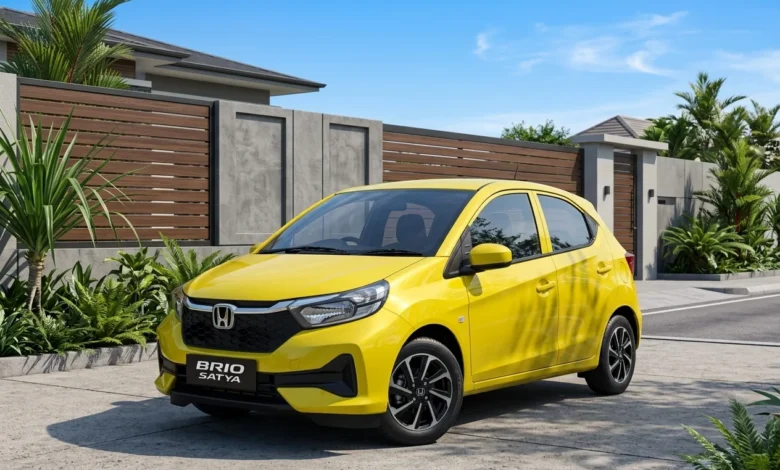
Priced starting from IDR 170 million, the Honda Brio Satya sits at the premium end of the LCGC spectrum. It is widely recognized for its superior driving dynamics, thanks to its 1.2L i-VTEC four-cylinder engine. Unlike many competitors that utilize three-cylinder engines, the Brio’s four-cylinder configuration offers a smoother power delivery and less vibration. For buyers who prioritize driving pleasure and brand image within a budget, the Brio remains the benchmark in the segment.
4. Suzuki S-Presso: The Crossover Alternative
At an entry price of IDR 173 million, the Suzuki S-Presso offers a departure from the traditional hatchback silhouette. With a higher ground clearance and a distinct "crossover" aesthetic, it is specifically designed for urban environments where road conditions may be uneven or subject to flooding. Its boxy design maximizes cabin height, offering a surprising amount of headroom for passengers. Suzuki’s focus on the HEARTECT platform also ensures that the vehicle remains lightweight, further enhancing its fuel efficiency.
Broader Economic Implications and Market Trends
The stability of this price segment is currently influenced by several macroeconomic factors. First, the fluctuation in the Rupiah against the US Dollar affects the cost of imported raw materials and electronic components, such as ECU units and safety sensor modules. Despite these pressures, manufacturers are maintaining price points through increased localization—using domestic steel and plastic components to reduce dependency on international supply chains.
Furthermore, the shift toward vehicle electrification in Indonesia is beginning to trickle down to the entry-level segment, albeit slowly. While pure electric vehicles (EVs) remain far above the IDR 200 million mark, many manufacturers are incorporating "mild-hybrid" or "start-stop" systems in their latest models to meet increasingly stringent emissions regulations.
Industry observers note that the competition in the under-200-million segment is driving innovation in safety features. Where once basic anti-lock braking systems (ABS) were considered a luxury, they are now standard equipment across almost all models in this category. Dual front airbags, side-impact beams, and reinforced safety cages are now non-negotiable requirements for these manufacturers to maintain market relevance.
Expert Analysis on Maintenance and Longevity
For the first-time owner, the purchase price is only the beginning of the financial commitment. Maintenance costs for these vehicles generally fall into a predictable cycle. Most manufacturers offer a complimentary service program covering the first 30,000 to 50,000 kilometers or the first three years of ownership.
The primary recommendation from automotive service centers is strict adherence to the manufacturer’s oil change intervals—usually every 10,000 kilometers. Given the high humidity and high-traffic density of Indonesian cities, these vehicles are classified as operating in "severe driving conditions." Consequently, air filter maintenance and cooling system inspections are critical to ensuring the engine lasts beyond the five-year mark.
Conclusion: Making the Final Decision
Choosing a vehicle under IDR 200 million is an exercise in prioritizing specific needs over general wants. If the buyer is a single professional or a young couple residing in a dense urban center, the Honda Brio Satya or Daihatsu Ayla provides the ideal balance of maneuverability and performance. Conversely, for those who anticipate needing to transport extended family members or require extra utility for cargo, the Daihatsu Sigra remains the undisputed leader in its class.
For those desiring a vehicle with a distinct personality and high-clearance capabilities for unpredictable road conditions, the Suzuki S-Presso serves as a modern, practical alternative. Regardless of the choice, the current market offers more value, safety, and reliability than at any point in the history of the Indonesian automotive sector. By focusing on maintenance schedules and selecting a model that aligns with daily usage patterns, buyers can secure a reliable asset that will serve them well for years to come.