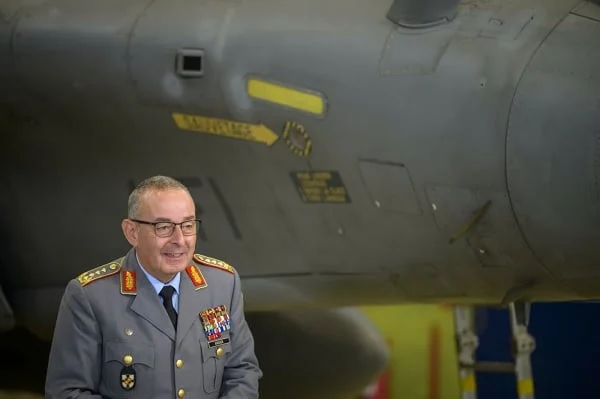
The appointment of German General Carsten Breuer as the next Chairman of the NATO Military Committee marks a significant shift in the strategic alignment of the North Atlantic Treaty Organization. As the current Inspector General of the Bundeswehr, Breuer’s elevation to the alliance’s most senior military post reflects both the evolving security architecture of Europe and Germany’s growing commitment to collective defense. The decision, finalized during the annual Military Committee conference in Copenhagen, places a seasoned strategist at the helm of NATO’s military coordination efforts at a time when the alliance faces its most complex geopolitical challenges since the end of the Cold War.
The Rise of General Carsten Breuer
Carsten Breuer is widely regarded within the German military establishment as a pragmatic and highly effective leader. His career has been defined by his ability to bridge the gap between complex military doctrine and the practical realities of modern geopolitical tension. Prior to his current role as the Inspector General of the Bundeswehr, a position he assumed in 2023, Breuer gained prominence for his management of the COVID-19 vaccination logistics task force. This experience demonstrated his capacity for large-scale organizational coordination, a skill that will be essential as he prepares to lead the NATO Military Committee.
As the highest-ranking military officer in the German Armed Forces, Breuer has been the architect behind the "Zeitenwende"—the historic turning point in German defense policy initiated by Chancellor Olaf Scholz following the Russian invasion of Ukraine in 2022. This policy shift ended decades of German military restraint, prioritizing rapid modernization, increased defense spending, and a more robust role for Berlin in European security. His selection as the NATO Military Committee Chairman is a direct endorsement of these efforts by the alliance’s member states.
Chronology of the Appointment and Transition
The selection process for the Chairman of the NATO Military Committee involves a rigorous assessment by the heads of defense of the 32 member nations. The vote held in Copenhagen in September 2026 was the culmination of months of diplomatic maneuvering and strategic deliberation.
- 2022: The Russian invasion of Ukraine prompts a massive shift in European security doctrine, leading to the initiation of the "Zeitenwende" policy in Germany.
- March 2023: Carsten Breuer is appointed as the Inspector General of the Bundeswehr, tasked with overseeing the radical modernization of the German military.
- Early 2026: NATO begins the search for a successor to Italian Admiral Giuseppe Cavo Dragone, whose three-year tenure is nearing its conclusion.
- September 2026: During the annual Military Committee conference in Copenhagen, NATO’s chiefs of defense elect General Breuer to the position.
- Summer 2027: General Breuer is scheduled to formally take office, beginning his three-year mandate as the top military advisor to the North Atlantic Council.
The Role of the NATO Military Committee
The Military Committee is the primary source of military advice to NATO’s political decision-making bodies, the North Atlantic Council and the Nuclear Planning Group. The Chairman of this committee is the principal military advisor to the Secretary General of NATO. As such, Breuer will be responsible for translating political directives into actionable military strategies.
In an era defined by the return of great-power competition, the committee’s mandate has expanded significantly. The Chairman must facilitate consensus among 32 nations with varying national interests, geographic realities, and defense capabilities. Breuer’s tenure will require him to navigate the integration of new member states, the ongoing support for Ukraine, and the modernization of NATO’s command structure to counter threats in the Baltic, Arctic, and Black Sea regions.
Supporting Data: Germany’s Defense Rejuvenation
The appointment of a German general to such a prestigious post is underscored by Berlin’s recent financial commitment to the alliance. For years, Germany was criticized by its NATO allies—most notably the United States—for failing to meet the target of spending 2% of its GDP on defense.

Data from the German Ministry of Defense and reports from Handelsblatt indicate a radical departure from this trend:
- Defense Budget Expansion: Germany has committed approximately €125 billion (USD 143 billion) to its defense sector, making it the highest spender among European NATO members in absolute terms.
- Modernization Efforts: These funds are being directed toward the procurement of advanced fighter jets (such as the F-35), modernized tank fleets, and enhanced air defense systems, including the European Sky Shield Initiative.
- Strategic Influence: Beyond funding, Germany has increased its footprint in NATO’s Eastern Flank, particularly through the deployment of a permanent combat-ready brigade to Lithuania, signaling a shift toward forward defense.
Official Responses and International Reaction
The reaction to Breuer’s appointment has been largely positive among NATO partners. German Defense Minister Boris Pistorius stated that the election is "a clear recognition of the steps Germany has taken to strengthen the alliance." Within the halls of the Bendlerblock in Berlin, the consensus is that Breuer’s appointment will grant Germany a stronger voice in determining the strategic trajectory of the alliance, particularly regarding deterrence against Russia.
International military analysts have also noted the significance of this move. While the position has historically rotated among senior leaders from various member nations, a German at the helm provides a sense of stability and institutional continuity. There is an expectation that Breuer will prioritize the standardization of munitions, the interoperability of digital battlefield systems, and the streamlining of NATO’s rapid reaction forces.
Broader Implications for European Security
The selection of General Breuer serves as a barometer for the current state of NATO. The alliance is currently navigating a period of unprecedented expansion, having recently integrated Finland and Sweden. These additions have shifted the focus of NATO’s northern flank, necessitating a new strategic approach to maritime security in the Baltic Sea.
Breuer’s leadership is expected to emphasize the "three-pillar" approach to security: deterrence, defense, and dialogue. However, under the current geopolitical climate, the emphasis will undoubtedly lean toward the first two. The conflict in Ukraine has exposed vulnerabilities in the European defense industrial base, particularly regarding the production of 155mm artillery ammunition and long-range missiles. One of Breuer’s most immediate challenges will be ensuring that the industrial output of NATO members can sustain a prolonged period of high-intensity conflict should the need arise.
Furthermore, the appointment comes at a time when the transatlantic relationship is subject to internal political pressures. The Chairman of the Military Committee plays a vital role in maintaining the cohesion of the alliance, ensuring that European and North American interests remain aligned even during times of political uncertainty. Breuer’s background suggests he is well-equipped to handle the diplomatic intricacies of this role. His tenure will likely be characterized by a focus on "military readiness"—a concept he has championed in Germany, pushing for a military that is not just well-funded, but effectively prepared for immediate deployment.
Conclusion
General Carsten Breuer’s appointment to the chair of the NATO Military Committee is more than a personnel change; it is a strategic signal to the international community. It confirms that Germany has transitioned from a cautious observer of European security to an active, leading participant in the alliance’s defense architecture. As he prepares to assume the mantle in 2027, the international security landscape remains volatile. The task before him is immense: managing the military preparedness of 32 nations while simultaneously fostering a unified response to the challenges posed by the Russian Federation. If his track record as the Inspector General of the Bundeswehr is any indication, NATO can expect a period of disciplined, methodical, and strategic evolution under his leadership.