
The persistent challenge of drug trafficking within Indonesia’s urban centers has once again come to the forefront following the arrest of a recidivist in Mampang Prapatan, South Jakarta. Law enforcement officials from the Mampang Prapatan Sector Police confirmed the apprehension of a 33-year-old suspect identified by the initials OR, who was found in possession of crystal methamphetamine. The arrest, which took place amidst the broader regional crackdown known as Operasi Nila Jaya 2026, has reignited long-standing concerns regarding the infiltration of illicit narcotics networks originating from within the prison system.
The Circumstances of the Arrest
The operation leading to the detention of OR was part of a strategic two-week initiative by the Jakarta Metropolitan Police (Polda Metro Jaya). Operating from September 9 to September 23, 2026, the Operation Nila Jaya campaign is designed to curb the distribution of illegal substances across the capital. On Monday, September 14, 2026, officers patrolling the area of Jalan Bangka V, located in the Pela Mampang sub-district of Mampang Prapatan, identified the suspect.
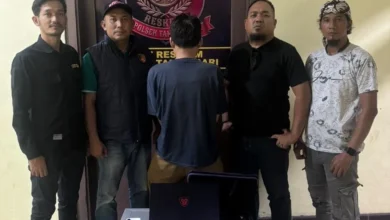
Upon intercepting the individual, law enforcement officers conducted a search of his person. The search yielded five small, clear plastic clips containing a crystalline substance later identified as methamphetamine. Following the discovery, OR was immediately taken into custody and transported to the Mampang Prapatan Sector Police station for formal interrogation and processing.
The Modus Operandi: The "Prison Connection"
Perhaps the most significant revelation stemming from the preliminary investigation is the suspect’s admission regarding his supply chain. During interrogation, OR, who has a prior history of drug-related offenses, claimed that he was acting on instructions received from an associate currently incarcerated within a correctional facility (Lembaga Pemasyarakatan or Lapas).
According to AKP Purwaditya, the Head of the Criminal Investigation Unit at the Mampang Prapatan Police, the suspect described a process where he would be contacted by an inmate via mobile communication. The inmate would then direct the suspect to a specific "drop zone" to retrieve the narcotics for local distribution. "The perpetrator’s admission indicates he was in contact with someone inside the prison system who instructed him to collect the illicit goods at a designated location," Purwaditya stated on Saturday, September 19, 2026.
While these claims remain subject to rigorous verification and investigation, they align with a recurring pattern identified by narcotics investigators across the country. The persistence of drug trade operations orchestrated from behind bars remains one of the most difficult hurdles for the Indonesian Ministry of Law and Human Rights to clear, despite numerous internal reforms and security upgrades.
Broader Context: Operation Nila Jaya 2026
Operation Nila Jaya is an annual or semi-annual tactical response utilized by the Jakarta Police to dismantle local distribution cells. By concentrating resources over a 15-day period, the police aim to create a "shock therapy" effect, disrupting the supply lines that feed the drug market in densely populated areas like South Jakarta.
The choice of Mampang Prapatan as a focal point for these operations is not incidental. As a transit point between high-density residential zones and commercial hubs, the area is often targeted by mid-level dealers looking to facilitate quick transactions. The success of this specific operation—resulting in the apprehension of a repeat offender—serves as a reminder that recidivism remains a primary driver of the drug crisis. Without adequate rehabilitation and post-release monitoring, individuals who have served time for narcotics offenses frequently return to the trade due to established underworld connections and the perceived economic necessity of the illicit drug market.
The Challenge of Prison-Based Trafficking
The admission by the suspect underscores a structural vulnerability within the Indonesian justice system. Despite the implementation of signal jammers and stricter visitor policies in many correctional facilities, the proliferation of contraband mobile phones allows for the coordination of criminal activity from within the cells.
Experts in criminal justice often point out that the issue is multifaceted. It involves not only the security measures within the walls of the correctional facilities but also the integrity of the staff tasked with overseeing them. When an inmate can successfully facilitate a drug transaction in the outside world, it suggests a failure in the custody-control paradigm. For the Jakarta Metropolitan Police, this case necessitates a collaborative effort with the Directorate General of Corrections to identify the specific facility and the individual inmates involved in the command structure described by the suspect.
Implications for Public Safety and Policy
The arrest of OR has broader implications for the fight against narcotics in Indonesia. First, it highlights the necessity for integrated intelligence between local police precincts and the specialized narcotics directorates that manage high-profile investigations. By tracing the communications between the suspect and the inmate, police hope to dismantle a larger network rather than simply removing a low-level dealer from the streets.
Second, the case reinforces the urgency of reviewing rehabilitation programs. A recidivist returning to drug trafficking is often a sign that the current correctional model is failing to deter future criminal behavior. If the prison environment itself serves as a base of operations, the state must confront the irony that incarceration is, in some instances, facilitating the very crimes it is meant to prevent.
The Mampang Prapatan Police have confirmed that the investigation is ongoing. They are currently working to trace the origins of the seized crystal meth and identifying other potential accomplices involved in the distribution network. The police have maintained that no stone will be left unturned, and they are actively coordinating with other law enforcement agencies to bridge the gap between street-level arrests and the upper echelons of these criminal syndicates.
Moving Forward: Surveillance and Enforcement
As the police continue their probe, the community in Mampang Prapatan remains under heightened scrutiny. The success of Operation Nila Jaya depends heavily on the continuity of these enforcement actions. While the arrest of one individual is a tactical victory, the strategic goal remains the neutralization of the "prison-to-street" connection.
Law enforcement agencies are expected to provide further updates as the investigation progresses. For now, the suspect remains in police detention, facing charges that could carry significant penalties given his status as a repeat offender. The case stands as a stark reminder of the complexities involved in policing urban narcotics, where the shadow of the correctional system continues to influence the criminal landscape of the nation’s capital. The public is encouraged to remain vigilant and report suspicious activities, as community involvement remains a cornerstone of the broader effort to curtail the reach of drug syndicates.