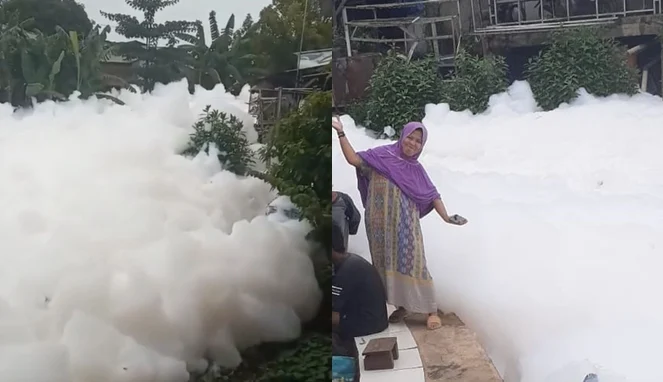
A viral video depicting severe water pollution in a river located in Depok, West Java, has sparked widespread public concern and drawn the attention of local environmental authorities. The footage, which began circulating rapidly across major social media platforms on Monday afternoon, November 27, showcases an alarming environmental hazard at Kali Baru River, situated in Tugu Village, Cimanggis District, Depok City. Instead of flowing water, the river is entirely obscured by an immense accumulation of thick, white foam that towers high above the surface, with some of the billowing suds even overflowing onto nearby residential properties and impacting at least five homes.
The harrowing visual quickly captured the attention of netizens, many of whom initially expressed disbelief at the natural-defying spectacle. Due to the sheer density and height of the white substance, numerous online users mistook the river for a bed of clouds or a heavy accumulation of snow. However, the lighthearted confusion soon transformed into serious alarm and widespread criticism directed at local governance, with citizens forcefully demanding immediate intervention from municipal authorities to address what has become a recurring and escalating ecological crisis in Depok’s waterways.
Chronology of the Incident and Local Observations
According to eyewitness accounts and local residents living along the banks of the Kali Baru River, the dense foam did not appear instantaneously in its maximum volume. The phenomenon initially manifested as a subtle, thin layer of bubbles that progressively multiplied and thickened over a short period. By Monday afternoon, the accumulation had reached staggering proportions, completely sealing off the water surface and emitting a pungent, harsh odor that deviated significantly from the pleasant scent of commercial detergents, indicating the presence of heavy chemical compounds.
Remarkably, the volatile nature of the pollution was further demonstrated later that same evening. By nightfall on November 27, the towering mass of foam had mysteriously dissipated, leaving behind the dark, murky waters characteristic of urban river pollution in the region. This cyclical appearance and disappearance suggest a controlled or intermittent release of industrial or domestic discharge into the municipal drainage systems that feed into the Kali Baru River.
Response and Investigation by the Environmental Agency
In direct response to the viral dissemination of the footage and mounting public pressure, the Environment and Sanitation Office (Dinas Lingkungan Hidup dan Kebersihan – DLHK) of Depok City initiated a comprehensive field investigation to trace the exact origin of the hazardous waste. Preliminary hypotheses formulated by environmental experts point heavily toward domestic waste accumulation, specifically large volumes of surfactants originating from soaps, cleaning agents, and detergents channeled directly into the watershed without adequate prior treatment.
Environmental officials noted that the unprecedented rise of the foam to the surface was significantly exacerbated by fluctuating weather patterns. Specifically, the ongoing transition period from the dry season to the rainy season caused an increase in water discharge and current velocity, which churned the chemical-laden waters and whipped the surfactant compounds into massive banks of foam. As part of their ongoing investigative protocol, DLHK representatives announced plans to conduct systematic inspections of local commercial establishments, industrial entities, and residential settlements surrounding the watershed to pinpoint the primary contributors to the pollutant load.
Broader Environmental and Public Health Implications
The severe pollution event in Cimanggis serves as a stark reminder of the fragile state of urban river ecosystems in densely populated regions surrounding Indonesia’s capital. Industrial and domestic wastewater pollution poses profound, multifaceted risks to both public health and environmental sustainability.
From a public health perspective, water bodies heavily contaminated with chemical surfactants and unidentified domestic effluents can become breeding grounds for waterborne pathogens. Direct or indirect contact with such polluted water can lead to severe dermatological conditions, respiratory irritations due to toxic airborne compounds emitted from the foam, and long-term systemic health issues for communities relying on shallow groundwater aquifers adjacent to the river.
Ecologically, the implications are equally catastrophic. The presence of dense chemical foams drastically reduces the transfer of atmospheric oxygen into the water, leading to severe hypoxia. This oxygen depletion severely threatens aquatic biodiversity, suffocating endemic fish species and destroying the delicate food web of the benthic ecosystem. Furthermore, the degradation of river water quality has a direct economic toll on regional agriculture. Farmers who depend on the Kali Baru River system for irrigation risk crop contamination and soil degradation, threatening local food security and rural livelihoods.
The incident at Kali Baru River underscores an urgent need for stricter regulatory enforcement, upgraded wastewater treatment infrastructure, and heightened community awareness regarding waste disposal practices in Depok and the broader Jabodetabek metropolitan area. As DLHK continues its forensic environmental assessment, residents and environmental advocates alike await concrete corrective actions to prevent future recurrences of this alarming phenomenon.