Exploring the Highlands: Top Scenic Cafes and Hangout Spots in Kintamani, Bali for Unmatched Mountain Views

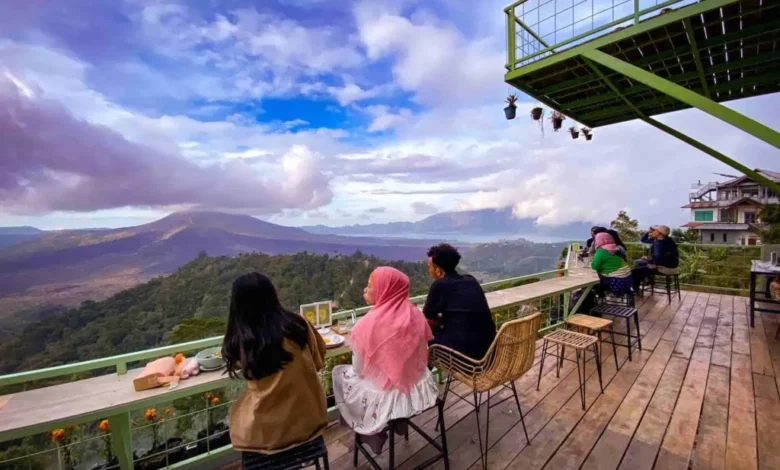
The island of Bali has long held its status as the crown jewel of Indonesia’s tourism industry, captivating millions of international and domestic travelers annually with its unique blend of rich cultural heritage and breathtaking natural landscapes. While the island’s southern coastline—featuring destinations such as Kuta, Seminyak, and Uluwatu—traditionally dominates global travel itineraries for its vibrant beach clubs and sunset surfing spots, a significant shift in traveler preferences has emerged in recent years. Visitors are increasingly venturing away from the coastline and heading northward toward the cooler, mist-shrouded highlands of Kintamani. Situated in the Bangli Regency, this mountainous region has rapidly transformed into Bali’s premier epicenter for scenic café culture, offering patrons a rare combination of artisanal coffee and panoramic vistas of towering volcanoes and ancient caldera lakes.
The evolution of Kintamani from a quiet agricultural enclave into a bustling hub of modern, aesthetically designed coffee shops represents one of the most notable economic and tourism developments in post-pandemic Bali. Historically known primarily for producing high-grade Arabica coffee beans and operating as a transit point for hikers scaling Mount Batur, the area experienced a boom in architectural hospitality beginning around late 2019. Local entrepreneurs and regional developers recognized the immense potential of the ridge overlooking the Batur Caldera, capitalizing on the dramatic topography to establish multi-level, glass-fronted establishments designed to frame the surrounding peaks. Today, these venues not only provide spaces for socialization but also serve as strategic economic drivers for the highland communities, bridging traditional agriculture with modern service-sector employment.
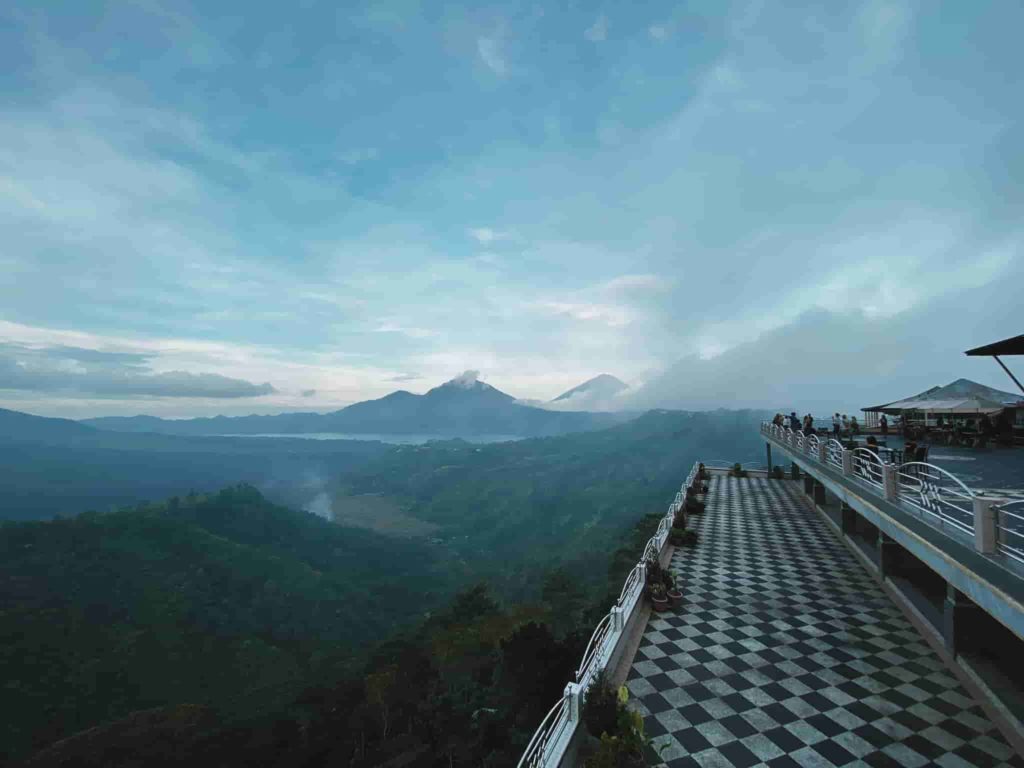
To provide a comprehensive guide for travelers seeking both culinary comfort and visual splendor, a detailed examination of the top five destination cafes along the Kintamani ridge highlights the architectural and natural diversity of the region.
Tegu Kopi: Pioneering Modern Highland Hospitality
Inaugurated in December 2019 along the bustling Jalan Raya Penelokan in the Kintamani district of Bangli Regency, Tegu Kopi stands as one of the early pioneers that reshaped the local café landscape. Situated dramatically atop the volcanic ridge, the venue is engineered to provide an unobstructed, multi-directional viewpoint encompassing Mount Batur, Mount Abang, Mount Agung, and the crescent expanse of Lake Batur below. Due to its high elevation, the microclimate at Tegu Kopi often sees temperatures plummeting to between 17 and 18 degrees Celsius, offering a refreshing respite from Bali’s tropical coastal heat. The establishment capitalizes on its orientation toward the western horizon, drawing large crowds in the late afternoon who gather to observe dramatic sunsets unfolding behind the silhouette of the central mountain range. Industry analysts note that Tegu Kopi’s early success laid the foundational blueprint for subsequent developments in the area, proving that high-altitude agricultural land could be successfully repurposed into high-yield tourism assets without necessarily compromising environmental aesthetics.
Eco Bike Coffee: Architectural Scale and Agricultural Integration
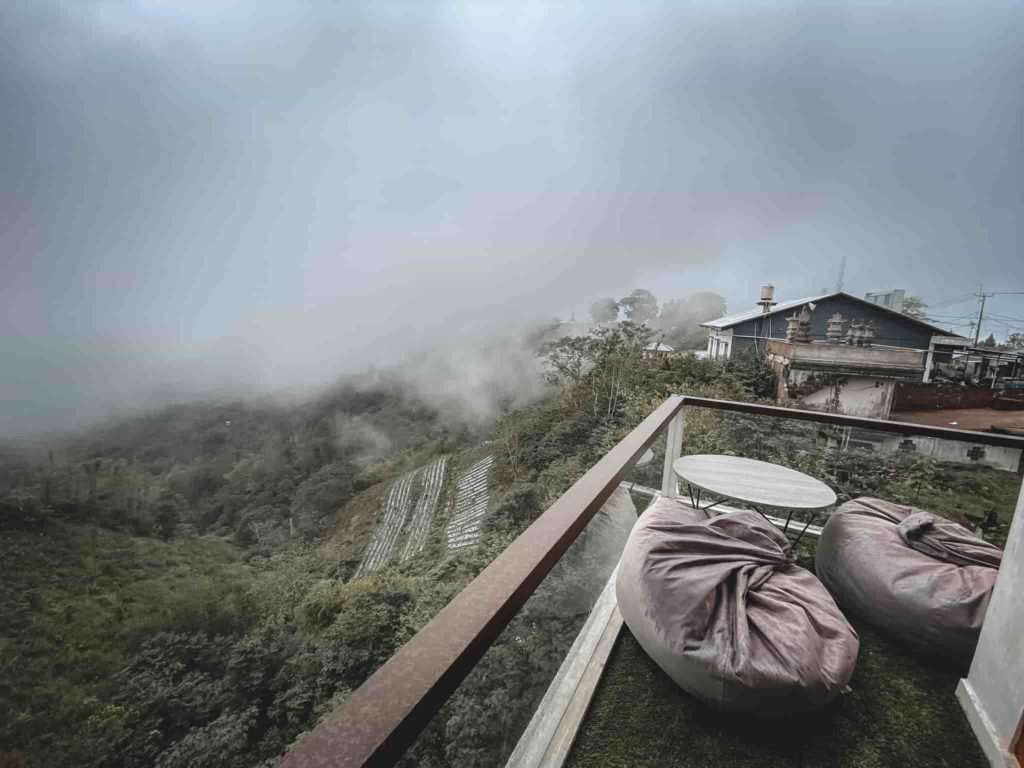
Positioned as one of the largest architectural complexes along the Kintamani cliffside, Eco Bike Coffee introduces a multifaceted approach to highland hospitality by integrating working agriculture directly into its commercial operations. Spanning three distinct levels, the establishment utilizes its ground floor to incorporate active coffee plantations and functional lodging facilities, thereby offering visitors an immersive educational glimpse into the lifecycle of Kintamani Arabica beans. The intermediate levels house standard dining and seating areas, while the uppermost third floor transitions into an expansive open-air rooftop designed for unobstructed horizon gazing. However, local tourism boards and hospitality experts frequently advise visitors to monitor regional weather patterns prior to ascent. Because of its extreme elevation, the Kintamani ridge is susceptible to sudden dense fog banks. During inclement weather, visibility can drop precipitously, obscuring the monumental landscape in a uniform white mist and temporarily shifting the venue’s appeal from panoramic vistas to cozy, indoor atmosphere.
Akasa Coffee: Premium Elevation and Contemporary Comfort
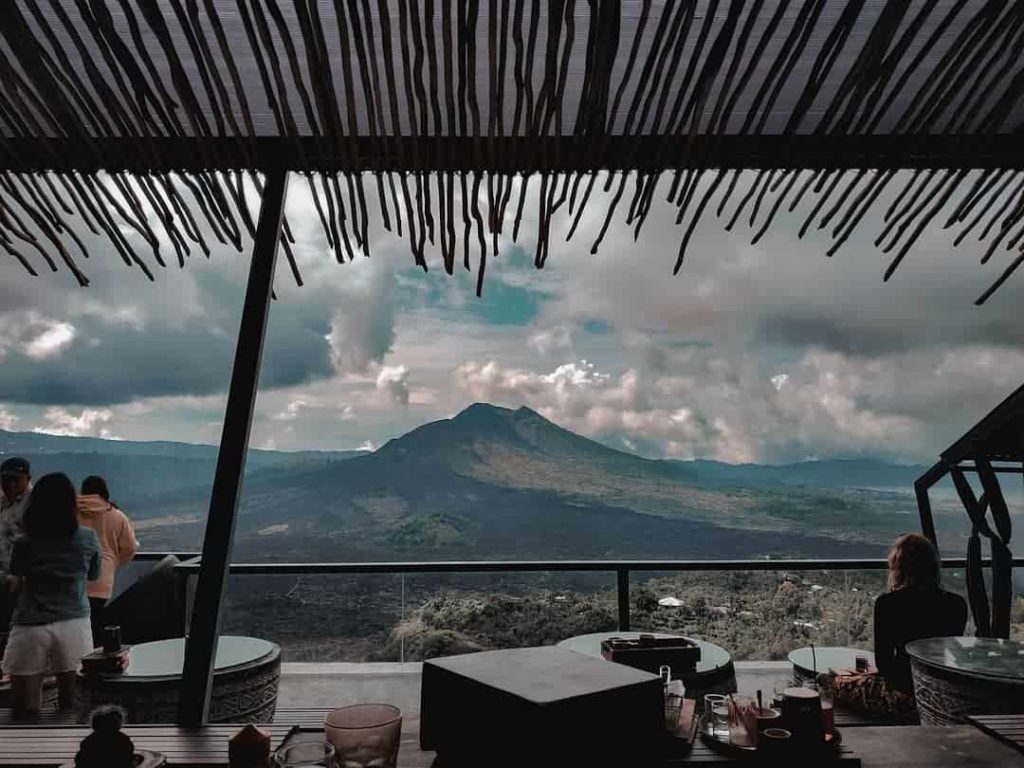
For travelers seeking a refined culinary experience paired with striking interior design, Akasa Coffee has established itself as a premier destination within the Kintamani cluster. Renowned for its sophisticated ambiance and commitment to comfort, the venue maintains an elevation that guarantees brisk alpine temperatures, prompting management to advise guests to dress warmly or utilize provided amenities to counteract the mountain chill. Akasa Coffee’s menu reflects a diverse international palate, offering specialized breakfast formulations, artisan tea and coffee selections, and an unexpected inclusion of craft beers, with average spending hovering around the Rp 150,000 threshold per person. The venue’s financial positioning places it firmly in the mid-to-high tier of regional dining, catering primarily to tourists and affluent domestic travelers willing to invest in premium scenery. Like its neighbors, Akasa operates best under clear skies, where the visual contrast between the dark volcanic slopes of Mount Batur and the bright morning sun creates optimal conditions for architectural photography and social media engagement.
Batur 1926: The Ultimate Sunrise Observatory
Operating with a strategic focus on early morning tourism, Batur 1926 has carved out a distinct niche by opening its doors well before dawn, specifically targeting hikers, photographers, and peace-seekers. Operating data from local tour operators indicates that peak patronage at Batur 1926 occurs around 5:30 AM, when visitors can witness the gradual emergence of the sun over the eastern horizon—a phenomenon that illuminates the caldera in shifting shades of gold and amber. On days characterized by high atmospheric clarity, patrons seated on the rooftop terrace are granted simultaneous views of three sacred peaks: Mount Batur, Mount Abang, and the towering stratovolcano of Mount Agung. Architecturally, Batur 1926 distinguishes itself by incorporating traditional Balinese design elements, most notably a stylized split gate (candi bentar) positioned at the entrance of the rooftop terrace. This deliberate blend of vernacular architecture and modern minimalist framing has made the venue a favored subject for architectural publications and digital content creators alike.
Kava Coffee: Framing the Legend of Lake Batur
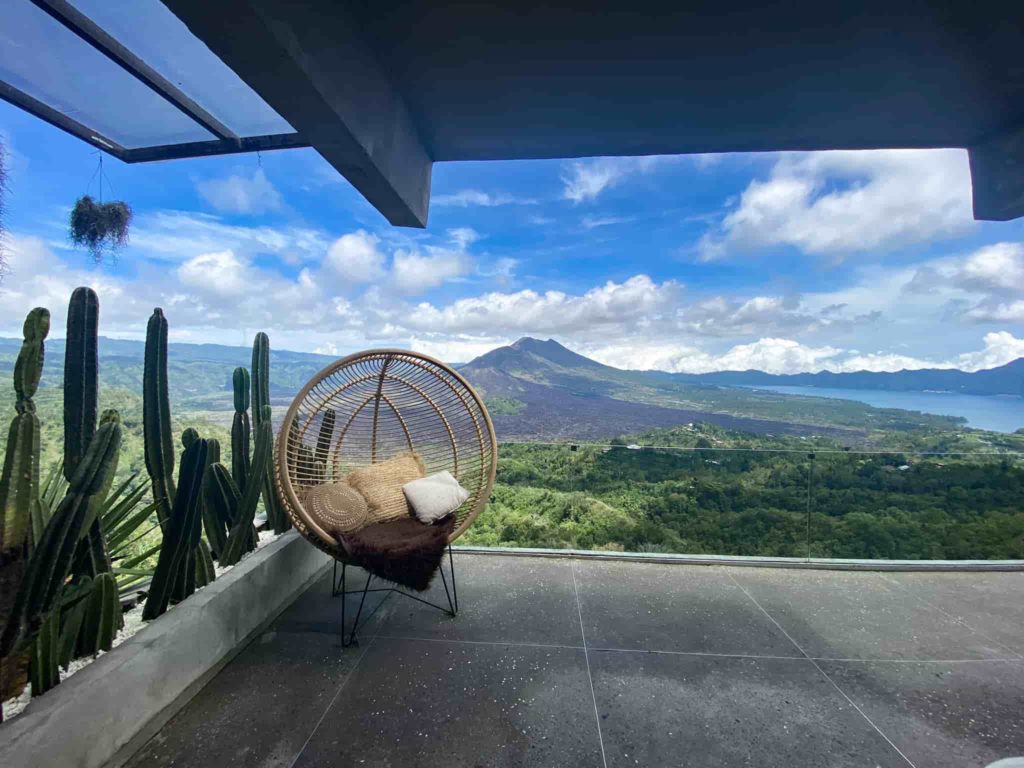
Situated prominently along the legendary shoreline of Lake Batur, Kava Coffee offers a perspective distinct from its ridge-top counterparts, positioning guests closer to the water level while maintaining a commanding view of the surrounding triad of mountains: Batur, Abang, and Agung. Upon entry, patrons are greeted by an interior layout meticulously designed to harmonize with the rugged geography of the surrounding caldera. The establishment features expansive semi-outdoor seating arrangements anchored by lengthy communal tables, flanked by floor-to-ceiling glass paneling that ensures the exterior panorama remains fully visible even from the deep interior. The integration of transparent architectural elements reflects a broader design trend in modern highland cafes, where natural light and external landscapes function as the primary interior decoration, minimizing the need for artificial ornamentation.
Economic Implications and Regional Infrastructure Development
The rapid proliferation of these scenic establishments in Kintamani has triggered profound socio-economic transformations throughout the Bangli Regency. Historically one of Bali’s less economically affluent regions compared to the urbanized south (such as Denpasar and Badung), Bangli has experienced a marked increase in local tax revenues, land valuations, and employment opportunities since the tourism pivot toward the highlands. According to regional economic data, the hospitality sector in Kintamani now absorbs a significant percentage of the local workforce, transitioning individuals from traditional agrarian labor to service-oriented professions encompassing barista operations, hospitality management, and culinary arts.
Furthermore, the integration of local agricultural products—specifically Kintamani’s Geographical Indication (GI)-certified Arabica coffee—into the menus of these cafes has created a mutually beneficial supply chain. Coffee farmers now possess a direct, high-margin local market for their harvests, reducing their reliance on volatile global commodity pricing and long-chain distribution middlemen. This synergy between agriculture and tourism, often termed "agritourism," has served as a stabilizing economic model for the region.
However, the rapid expansion of commercial infrastructure along the fragile volcanic slopes of Kintamani has not been without operational challenges. Environmental scientists and urban planners have raised pertinent concerns regarding sustainable waste management, water consumption, and land-use regulations in the highlands. The construction of multi-level commercial complexes on steep inclines requires rigorous geological assessments to prevent soil erosion and maintain slope stability, particularly during Bali’s intense monsoon seasons. Additionally, increased vehicular traffic along the narrow arterial roads connecting Denpasar to the Kintamani ridge has occasionally resulted in congestion, prompting local transportation authorities to evaluate infrastructure enhancement projects to accommodate the steady influx of visitors.
Official Responses and Future Outlook
Local government bodies, including the Bali Provincial Tourism Office and the Bangli Regency administration, have actively responded to the highland tourism boom by implementing stricter zoning laws and environmental compliance frameworks. Officials have emphasized the necessity of balancing commercial development with the preservation of the sacred and ecological integrity of the Mount Batur caldera, which is designated as a UNESCO Global Geopark. Collaborative initiatives between local regency planners and business owners are currently underway to ensure that waste disposal systems, particularly wastewater management from the proliferating cafes, adhere to stringent environmental standards to protect Lake Batur from pollution.
In conclusion, the emergence of scenic cafes in Kintamani—exemplified by venues such as Tegu Kopi, Eco Bike Coffee, Akasa Coffee, Batur 1926, and Kava Coffee—represents a mature evolution in Bali’s tourism sector. By successfully diversifying the island’s appeal beyond coastal leisure into the realm of highland exploration and specialty coffee culture, these establishments have redefined the visitor experience. As regional authorities and private stakeholders continue to navigate the dual imperatives of economic growth and environmental stewardship, the Kintamani highlands are poised to remain a cornerstone of sustainable, landscape-integrated tourism in Indonesia for the foreseeable future.