Brown Canyon Semarang: From Industrial Extraction Site to Unintended Tourist Destination


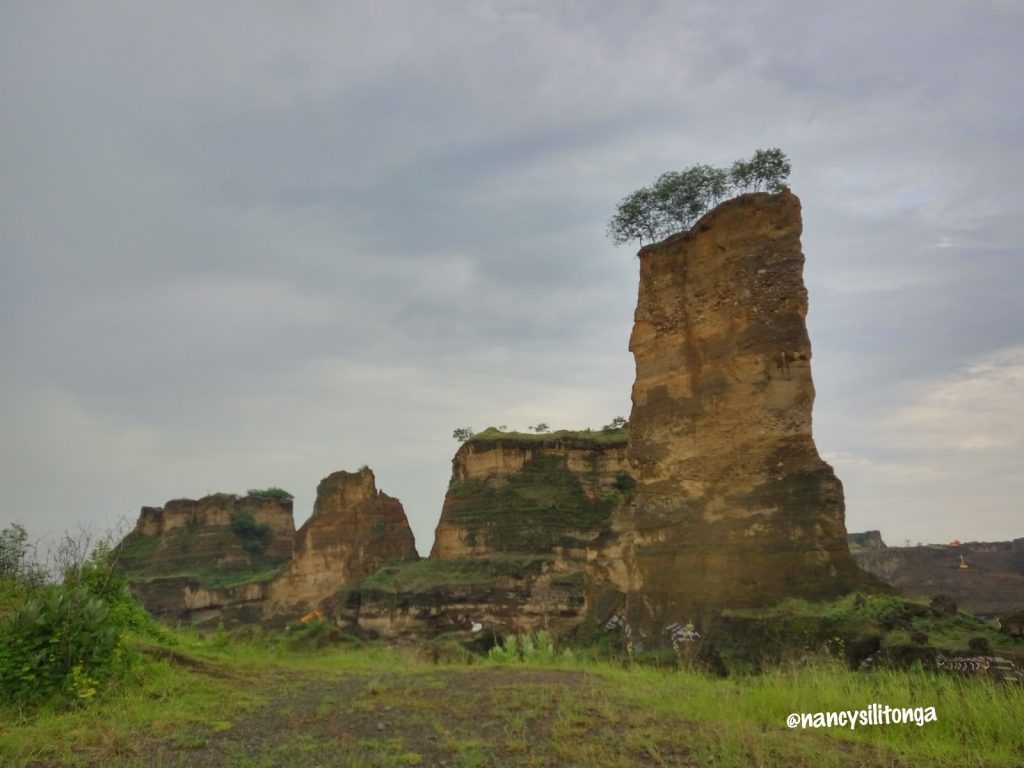
The Brown Canyon, situated in the Rowosari area of Meteseh, Tembalang, Semarang, stands as a testament to the intersection of industrial activity and landscape transformation. Originally a site designated for the intensive extraction of soil, sand, and padas rock—a process that has been ongoing for over a decade—the location has undergone a radical morphological shift. Today, what was once a series of mundane hills has been sculpted into a series of jagged cliffs and deep ravines, drawing comparisons to the iconic Grand Canyon in the United States. While the site remains a fully operational mining zone, it has simultaneously emerged as an unconventional, high-traffic destination for photographers, adventure seekers, and domestic tourists drawn to its stark, industrial aesthetic.
Chronology of the Site Transformation
The evolution of Brown Canyon is not the result of deliberate tourism planning, but rather a byproduct of long-term geological exploitation. For more than ten years, the area has served as a primary source of raw materials for construction projects throughout Central Java. The heavy machinery—excavators, dump trucks, and crushers—that characterizes the site is responsible for the systematic removal of topsoil and rock.
This continuous extraction process has exposed subterranean layers and created steep, vertical rock faces that would otherwise remain hidden beneath a typical landscape. The chronology of this transformation can be divided into three phases: the initial phase of early exploration and small-scale extraction; the secondary phase, which saw the arrival of heavy industrial equipment and large-scale clearing; and the current phase, where the site has attained a level of aesthetic recognition, leading to increased public visitation despite the absence of formal tourism infrastructure.

Geological and Industrial Context
From a geological perspective, the formation of these canyons is an accidental mimicry of natural erosion. While the Grand Canyon was shaped by the Colorado River over millions of years, the Brown Canyon’s topography is the result of human-driven mechanical excavation. The "canyons" are essentially man-made cuts into the earth, where the removal of sand and stone has left behind pillars and tall embankments.
The site is currently managed by private mining operations. These entities hold the rights to extract materials, which are essential for regional infrastructure development. The primary material recovered is padas, a type of semi-hardened soil or soft rock, alongside sand and common fill dirt. The industrial nature of the site is its most defining characteristic, with the constant movement of heavy vehicles and the resulting dust clouds serving as constant reminders of its primary purpose.
Visitor Experience and Logistical Challenges
Because Brown Canyon is not a state-sanctioned tourism site, it lacks the standard amenities expected at popular recreational areas. There are no marked trails, safety barriers, or designated parking lots. Visitors are essentially entering a private, active industrial zone.
The accessibility of the area varies depending on weather conditions. During the rainy season, the unpaved roads leading to the canyon become muddy, uneven, and prone to significant water pooling. Conversely, in the dry season, the site is notoriously dusty due to the constant traffic of dump trucks. Local authorities and observers have noted that navigating these roads requires vigilance, as the path was engineered for heavy industrial transport rather than passenger vehicles.
Regional Connectivity and Access Routes
Access to the site is possible via several routes, reflecting its location on the outskirts of Semarang. For those traveling from the eastern part of the city, the route generally follows Jalan Fatmawati toward the regional public hospital (RSUD Kota Semarang) in Ketileng, proceeding toward the Klipang Golf area. The final approach involves crossing a series of bridges; upon crossing the third major bridge, a turn to the south leads to a two-kilometer stretch that brings visitors into the heart of the canyon.
Travelers arriving from the west, including those coming from the Kendal or Batang regions, typically navigate through the "Pasar Kambing" junction, passing through the Kedung Mundu and Sambiroto corridors before reaching the Meteseh market area. Similarly, visitors arriving from the direction of Solo or Yogyakarta usually traverse the southern route through Banyumanik and the Diponegoro University (UNDIP) area, descending the Sigar Bencah incline to reach the Meteseh vicinity.
Public Safety and Occupational Implications
The dual use of the site—as a mining area and a tourist attraction—presents significant safety implications. The presence of active heavy machinery, shifting ground, and steep, unstable cliffs poses risks to visitors who are not accustomed to industrial work environments.
Public health experts and site observers recommend that visitors take specific precautions. For those who choose to visit during active operating hours, protective gear is considered essential. This includes high-quality respiratory masks or buffs to filter the high concentration of airborne dust, and protective eyewear to shield against debris. The absence of a formal management body means that safety oversight is minimal, shifting the burden of risk entirely onto the individual visitor.

Economic and Environmental Impact Analysis
The emergence of Brown Canyon as a tourist site has had a negligible but noticeable impact on the local economy. While there are no formal ticket counters, local residents have occasionally facilitated parking arrangements for visitors, charging a nominal fee—typically around Rp 5,000 for entry and Rp 10,000 for parking. This indicates a nascent informal economy forming around the site’s popularity.
However, the broader environmental implications are significant. The removal of large volumes of earth affects local drainage patterns and soil stability. Environmental scientists note that without a post-mining rehabilitation plan, the landscape remains vulnerable to erosion and landslides. Furthermore, the lack of waste management facilities at the site has led to concerns regarding littering, as the influx of tourists often leaves behind non-biodegradable waste in an area that lacks municipal sanitation services.
Official Perspectives and Future Status
To date, the Semarang municipal government and the provincial authorities of Central Java have not formally designated Brown Canyon as a protected tourism site. The land remains under the jurisdiction of industrial and private mining entities. Discussions regarding the future of the area often center on the eventual cessation of mining activities.
Proposals for the "post-mining" phase of Brown Canyon have been debated by urban planners. Some suggest that once the extraction is completed, the site could be rehabilitated into a planned park or a geological education center. However, such a transition would require massive investment in infrastructure, soil stabilization, and safety measures. As it stands, the site exists in a state of suspended animation: an industrial workspace that is simultaneously being redefined by the gaze of the public.

Socio-Cultural Significance
The phenomenon of Brown Canyon highlights a growing trend in domestic tourism, often referred to as "industrial tourism" or "ruin photography." There is a distinct cultural appeal in visiting sites that appear desolate or "otherworldly." For photographers, the contrast between the sharp, artificial cliffs and the natural vegetation at the summits provides a visual narrative of change and resilience.
For many visitors, the journey to the canyon is a departure from the routine of urban life. The sheer scale of the landscape offers a sense of perspective that is rarely found within the dense, built-up areas of Semarang city center. While the site remains a work in progress—both industrially and conceptually—it stands as a poignant reminder of the permanent ways in which human activity reshapes the natural world.
Conclusion
Brown Canyon remains an anomaly in the landscape of Indonesian tourism. It is a place defined by its lack of polish and its raw, functional existence. Whether it will ever transition into a managed park or eventually be reclaimed by nature remains to be seen. For now, it serves as a rugged, challenging, and visually striking destination for those willing to navigate the complexities of an active industrial site. The site is a reminder that beauty can often be found in the most unlikely of places, even those born from the dust and labor of industrial extraction. Visitors are advised to prioritize safety, respect the active mining operations, and remain cognizant that they are guests in a zone primarily dedicated to the economic development of the region.