The ‘Foldover Jeans’ Phenomenon: A Gen Z Fashion Trend Challenging Traditional Norms and Stirring Generational Debate

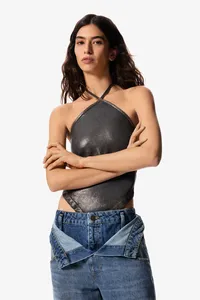
A distinctive new fashion trend has emerged among Generation Z, prompting widespread discussion and, in many instances, exasperated head-shaking from older generations. This trend centers on a particular style of trousers that intentionally gives the appearance of being unzipped or unbuttoned. Popularly dubbed ‘foldover jeans,’ this look has rapidly gained traction with Gen Z and achieved viral status across social media platforms. Its characteristic appearance, mimicking a forgotten zipper or an unfastened button, frequently leads to it being perceived as immodest or even unfinished.
Foldover jeans are, in essence, meticulously designed garments featuring a waistband that is deliberately folded outwards and often stitched in place to create the illusion of an open or partially undone closure. Some iterations of these designs incorporate subtle patterns, such as small floral motifs or delicate stripes, on the exposed inner lining, further enhancing the trompe l’oeil effect of revealing what might otherwise be considered an undergarment. This sartorial choice deliberately blurs the lines between conventional dress and a playful subversion of modesty, making a bold statement about personal style and comfort.
The Genesis and Ascent of a Viral Trend
While seemingly a recent phenomenon, the roots of the foldover jeans trend can be traced back to 2022. It began to gain significant momentum when influential figures in popular culture, including celebrities and social media personalities, were observed adopting variations of the style. Early adopters who helped propel this trend into the mainstream included American reality television personality and TikTok star Addison Rae, Grammy-winning musician Doja Cat, K-pop idol Hwasa from the girl group MAMAMOO, and Jennie Kim of the globally renowned BLACKPINK. These celebrities were frequently photographed and filmed wearing jeans with their zippers intentionally left undone and the waistbands artfully folded down, setting a precedent that resonated deeply with their young, trend-conscious followers.
The endorsement from such high-profile figures played a crucial role in legitimizing the look and accelerating its diffusion. What started as a seemingly spontaneous styling choice soon transformed into a deliberate fashion statement, rapidly disseminated through the powerful engines of social media. Platforms like TikTok and Instagram became fertile ground for the trend’s exponential growth, where countless users began replicating and adapting the style. Short-form video content showcasing "foldover jeans outfits" or "DIY foldover jeans hacks" garnered millions of views, likes, and shares, creating a self-reinforcing cycle of visibility and adoption. Fashion challenges and style guides quickly populated feeds, further cementing its status as a must-try look for Gen Z.
From DIY Experiment to Mainstream Retail
The evolution of foldover jeans from a celebrity-inspired DIY experiment to a commercially viable product highlights the rapid pace of modern fashion cycles. Initially, many young enthusiasts achieved the look by simply unzipping their existing jeans and folding down the waistband. This organic, user-driven adaptation demonstrated a desire for the aesthetic that transcended the availability of specific products. Recognizing this burgeoning demand, fashion brands, spanning a wide spectrum from fast fashion retailers to high-end luxury labels, quickly moved to incorporate foldover designs into their collections.

Today, a diverse array of brands offers their take on foldover jeans. Fast fashion giants like Fashion Nova and Hollister have embraced the trend, making it accessible to a broad consumer base at competitive price points. Contemporary brands such as Edikted and AGOLDE have also introduced their versions, often with a focus on quality denim and nuanced design. Even luxury Japanese label Sacai, known for its innovative deconstruction and hybrid garments, has presented sophisticated interpretations of the foldover aesthetic, showcasing its versatility and appeal across different market segments. This widespread adoption by brands underscores the trend’s commercial viability and its deep penetration into the current fashion landscape.
The pricing of foldover jeans reflects this broad market appeal, ranging from approximately US$35 (equivalent to around IDR 628,000) for more mass-produced options to a staggering US$1,210 (approximately IDR 21.7 million) for designer interpretations. This significant price differential indicates that the trend caters to various consumer budgets and preferences, from those seeking an affordable way to stay current to those willing to invest in high-fashion pieces. The availability across such a wide price spectrum further solidifies its position as a pervasive and adaptable fashion movement.
A Chasm of Perception: Generational Divide
Despite its undeniable popularity among Gen Z, the foldover jeans trend has not been universally embraced, particularly by older generations. The aesthetic, which intentionally mimics a state of undress, has frequently been met with bewilderment and even outright disapproval from parents and guardians who perceive it as inappropriate or suggestive. This generational divide underscores a broader cultural clash regarding norms of modesty, self-expression, and the evolving boundaries of public attire.
Lisa Alvarez, a mother from Queens with two daughters who have adopted the trend, articulated a common parental sentiment to the New York Post: "This trend really gets under my skin. Every time they come down from their rooms, I feel like saying, ‘Please zip up your pants, honey.’" Her reaction, echoing the "geleng-geleng kepala" (head-shaking in disapproval) mentioned in the initial observation, symbolizes the frustration many parents feel when confronted with fashion choices that challenge their established ideas of decorum. For these parents, the trend is not merely a style preference but a perceived lapse in proper grooming or even a rebellious statement against traditional values. The visual cue of an "unzipped" or "unbuttoned" garment triggers an automatic response rooted in social conventions of what is considered acceptable public appearance.
Youthful Expression and Market Momentum
In stark contrast to parental apprehension, experts in youth culture and fashion view the foldover jeans trend as a natural evolution of Gen Z’s approach to personal style. Aiyana Ishmael, a lifestyle editor for Cosmopolitan USA, offered an insightful perspective on the phenomenon. "Gen Z is embracing this trend with incredible enthusiasm," Ishmael noted. "The style looks cute, a little mischievous, and it’s also a way to show more skin, something young people often enjoy." Her analysis highlights the multifaceted appeal for younger demographics: a blend of playful defiance, aesthetic appeal, and a desire to express individuality through a subtle yet noticeable alteration of conventional clothing. The "mischievous" element speaks to Gen Z’s inclination to subvert expectations and engage with fashion in a way that is both personal and provocative.
The commercial success of foldover jeans further substantiates their popularity. According to Ishmael, these styles have consistently sold out throughout the summer, indicating robust consumer demand. This observation is corroborated by firsthand accounts from retail environments. A sales associate at a Hollister store in Manhattan reported that foldover jeans are perpetually in high demand, selling out quickly and requiring frequent restocking to meet customer needs. Similar trends have been observed at other prominent American retailers like Nordstrom and Edikted, where the style’s rapid turnover underscores its widespread appeal and commercial strength. This fervent market response signifies that the trend is not merely a fleeting social media fad but a significant commercial force driven by Gen Z’s purchasing power and influence.

The phenomenon has also spurred a wave of creativity among students, demonstrating Gen Z’s resourcefulness and desire for personalized expression. Sofia Yassinger, a student at Duke University, observed that many of her peers are embracing a do-it-yourself (DIY) approach. They purchase oversized loose-fitting denim jeans and then custom-tailor or sew the waistbands themselves to achieve the distinctive foldover effect. This DIY culture not only allows for greater customization and affordability but also speaks to a deeper desire for unique sartorial statements. As Yassinger succinctly put it, "They want to look sexy," encapsulating a core motivation behind the trend: an empowered sense of self and a confident embrace of one’s body.
Broader Context: Fashion as Social Commentary
The foldover jeans trend is not an isolated incident but rather fits into a broader historical narrative of fashion serving as a powerful medium for social commentary and generational identity. Throughout history, youth subcultures have consistently used clothing to challenge existing norms, express dissent, and forge a distinct identity separate from older generations. From the flappers of the 1920s who defied Victorian modesty with shorter hemlines and boyish silhouettes, to the rebellious leather jackets of the 1950s rock-and-roll era, the provocative miniskirts of the 1960s, the anti-establishment ripped jeans of punk in the 1970s, and the disheveled aesthetic of 1990s grunge, each generation has found its voice through sartorial choices that often bewildered or offended their elders.
The current foldover jeans trend can be seen as Gen Z’s contemporary contribution to this lineage. It subtly challenges traditional notions of "dressed" versus "undressed," playing with the boundaries of what is considered appropriate public attire. In an era increasingly defined by digital self-expression and the curated persona, fashion becomes an extension of identity, a visual language spoken by a generation that values authenticity, individuality, and a nuanced understanding of irony. The perceived "incompleteness" of the foldover design can be interpreted as a rejection of rigid perfection, embracing a more relaxed, perhaps even playful, approach to self-presentation.
Furthermore, the role of social media platforms, particularly TikTok, in accelerating and amplifying such trends cannot be overstated. These platforms have democratized fashion influence, allowing micro-trends to emerge and spread globally at unprecedented speeds. Gen Z, as digital natives, are highly adept at navigating these spaces, consuming and contributing to trends with an innate understanding of viral mechanics. The constant influx of new aesthetics and the rapid cycle of trends mean that what might seem radical today could become commonplace tomorrow, driven by collective participation and digital endorsements.
Implications and Future Outlook
The foldover jeans trend offers valuable insights into the evolving landscape of youth fashion, consumer behavior, and intergenerational dynamics. Its commercial success underscores the significant purchasing power and influence of Gen Z, a demographic that is increasingly shaping global markets. Brands that can effectively tap into this generation’s values – which often include individuality, comfort, and a subtle challenge to the status quo – are poised for significant growth. The trend also highlights the enduring human need for self-expression through clothing, a desire that transcends age but manifests differently across generations.
As with all fashion trends, the longevity of foldover jeans remains to be seen. Fashion is inherently cyclical, with styles continuously being reinterpreted and revived. However, its current impact is undeniable. It serves as a potent cultural marker, reflecting Gen Z’s experimental spirit, their comfort with challenging established norms, and their adeptness at leveraging digital platforms to define and disseminate their unique aesthetic. Whether it endures as a classic or fades into the annals of fleeting fads, foldover jeans have certainly made their mark as a symbol of contemporary youth culture, sparking conversations and influencing wardrobes across the globe.