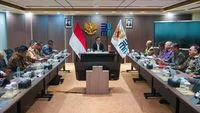
Directorate General of Taxes Clarifies Role of Babinsa and Digital Strategy in Enhancing National Tax Compliance


The Directorate General of Taxes (DJP) under the Indonesian Ministry of Finance has officially addressed and refuted circulating rumors regarding the involvement of the Bintara Pembina Desa (Babinsa), a village-level territorial unit of the Indonesian National Armed Forces (TNI), in the direct collection or "hunting" of taxpayer data. In a formal clarification released through its official communication channels, including its verified Instagram account @ditjenpajakri, the tax authority emphasized that while coordination with local security and community officers exists, the primary responsibility for tax auditing and data collection remains strictly within the jurisdiction of trained tax officials.
The clarification comes at a time of heightened public discourse following the issuance of new guidelines aimed at strengthening tax compliance. According to the DJP, the involvement of Babinsa, along with the Bhayangkara Pembina Keamanan dan Ketertiban Masyarakat (Bhabinkamtibmas) from the National Police (Polri), is limited to supporting field coordination and ensuring the safety and procedural integrity of tax officers when they conduct site visits. In many instances, these community-level officers serve as witnesses or administrative escorts to verify that tax officials have carried out their duties in accordance with established legal protocols.
"The news regarding Babinsa participating in the hunt for tax data in villages is confirmed to be NOT TRUE," the Directorate General of Taxes stated on Monday, July 20, 2026. "Territorial apparatus are not tax auditors; rather, they provide coordination support to ensure that field visits by tax officers proceed according to procedure."
Understanding the Legal Framework: SE-8/PJ/2026
The confusion surrounding the role of military and police personnel in tax matters surfaced following the enactment of the Circular Letter of the Director General of Taxes Number SE-8/PJ/2026. Titled "Guidelines for Taxpayer Compliance Supervision," the document was issued on July 15, 2026. The circular was designed to provide a comprehensive framework for tax officials to ensure sustainable compliance within Indonesia’s self-assessment tax system.
Under a self-assessment regime, the burden of reporting and calculating tax liability rests with the taxpayer. However, the government maintains the right and responsibility to monitor these reports to ensure accuracy and fairness. SE-8/PJ/2026 outlines three primary pillars of supervision:
- Supervision of Registered Taxpayers: Monitoring individuals and entities already within the tax system to ensure timely and accurate payments.
- Supervision of Unregistered Taxpayers: Identifying potential taxpayers who meet the legal criteria but have not yet registered for a Taxpayer Identification Number (NPWP).
- Regional Supervision: A broader geographical approach to mapping economic activity within specific jurisdictions to expand the national tax base.
The circular mentions the development of "information networks" as a method of regional supervision. This includes potential coordination with local figures and territorial authorities like Babinsa or Bhabinkamtibmas to understand the economic landscape of a village or district. It is this specific mention of "building networks" that led to public speculation about military involvement in fiscal audits.
The Shift Toward Digital Surveillance and Remote Sensing
A significant portion of the DJP’s clarification focused on the modernization of tax administration. The authority noted that physical field visits are becoming less frequent as the department pivots toward a high-tech, data-driven approach. In the digital era, the "hunt" for data is conducted through algorithms and satellite imagery rather than door-to-door inquiries.
The DJP revealed that it currently utilizes a sophisticated array of technological tools to monitor compliance, including:
- Remote Sensing and Satellite Imagery: Used primarily for monitoring Land and Building Tax (PBB) and identifying large-scale commercial land use in sectors such as plantations, mining, and forestry.
- Web Scraping and Big Data Analytics: Automated tools that gather publicly available information from the internet to cross-reference reported income with lifestyle or business activity indicators.
- AI-Driven Risk Analysis: Systems that flag discrepancies in tax filings by comparing them against third-party data from banks, land registries, and other government agencies.
- Taxation Partnership and Mirroring: Comparing business processes and financial results across similar industries to identify outliers that may indicate tax evasion.
By leveraging these technologies, the DJP aims to improve data quality without imposing new administrative burdens on the public or conducting invasive mass audits. The goal is a "risk-based" supervision model where only those with high-probability discrepancies are targeted for further inquiry.
Chronology of the Policy Implementation
The timeline of these developments reflects a broader push by the Indonesian government to modernize its fiscal infrastructure.
- Early 2026: The Ministry of Finance initiates a review of the "Core Tax Administration System" (CTAS), seeking to integrate various data sources into a single, unified platform.
- July 15, 2026: Director General of Taxes signs SE-8/PJ/2026, providing the field staff with updated instructions on how to conduct regional monitoring and taxpayer "extensification."
- July 16–18, 2026: Excerpts of the circular begin circulating on social media, specifically highlighting the mention of Babinsa and Bhabinkamtibmas. Public concern grows regarding the potential "militarization" of tax collection.
- July 20, 2026: The DJP issues its official rebuttal and clarification, explaining that the role of territorial officers is purely supportive and procedural, consistent with long-standing government practices in other sectors.
The Role of Field Visits: PPM and PKM
Despite the digital shift, physical visits remain a component of the tax authority’s strategy. These are categorized into two main activities:
- Periodic Payment Supervision (Pengawasan Pembayaran Masa/PPM): Ensuring that taxpayers fulfill their monthly obligations.
- Material Compliance Supervision (Pengawasan Kepatuhan Material/PKM): A deeper dive into the accuracy of the data reported in Annual Tax Returns (SPT).
When tax officers conduct these visits—often referred to as "canvassing"—they may require a presence that ensures the visit is officially recognized by the local community. This is where Babinsa and Bhabinkamtibmas play a role. Their presence is intended to prevent "fake" tax officers from extorting citizens and to provide a neutral third-party witness to the interaction. This practice is not unique to taxation; it is a standard administrative procedure for various government initiatives in Indonesia, including land redistribution programs and social subsidy distributions.
Economic Implications and the Tax-to-GDP Challenge
The backdrop of this policy is Indonesia’s ongoing effort to raise its tax-to-GDP ratio, which has historically lagged behind regional peers in Southeast Asia. To fund ambitious infrastructure projects and social welfare programs, the government must broaden its revenue base.
Economic analysts suggest that while the use of digital data is the correct path forward, the "human element" of regional supervision is still necessary in a country as geographically and economically diverse as Indonesia. Large segments of the informal economy remain "off the grid" from a digital perspective. In such cases, understanding the local economic "pulse" through regional supervision is the only way to ensure horizontal equity—where individuals with similar incomes pay similar taxes, regardless of whether they are in the formal or informal sector.
However, analysts also warn that the perception of military involvement can be counterproductive. "Taxation relies heavily on the ‘social contract’ between the citizen and the state," says a Jakarta-based fiscal policy researcher. "If the public perceives tax collection as an act of intimidation rather than a civic duty, it can lead to decreased voluntary compliance. The DJP’s quick clarification is a necessary step to maintain that fragile trust."
Strategic Goals of the New Guidelines
The DJP maintains that the new guidelines under SE-8/PJ/2026 are not about "chasing" citizens but about "fairness." By identifying those who have escaped the tax net, the government reduces the relative burden on those who have been compliant. The specific objectives of the current strategy include:
- Expansion of the Tax Base: Finding "shadow economy" actors who benefit from state infrastructure but do not contribute to its maintenance.
- Data Accuracy: Cleaning up the national database to ensure that tax notices are only sent to those with actual liabilities.
- Inter-Agency Synergy: Breaking down "data silos" between the tax office, local governments, and security forces to create a more transparent economic map of the country.
The Directorate General of Taxes concluded its statement by urging the public to remain vigilant against misinformation. They encouraged taxpayers to use official channels, such as the "Kring Pajak" call center or the official DJP website, to verify any visits from individuals claiming to be tax authorities. As the 2026 fiscal year progresses, the DJP remains committed to a "professional, persuasive, and procedural" approach to tax supervision, leaning on the power of big data while maintaining traditional community coordination for security and legitimacy.