Vinicius Junior and Girlfriend Virginia Fonseca Turn Heads at Spanish Grand Prix Amid Relationship Renaissance

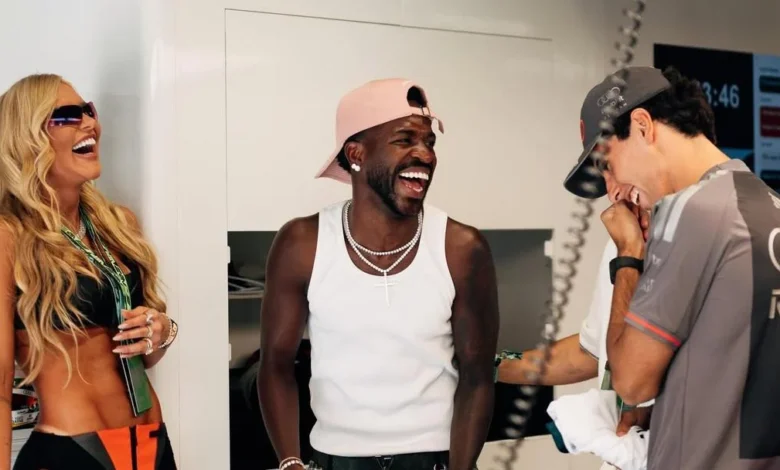
Real Madrid star Vinicius Junior and his partner, prominent Brazilian television presenter and digital influencer Virginia Fonseca, recently captured widespread international attention during a high-profile appearance at the Formula 1 Spanish Grand Prix in Madrid. The celebrity couple’s presence at the motorsport spectacle quickly dominated sports and entertainment headlines, driven largely by their coordinated yet striking paddock fashion choices and a relationship history that has recently weathered high-profile public scrutiny.
The high-octane weekend in Madrid brought together elite athletes, global celebrities, and motorsport enthusiasts, but few pairs drew as many lenses as the Brazilian football forward and his influential partner. Walking hand-in-hand through the paddock, the couple exuded a relaxed yet undeniably glamorous aura that was immediately captured and shared across multiple social media platforms, sparking viral commentary and fierce debate among fashion critics and sports fans alike.
Paddock Fashion and Public Reception
The sartorial choices made by Vinicius and Fonseca during the Grand Prix offered a masterclass in modern athletic-chic styling. Vinicius opted for a relaxed yet contemporary casual ensemble, featuring a crisp white tank top paired with classic dark trousers. To add a distinct urban flair to the look, the Real Madrid forward tied a casual shirt around his waist and accessorized with a vibrant pink snapback cap, balancing athletic comfort with high-end streetwear sensibilities.
However, it was Virginia Fonseca’s outfit that became the primary focal point of fashion commentators. The Brazilian television personality and style icon wore an edgy black bralette paired with low-rise sporty trousers. The trousers featured intricate cut-out accents that prominently accentuated her athletic waist and sculpted midriff. The bold, confident look immediately drew comparisons from online observers to various global pop icons, with social media users drawing parallels to international superstars like Shakira due to her voluminous blonde styling and radiant presence.
Fans and digital commentators flooded Instagram and other platforms with remarks celebrating the couple. "Vinicius Jr is truly living the dream life!" wrote one prominent user, encapsulating the sentiment of many supporters who view the young forward’s lifestyle as the pinnacle of modern football stardom. Beyond the superficial commentary on their attire, the public appearance served as a significant milestone for the couple, symbolizing solidarity and a unified front following months of intense tabloid speculation.
Relationship Chronology and Public Apology
The path to their recent public display of affection has not been entirely straightforward. Vinicius Junior and Virginia Fonseca have been romantically linked since the previous European summer, establishing themselves as one of high society’s most closely watched cross-industry couples. However, their nascent relationship was severely tested earlier in their timeline by public allegations of infidelity that threatened to derail the romance before it could fully solidify.
The crisis came to a head when rumors of indiscretion surfaced in digital media circles, prompting the Real Madrid star to take the unprecedented step of issuing a public apology. In an era where professional athletes frequently rely on public relations agencies to manage crises with sterile, boilerplate statements, Vinicius chose a remarkably candid and direct approach to address his shortcomings and seek reconciliation.
In his widely circulated statement, the Brazilian international reflected on the personal growth necessitated by the ordeal. "Chúng ta đều trải qua những khoảnh khắc khiến chúng ta suy ngẫm và trưởng thành," or translated into the context of his English admissions, the footballer acknowledged the gravity of his actions. He noted that he had recently navigated circumstances that forced him to reevaluate behaviors that fundamentally misaligned with his core character and the foundational values he wished to establish in a partnership.
Crucially, Vinicius candidly addressed the status of their relationship at the time of the incident, noting that while they had not yet formally committed to an exclusive official title, a genuine and profound bond already existed between them. "I am not ashamed to admit that I was careless, that I did not respond in the best way that I should have, and that I have disappointed her. Therefore, I want to publicly apologize," the forward stated. This raw admission of guilt, rather than alienating his partner, appeared to act as a bridge of accountability, allowing the couple to rebuild their foundation on transparency and mutual respect.
Background Context: The Intersection of Football, Motorsport, and Celebrity Culture
The appearance of Vinicius Junior at the Formula 1 Spanish Grand Prix highlights a broader, rapidly accelerating cultural phenomenon: the convergence of elite football culture with premier motorsport events. In recent years, Formula 1 has successfully positioned itself as the ultimate global playground for A-list celebrities, top-tier athletes, and fashion icons. Since Liberty Media acquired the commercial rights to Formula 1, the sport has undergone a massive demographic shift, largely driven by the explosive success of Netflix’s docuseries Drive to Survive.
For athletes like Vinicius Junior, attending a Grand Prix is no longer merely a weekend leisure activity; it is a strategic exercise in personal brand building and cultural positioning. Real Madrid players, operating at the absolute apex of club football, frequently inhabit the intersection of elite sports and high fashion. By gracing the Madrid paddock, Vinicius aligns himself with a global elite, leveraging the high-speed glamour of Formula 1 to transcend the traditional boundaries of association football.
Furthermore, Virginia Fonseca’s presence underscores the immense power of digital influencers and media personalities in shaping modern sports narratives. As a prominent presenter and digital entrepreneur in Brazil, Fonseca commands an audience of millions across her social media channels. Her relationship with one of the most recognizable footballers on the planet creates a synergistic media engine, where every public appearance is magnified, analyzed, and monetized through digital engagement. The coupling of a generational football talent with a powerhouse digital media figure represents the modern archetype of celebrity synergy in the digital age.
Implications for Vinicius Junior On and Off the Pitch
For Vinicius Junior, navigating the intense glare of public scrutiny both on the football pitch and within his personal life is an ongoing test of maturity. At a relatively young age, the Brazilian forward carries the immense weight of leading the attacking line for both Real Madrid and the Brazil national team. Off the pitch, his life is subjected to constant microscopic examination by international media outlets, paparazzi, and millions of social media followers.
The transparent handling of his relationship challenges, culminating in his public apology and subsequent united front with Fonseca, suggests a growing emotional maturity. In professional sports, personal stability often correlates directly with on-field performance. Athletes who successfully navigate the complexities of high-profile relationships without allowing personal turmoil to disrupt their professional focus are better equipped to sustain peak athletic output over lengthy, demanding seasons.
As Vinicius continues to cement his legacy as one of the finest talents in world football—consistently contending for individual accolades such as the Ballon d’Or and driving Real Madrid to domestic and European glory—his off-pitch life remains an integral component of his global brand. Incidents like the recent paddock appearance in Madrid demonstrate that he is learning to balance the unrelenting pressures of elite athletic competition with the realities of living a very public romance.
Ultimately, the viral moment at the Spanish Grand Prix served as more than just a snapshot of glamorous lifestyle aesthetics. It encapsulated a narrative of accountability, modern celebrity relationship dynamics, and the ever-expanding crossover between elite sports and global culture. As Vinicius Junior and Virginia Fonseca continue their journey together in the public eye, their ability to navigate both triumph and turbulence will undoubtedly remain a subject of fascination for fans and media observers worldwide.