The modern traveler’s itinerary is undergoing a significant transformation. Where once the focus lay solely on cultural landmarks, culinary tours, or relaxation, a burgeoning segment of the global population is now shaping their travel schedules around the rigorous demands of Hyrox. This intersection of high-intensity fitness and international tourism, commonly referred to as "race-cation," has evolved from a niche hobby into a dominant lifestyle trend, compelling thousands to cross borders not just for leisure, but for the challenge of the world’s most prominent indoor fitness race.
The Rise of Hyrox as a Global Phenomenon
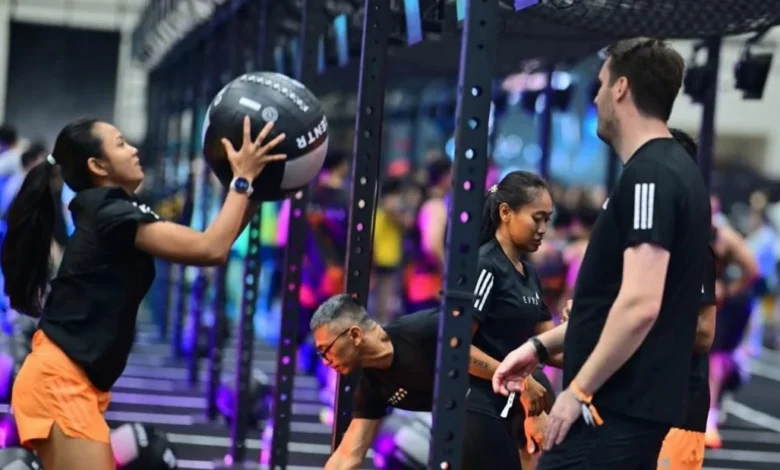
Hyrox, founded in 2017 in Germany by Christian Toetzke and Moritz Fürste, was designed to bridge the gap between endurance sports and functional fitness. Combining eight 1-kilometer runs with eight functional workout stations—such as the sled push, sandbag lunges, and burpee broad jumps—the competition offers a standardized format that allows athletes to compare their times globally.
While the sport initially gained traction within the European CrossFit and gym-going community, its expansion has been meteoric. By 2026, the event series has permeated major metropolitan hubs across Asia, Europe, and North America. This standardization is the bedrock of the "race-cation" trend. Because the event layout, equipment, and rules remain identical whether a participant is in London, Sydney, or Taipei, athletes can accurately measure their performance progress on a global scale while exploring diverse urban landscapes.
The Anatomy of a Race-cation
For individuals like Alan Cheung, a Singapore-based orthopedic surgeon, the appeal of Hyrox is multifaceted. Having competed in nine races across cities including Seoul, Sydney, Melbourne, Hong Kong, Taipei, and Bangkok, Cheung embodies the demographic currently driving this shift in travel behavior.
"I enjoy the synergy between personal health and global exploration," Cheung notes. "Hyrox acts as the anchor for my travel. It provides a structured goal that motivates training, which then serves as the excuse to visit a city I might not have otherwise prioritized."
This sentiment is echoed by many in the professional and amateur athletic communities. The ability to pair a grueling physical test with a post-race recovery period—often involving local gastronomy, sightseeing, and cultural immersion—has created a symbiotic relationship between sports event organizers and the tourism industry. Municipalities have begun to recognize the economic impact of these events, as thousands of participants, their families, and support crews occupy hotels, utilize local transportation, and contribute to the hospitality sector for several days surrounding the competition.
Family Dynamics and Social Integration
The trend is not restricted to solo competitors. Increasingly, Hyrox events are functioning as the centerpiece for family reunions and group vacations. Amelia Yeo’s experience at Hyrox Incheon serves as a poignant case study. After nearly eight years of failed attempts to coordinate a multi-generational family vacation, her registration for the Incheon event provided the necessary catalyst.
Her parents, siblings, and extended family traveled to South Korea to serve as her support system. This shift turns a potentially solitary endeavor into a collective experience. "The pressure of the race is balanced by the camaraderie of having your support network present," Yeo explains. "After the race, the stress dissipates, and the rest of the trip transitions into a standard vacation. It turns a singular physical goal into a shared memory."
Beyond individual families, large training clubs are capitalizing on this model. The DOP Training Club from Hong Kong, which recently mobilized 90 members for a trip to Bangkok, illustrates the rise of organized fitness tourism. These groups often secure block bookings at hotels and arrange private social events, effectively turning a competitive weekend into a team-building retreat.
The Culture of Collection and Status
As the frequency of travel for races increases, a new subculture of "collector" athletes has emerged. Angus Tan, a participant from Singapore, highlights the significance of physical memorabilia as a marker of achievement. The "patch" or emblem culture, where participants collect race-specific badges to affix to their kit bags, serves as a visual map of their competitive journey.
This gamification of travel mimics the achievement-oriented culture found in long-distance running, specifically the World Marathon Majors (WMM). Just as runners chase the "Six Star Medal," Hyrox participants are increasingly setting their sights on the Hyrox World Championships. The 2026 Championships in Stockholm, Sweden, serves as the ultimate destination for the season, attracting elite performers and qualified amateurs who have navigated regional qualifiers throughout the year.
Economic and Logistical Implications
The broader implications of this trend for the travel industry are significant. Hospitality and tourism boards are beginning to view fitness events as high-value tourism drivers. Unlike standard tourists, race participants often stay longer, spend more on high-end nutrition and recovery services, and demonstrate higher repeat-visit intent if the venue and city infrastructure are accommodating.
However, the logistics of transporting fitness enthusiasts present new challenges. Airlines and hotel chains are increasingly required to account for the specific needs of these travelers—such as specialized nutrition, space for recovery equipment, and proximity to large-scale exhibition centers.
Furthermore, the rise of Hyrox complements, rather than displaces, the existing landscape of endurance tourism. The World Marathon Majors, which recently expanded its footprint to include cities like Sydney and Cape Town, continues to see record registration numbers. The coexistence of these two sectors suggests a permanent shift in consumer behavior: the "destination" is no longer just a place, but an experience defined by personal achievement.
Future Projections and Industry Analysis
Industry analysts observe that the "race-cation" phenomenon is likely to see sustained growth as long as international standardization remains consistent. The ability for an athlete to maintain a consistent training regimen in a foreign country—utilizing the same gear and meeting similar communities—reduces the friction typically associated with international travel.
Looking ahead, the calendar for the 2027 season is already being scrutinized by amateur athletes. Cities such as Paris and various Swiss municipalities are currently slated for high-profile events, drawing interest from the veteran pool of Hyrox competitors. As these cities vie for the attention of the growing fitness-tourism market, organizers are under pressure to provide seamless integration between the competition venue and the tourist-friendly infrastructure of the host city.
Conclusion: A New Era of Active Travel
The transformation of Hyrox from a fitness challenge into a travel lifestyle is a testament to the evolving priorities of the modern global citizen. By integrating physical discipline with the desire for exploration, participants have created a sustainable model for international engagement. Whether it is the pursuit of a world championship title in Stockholm or a weekend getaway with a local training club in Bangkok, the trend signifies a move away from passive tourism toward a more active, goal-oriented form of engagement with the world.
As the lines between health, sport, and travel continue to blur, the "race-cation" is poised to remain a cornerstone of the global sports-tourism economy. For the athletes, the patch on their bag is more than just a piece of fabric; it is a ledger of personal growth, family bonding, and the discovery of new horizons through the lens of high-intensity competition. As thousands prepare for their next race, the question for many is no longer "where should I go for vacation?" but "where will my next race take me?"