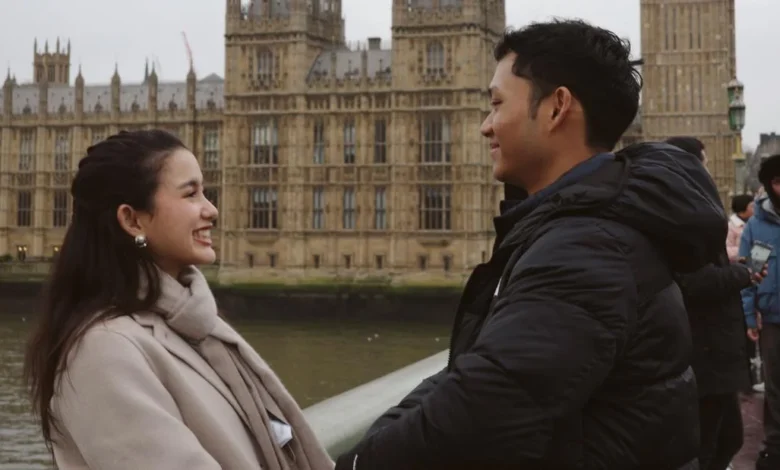
The milestone of a six-year relationship is a significant juncture for any couple, and for public figures Sarah Menzel and Azriel Hermansyah, it serves as a testament to their enduring commitment amidst the public spotlight. On Sunday, September 20, 2026, Sarah Menzel marked this occasion by sharing a series of intimate, reflective posts on her social media platforms, offering a rare glimpse into the dynamics of their long-term partnership. As they navigate the complexities of fame and personal growth, their journey has evolved from a burgeoning romance into a stable, future-oriented union that has captured the attention of their followers and the media alike.

A Reflective Milestone: Celebrating Six Years Together
The anniversary post, shared by Sarah Menzel, was not merely a celebration of time passed, but a poignant articulation of the bond they have cultivated since the inception of their relationship. In her message to Azriel, the son of Indonesian celebrity Anang Hermansyah, Sarah emphasized the evolution of their connection. "Happy 6th anniversary to us, my love," she wrote, expressing gratitude for the years spent growing alongside him. She noted that after six years of loving him, she continues to choose him, underscoring the intentionality that defines their partnership.
For many followers, the post was a touching reminder of the stability the couple has found in one another. Sarah specifically thanked Azriel for serving as her "safe space," a term that highlights the emotional foundation of their relationship. In an industry often characterized by fleeting romances, the six-year mark for this couple stands out as a symbol of consistency and mutual support.

Chronology of a Public Romance
The timeline of Sarah Menzel and Azriel Hermansyah’s relationship is one that has unfolded largely in the public eye. Since they first went public with their relationship, the couple has been a staple in Indonesian entertainment news. Their journey began in an era when social media documentation became a primary way for fans to follow the lives of celebrity offspring.
Throughout the years, the couple has weathered various phases, from the initial excitement of early dating to the more mature stage of planning for a future together. Their relationship has been characterized by mutual integration into each other’s families, with both Sarah and Azriel frequently appearing in family events, travel vlogs, and public engagements involving the broader Hermansyah clan. This familial acceptance has been a cornerstone of their relationship, providing a support system that has undoubtedly contributed to their longevity.

The progression of their relationship reached a significant turning point recently when Azriel officially proposed to Sarah. This engagement served as the natural culmination of their six-year bond, transitioning their status from long-term partners to future spouses. The announcement of their engagement sparked widespread interest, as it signaled a formal commitment to a shared life, moving beyond the label of "dating" toward the promise of marriage.
The Role of Family and Public Perception
The influence of family support in the relationship between Sarah Menzel and Azriel Hermansyah cannot be overstated. As members of high-profile families, their private lives are subject to constant public scrutiny. However, both have managed to maintain a level of privacy that allows their relationship to flourish. The Hermansyah family, led by Anang and Ashanty, has been vocal in their support of the couple, often treating Sarah as an integral part of their family long before the formal engagement.

This public integration has helped the couple navigate the pressures of their status. In modern celebrity culture, the "power couple" dynamic often relies on the ability to balance personal identity with public branding. Sarah and Azriel have demonstrated a balanced approach, appearing together in professional contexts while maintaining the intimacy of their private bond. Their relationship has become a case study in how to navigate modern dating under the gaze of millions, with fans often citing their maturity and lack of controversy as reasons for their widespread popularity.
Fact-Based Analysis of Modern Celebrity Relationships
The longevity of Sarah and Azriel’s relationship provides a unique lens through which to view modern celebrity relationships. Data regarding celebrity marriage and long-term partnerships suggests that external pressure, career demands, and the lack of privacy are the primary contributors to relationship instability. However, couples who successfully navigate these hurdles often do so by establishing clear boundaries and fostering a shared vision for the future.

The "six-year threshold" is often viewed by sociologists as a critical period in long-term relationships, where the initial "honeymoon phase" is long gone, and the reality of long-term partnership—including conflict resolution, career alignment, and family planning—takes precedence. By reaching this point with an engagement already in place, Sarah and Azriel have bypassed the uncertainty that often plagues younger couples. Their ability to remain together for over half a decade suggests a high level of compatibility and the effective use of communication strategies, which are essential for any relationship operating under the intense scrutiny of the media.
Implications for the Future
As the couple looks toward their future, the implications of their union extend beyond their personal happiness. As public figures, their eventual wedding will likely be one of the most anticipated events in the local entertainment industry. Furthermore, their relationship sets a standard for their younger followers regarding the value of patience, commitment, and the importance of finding a partner who serves as a "safe space."

The transition from dating to marriage is a complex legal and social process. With the engagement already formalized, the focus has shifted toward preparations for their wedding, a process that is often as demanding as the relationship itself. The industry’s attention remains fixed on them, not only because of their fame but because of the genuine affection they consistently display.
Conclusion: A Testament to Commitment
In an age where digital connectivity often complicates personal relationships, the story of Sarah Menzel and Azriel Hermansyah remains a narrative of focus and dedication. Six years is a substantial period in the life of any young adult, and the couple has utilized this time to solidify their bond, integrate their families, and prepare for a life together.

The emotional resonance of Sarah’s anniversary message—highlighting the choice to "choose him again and again"—serves as a poignant reminder of what makes a relationship successful. As they continue to move forward in their journey, their story serves as both entertainment and an example of resilience in the face of public life. With their future now clearly defined by their engagement, the public looks on with interest, acknowledging the stability and growth that define this celebrated couple’s six-year path to permanence. The consistency they have shown provides a rare, grounded narrative in a world of rapid-fire celebrity headlines, suggesting that even in the brightest spotlight, true connection can endure and thrive.