Philips Launches Evnia 32M2N6901A Gaming Monitor: A Balanced Approach to 4K QD-OLED Performance

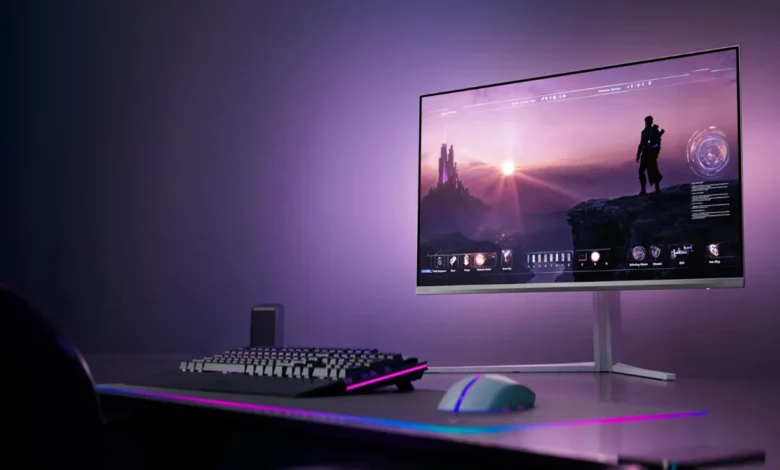
Philips has officially unveiled its latest gaming monitor, the Evnia 32M2N6901A, a device signaling a strategic shift in the premium monitor market by prioritizing a harmonious blend of cutting-edge visual technology, robust performance, and accessible pricing. This new offering features a 32-inch QD-OLED panel boasting a crisp 4K resolution (3840 x 2160 pixels) and a fluid 165Hz refresh rate, a configuration designed to elevate the gaming experience for AAA titles and visually demanding content rather than solely chasing extreme refresh rates for esports. The monitor is slated for availability starting August, with a retail price point of approximately $868 USD (or £649.99), positioning it as a compelling option for gamers seeking top-tier display technology without the prohibitive cost often associated with early OLED adoption.
The introduction of the Evnia 32M2N6901A by Philips underscores a growing trend within the display industry: the democratization of advanced panel technologies. Once exclusively the domain of ultra-high-end, niche products, OLED panels, particularly Quantum Dot OLED (QD-OLED), are now becoming more attainable for a broader segment of the gaming community. This evolution reflects a maturing market where manufacturers are recognizing the demand for a balanced approach, moving beyond pure specification wars to deliver products that offer tangible benefits and value to a wider audience. The Evnia 32M2N6901A appears to be a direct manifestation of this evolving philosophy, aiming to strike a sweet spot between unparalleled image quality and practical gaming performance.
A Deeper Dive into the Evnia 32M2N6901A’s Specifications
Despite its more accessible refresh rate of 165Hz, the Evnia 32M2N6901A is far from a compromise on core display quality. The QD-OLED panel itself is a significant draw, promising the exceptional contrast ratios, true blacks, and vibrant color reproduction that have become hallmarks of OLED technology. This is further bolstered by a rapid 0.03ms response time, virtually eliminating motion blur and ghosting, which are critical for fast-paced gaming. The monitor also carries DisplayHDR True Black 400 certification, assuring users of its capability to deliver a superior HDR experience with deep blacks and bright highlights, enhancing the visual fidelity of games and multimedia content.
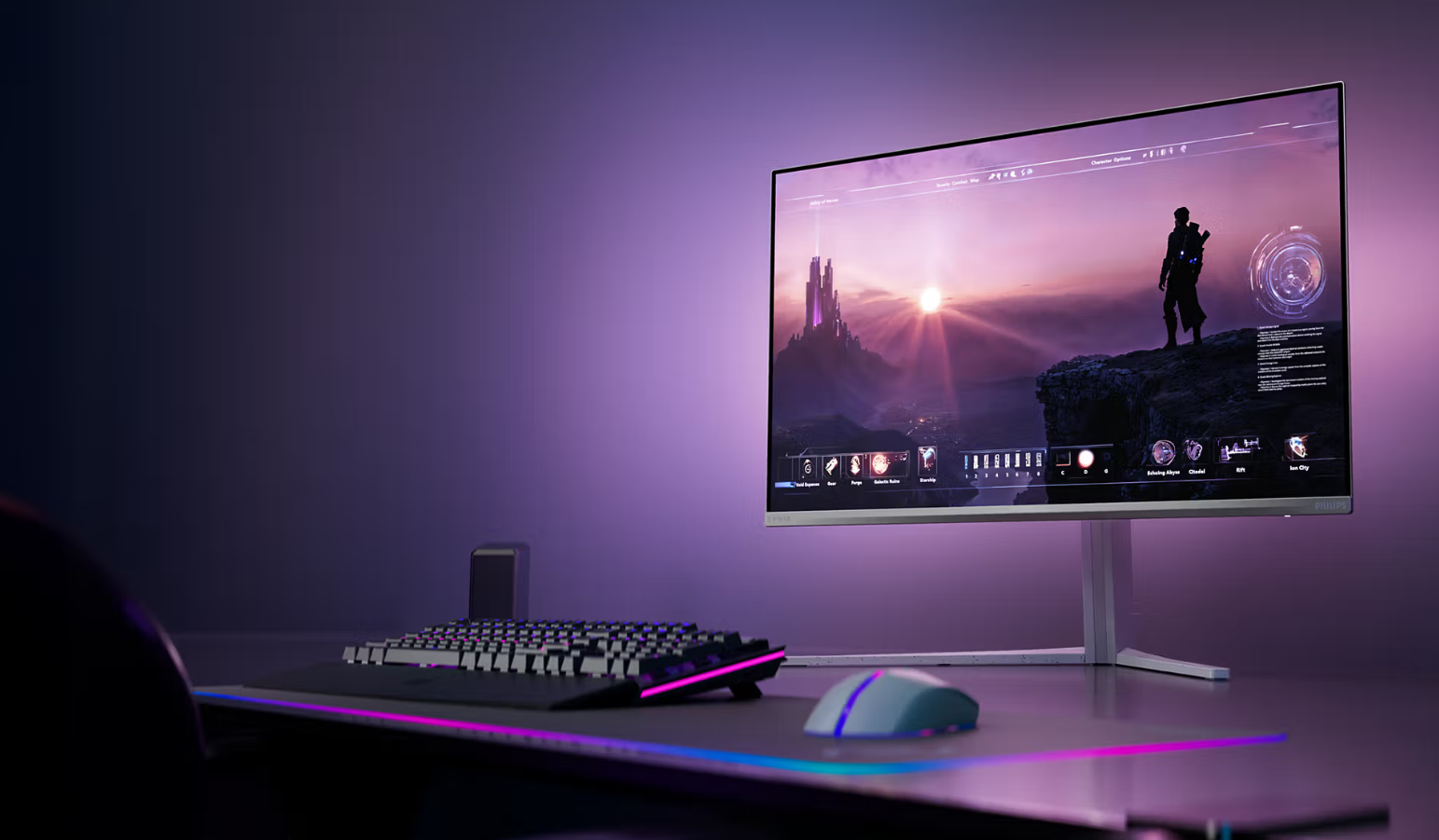
Beyond the core panel technology, Philips has integrated its proprietary AI Ambiglow technology. This feature enhances immersion by dynamically adjusting the RGB lighting on the rear of the monitor to complement the on-screen colors. This creates a halo effect that extends the visual experience beyond the confines of the screen, further drawing the player into the game world. While ambient lighting is not a new concept in gaming peripherals, the AI-driven responsiveness to on-screen content suggests a sophisticated implementation aimed at providing a more nuanced and engaging visual feedback loop.
Connectivity and Versatility: More Than Just a Gaming Monitor
The Evnia 32M2N6901A is not solely designed for the PC gaming enthusiast. Philips has equipped it with a comprehensive suite of connectivity options, underscoring its versatility. The inclusion of two HDMI 2.1 ports ensures full support for the latest gaming consoles like the PlayStation 5 and Xbox Series X, allowing for 4K gaming at high frame rates. A DisplayPort 1.4 connection caters to PC users, while a USB Type-C port with 90W Power Delivery offers a convenient solution for laptop users, enabling single-cable connectivity for both display output and charging.
Further enhancing its utility, the monitor features a built-in USB hub and a KVM (Keyboard, Video, Mouse) switch. These additions are invaluable for users who juggle multiple devices, such as a gaming PC and a work laptop. The KVM switch, in particular, allows users to control multiple computers with a single set of peripherals, streamlining workflows and reducing desk clutter. The integrated 5W stereo speakers, while unlikely to replace a dedicated sound system, provide a convenient audio solution for casual use or when a headset is not preferred. This multifaceted approach to connectivity suggests that Philips envisions the Evnia 32M2N6901A as a central hub for a modern digital setup, catering to both gaming and productivity needs.
Market Dynamics and the Evolution of OLED Gaming Monitors
The pricing and feature set of the Evnia 32M2N6901A are indicative of a significant shift in the premium monitor market, particularly concerning OLED technology. In recent years, 4K OLED monitors often debuted with ultra-high refresh rates, such as 240Hz or even 360Hz, commanding exorbitant prices. These early adopters were primarily targeting the most discerning esports professionals and enthusiasts willing to pay a premium for the absolute bleeding edge. However, the practical benefits of refresh rates exceeding 200Hz for the average gamer, especially at a demanding 4K resolution, are often marginal, and the performance demands on the PC hardware are immense.
Philips’ strategy with the Evnia 32M2N6901A reflects an understanding that for a substantial portion of the gaming audience, the most impactful leap in visual quality comes from the OLED panel itself – its contrast, color accuracy, and response times. By opting for a more "realistic" refresh rate of 165Hz, Philips has managed to bring the coveted 4K QD-OLED experience within a more attainable price bracket. This approach acknowledges that many high-end gaming PCs, while powerful, may struggle to consistently push games above 200 frames per second at 4K resolution. Therefore, a 165Hz monitor offers a near-perfect match for such systems, providing a fluid and visually stunning experience without requiring an astronomical investment or pushing hardware to its absolute limits for diminishing returns.
This strategic pivot by Philips is a clear signal to the industry that innovation in the premium monitor space is not solely about relentless increases in specifications. Instead, it’s increasingly about intelligent product design that balances cutting-edge technology with practical user needs and economic realities. The Evnia 32M2N6901A demonstrates that delivering a superior visual experience, characterized by the inherent advantages of OLED, can be achieved through a well-considered combination of features and a more competitive price point. This makes advanced display technology accessible to a wider demographic of gamers who prioritize picture quality and immersive gameplay over chasing unattainable frame rates.

Future Implications and Consumer Impact
The launch of the Philips Evnia 32M2N6901A has several important implications for the broader monitor market and consumers. Firstly, it is likely to accelerate the adoption of OLED technology in gaming monitors. As more manufacturers follow Philips’ lead and introduce more affordably priced OLED options, the technology will transition from a luxury item to a mainstream premium feature. This increased competition will likely drive down prices further and spur more innovation in OLED panel technology and monitor design.
Secondly, it sets a new benchmark for what consumers can expect from a "premium" gaming monitor. The expectation is no longer solely about raw refresh rates, but about a holistic experience that includes exceptional image quality, advanced features, and thoughtful connectivity. Gamers will have more informed choices, able to prioritize the aspects of a monitor that are most important to their individual gaming habits and budget.
Finally, this move by Philips highlights a maturing understanding of the gaming demographic. While hardcore esports players will always seek the highest refresh rates, the vast majority of gamers are looking for an immersive and visually rich experience that their hardware can comfortably support. The Evnia 32M2N6901A appears to be a calculated and successful attempt to cater to this larger, more pragmatic segment of the gaming market, proving that innovation can indeed be about smarter design and better value, not just brute force specifications.
The question now for consumers is whether this balance of 4K QD-OLED visuals and a 165Hz refresh rate aligns with their personal upgrade plans and budget for a new gaming monitor. This development suggests that the era of OLED gaming monitors being prohibitively expensive might be drawing to a close, making this groundbreaking technology a more realistic aspiration for many. Philips’ commitment to this balanced approach could very well shape the future landscape of high-performance displays for years to come.