Shifting Geopolitics in the Middle East: Inside the High-Level Security Talks in Tehran

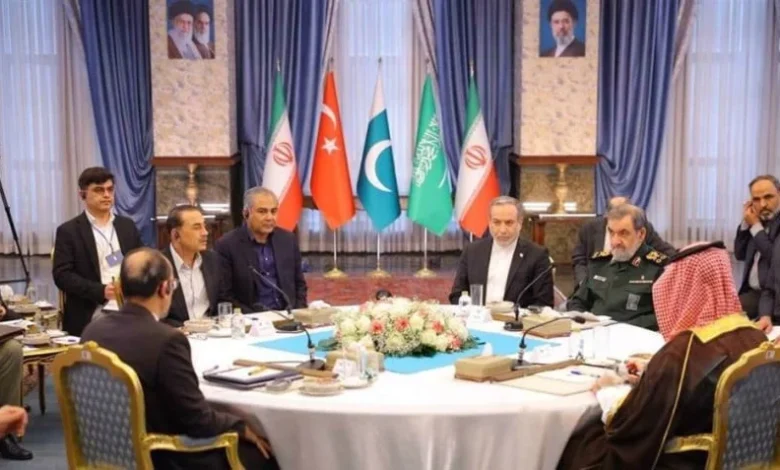
The regional security architecture of the Middle East is undergoing a profound transformation as senior military and intelligence officials from Saudi Arabia, Pakistan, and Turkey convened in Tehran this week for unprecedented discussions with Iranian leadership. This gathering marks a pivotal moment in regional diplomacy, as key members of the Mecca Defense Alliance—a bloc originally perceived as a counterweight to Iranian influence—are now actively engaging with Tehran to explore a new framework for regional stability. The talks, which included Saudi Defense Minister Prince Khalid bin Salman, Pakistan’s Army Chief General Asim Munir, and Turkish Intelligence Chief Ibrahim Kalin, underscore a growing consensus among regional powers that the path to long-term stability must be paved through direct communication rather than external reliance.
The meeting with Mohsen Rezaei, Secretary of Iran’s Supreme National Security Council, comes at a time of heightened regional volatility. While the shadow of the ongoing Israel-Hamas conflict and the intermittent strikes by Houthi rebels in Yemen have strained the diplomatic atmosphere, the presence of these high-ranking officials in the Iranian capital suggests a calculated pivot toward "endogenous security"—a concept long championed by Tehran, which prioritizes regional cooperation over the intervention of non-regional powers, particularly the United States.
A Chronology of the Mecca Defense Alliance
The emergence of the Mecca Defense Alliance in August 2026 was widely interpreted by geopolitical analysts as a defensive response to Iran’s expanding influence in the Levant and the Persian Gulf. The alliance, anchored by the economic and diplomatic weight of Saudi Arabia, the nuclear capability and strategic depth of Pakistan, and the military industrial complex of Turkey, was designed to function as a mutual defense pact.
- August 2026: The Mecca Defense Alliance is formally ratified. The treaty includes a clause stating that an armed attack against one member is viewed as an attack on all, necessitating a unified response.
- Late 2026 – Early 2027: The alliance faces its first major stress test. Persistent Houthi drone and missile attacks originating from Yemen target Saudi infrastructure, creating friction within the alliance regarding the appropriate response toward Iran, the primary benefactor of the Houthi movement.
- Mid-2027: Recognizing the limitations of military containment, Riyadh, Islamabad, and Ankara initiate quiet diplomatic backchannels. Turkey, leveraging its unique position as a NATO member with deep ties to both the West and the Middle East, facilitates the initial outreach to Tehran.
- November 2027: The high-level delegation arrives in Tehran, signaling a transition from containment to a tentative policy of regional engagement.
The Strategic Value of the Mecca Alliance
To understand the weight of this meeting, one must examine the synergy of the alliance members. The Mecca Defense Alliance is not merely a collection of armies; it is a synthesis of three distinct pillars of power. Saudi Arabia provides the financial liquidity and the moral authority of being the custodian of the Two Holy Mosques, which carries immense weight in the Islamic world. Pakistan, as the only declared nuclear power in the Muslim world, offers a strategic deterrent that complicates any potential direct conflict scenario. Turkey brings the most advanced drone technology and intelligence-gathering apparatus in the region, alongside the institutional memory of NATO integration.
Despite the initial concerns that the alliance was inherently anti-Iranian, Turkish officials have consistently maintained that the pact is "inward-looking" rather than "adversarial." This diplomatic nuance has been vital in keeping the door open for the current Tehran talks. The reality is that all three nations share a common interest in preventing the region from sliding into a broader war that could devastate global energy markets and derail their respective economic modernization plans, such as Saudi Vision 2030.
The Concept of Endogenous Security
During a weekly press briefing in Tehran, Iranian Foreign Ministry spokesperson Esmaeil Baghaei articulated the ideological framework guiding these discussions. "The security of the region must be defined, managed, and maintained by those who reside within it," Baghaei stated. This call for "endogenous security" is a direct challenge to the traditional US-led security architecture that has defined the Middle East since the end of the Cold War.
Iran’s argument is predicated on the idea that foreign military presence, particularly the US Fifth Fleet and various regional bases, creates a "security dilemma" where any move by one state is perceived as an existential threat by another, leading to an endless arms race. By moving toward a cooperative mechanism, Tehran hopes to neutralize the justification for foreign military bases on the Arabian Peninsula.
Official Responses and Internal Tensions
The reaction from global powers has been cautious. While the United States has not formally commented on the Tehran meeting, analysts in Washington have expressed concerns regarding the implications for the Abraham Accords and the overall stability of the regional status quo. However, the participating nations have emphasized that their primary concern is the mitigation of immediate threats.
For Saudi Arabia, the priority remains the cessation of Houthi attacks. Prince Khalid bin Salman’s participation is seen as a signal that Riyadh is willing to trade diplomatic normalization with Iran for a genuine guarantee of border security. For Pakistan, the focus is internal stability; General Asim Munir is acutely aware that regional conflict invites extremism that could spill over into Pakistani territory. Turkey, meanwhile, seeks to cement its role as a indispensable mediator, ensuring that its voice is heard in any future regional security architecture.
Implications for the Future of the Middle East
The shift toward these talks carries several critical implications for the global order:
- De-escalation of Proxy Conflicts: If these talks yield a substantive agreement, the most immediate impact will likely be seen in Yemen. A cessation of Iranian support for the Houthis in exchange for regional security assurances could bring the Yemeni conflict to a definitive close, marking the most significant success for regional diplomacy in a decade.
- Economic Integration: A stable security environment is a prerequisite for the trade corridors that these nations are attempting to build. The integration of the Saudi economy with the energy and logistical networks of Turkey and Pakistan, under the umbrella of a non-aggression pact with Iran, could create a formidable economic bloc.
- The Diminishing Role of External Hegemony: If the Mecca Alliance succeeds in brokering a deal with Tehran without the direct involvement of Washington or Brussels, it would mark a historic shift in power. It would demonstrate that regional powers are increasingly capable of managing their own disputes, effectively signaling the end of the post-1991 order in the Middle East.
However, significant hurdles remain. The legacy of distrust between Tehran and Riyadh is deep, and the Houthi issue is merely one part of a complex web of regional militias and political proxies. Furthermore, the alliance members themselves have competing interests; Turkey and Saudi Arabia have historically vied for leadership of the Sunni world, and Pakistan must balance its close relationship with China—which has been a silent broker in Iran-Saudi rapprochement—with its strategic military ties to the West.
A New Era or Temporary Rapprochement?
The meeting in Tehran is a recognition of a harsh reality: military alliances without diplomatic engagement are unsustainable. The members of the Mecca Defense Alliance, by meeting with the very power they were ostensibly formed to contain, are demonstrating a pragmatic flexibility. They are moving away from the binary logic of the past, where one was either "pro-US" or "pro-Iran," and toward a more nuanced, interest-based regionalism.
Whether this meeting leads to a lasting security framework or remains a tactical pause in a long-standing rivalry depends on the transparency of the commitments made behind closed doors in Tehran. For now, the world is watching as the major powers of the Middle East attempt to redraw the security map of the region. The outcome of these discussions will likely determine whether the Middle East continues to be a theater for proxy wars or emerges as a self-regulating, albeit complex, geopolitical entity in the coming decades.
As the talks conclude, the international community expects a joint statement outlining the next steps. For the nations involved, the goal is clear: to ensure that the security of their borders and the stability of their economies are no longer dependent on the whims of external powers, but on the shared commitment of those who have the most to lose from continued instability.