Jerusalem, Israel – Israel has ignited a global debate following revelations of a highly unusual plan to integrate crocodiles into its prison security apparatus, primarily aimed at deterring escape attempts by Palestinian detainees. This unprecedented proposal, championed by Israel’s controversial Minister of National Security, Itamar Ben-Gvir, has drawn sharp criticism from human rights advocates and animal welfare organizations, while simultaneously underscoring the escalating and often extreme measures considered in the complex realm of Israeli security. The initiative, which would see these formidable reptiles guarding the perimeters of correctional facilities, particularly those housing high-risk Palestinian prisoners, marks a significant departure from conventional security protocols and raises profound ethical, logistical, and legal questions.
The genesis of this peculiar security strategy lies in a recent administrative reclassification by Minister of Environmental Protection Idit Silman. On July 15, Silman’s ministry altered the status of crocodiles from "wild animals" to "captive-bred wildlife." This seemingly bureaucratic change holds profound implications, as it legally paves the way for the use of these reptiles for security purposes, effectively removing them from strict protections afforded to native wildlife and placing them under a new regulatory framework that permits their ownership and deployment by authorized security bodies. Minister Ben-Gvir, a figure known for his hardline stance and provocative actions, quickly seized upon this regulatory shift, publicly endorsing the plan and framing it as an essential tool in bolstering national security and preventing escapes.
Ben-Gvir’s enthusiasm for the crocodile-based deterrence system was immediately apparent through his social media activity. He posted an AI-generated image depicting himself holding a leash attached to a crocodile, accompanied by a stark warning: "You intend to try to escape? Think again." The accompanying caption, "Ministers Ben-Gvir and Silman are working together to surround the prisons with crocodiles!" left no ambiguity about the intent behind the new policy. This public display, typical of Ben-Gvir’s confrontational communication style, further amplified the international spotlight on a proposal already considered outlandish by many.
A Hardline Minister’s Vision for Security
The proposal must be understood within the broader context of Itamar Ben-Gvir’s political ideology and his tenure as Minister of National Security. A prominent figure in Israel’s far-right political spectrum, Ben-Gvir is known for his extremist views on Israeli-Palestinian relations, advocating for more aggressive policies against Palestinians and harsher measures within the Israeli justice system. His appointment to a powerful ministerial position in the current government, which includes other ultranationalist and religious Zionist parties, has been met with concern by international observers and human rights groups, who frequently criticize his rhetoric and actions as inflammatory and divisive.
Prior to the crocodile initiative, Ben-Gvir garnered significant negative attention in May for his alleged inhumane treatment of activists from the Global Sumud Flotilla 2.0, an event that drew international condemnation and further cemented his reputation as a controversial figure. His consistent advocacy for "iron fist" policies against Palestinian detainees aligns with his broader vision of enhanced security at any cost. For Ben-Gvir, the deployment of crocodiles represents an innovative, albeit extreme, solution to what he perceives as a persistent security vulnerability: prison escapes. He has consistently championed measures that he believes will instill fear and absolute obedience among prisoners, particularly those designated as security threats.
The Precedent and the Practicalities
While the idea of using crocodiles as prison guards might seem unprecedented, Ben-Gvir reportedly drew inspiration from a facility in Florida, USA, often colloquially referred to as "Alligator Alcatraz." This moniker typically refers to detention centers or correctional facilities, often for immigrants, situated in swampy regions where the natural presence of alligators and other dangerous wildlife acts as an inherent perimeter deterrent. However, it is crucial to distinguish between a natural environmental deterrent and the active deployment and management of captive-bred predatory animals for security. The Florida example relies on the existing ecosystem, whereas the Israeli plan involves the intentional introduction and maintenance of these animals in an artificial security capacity.
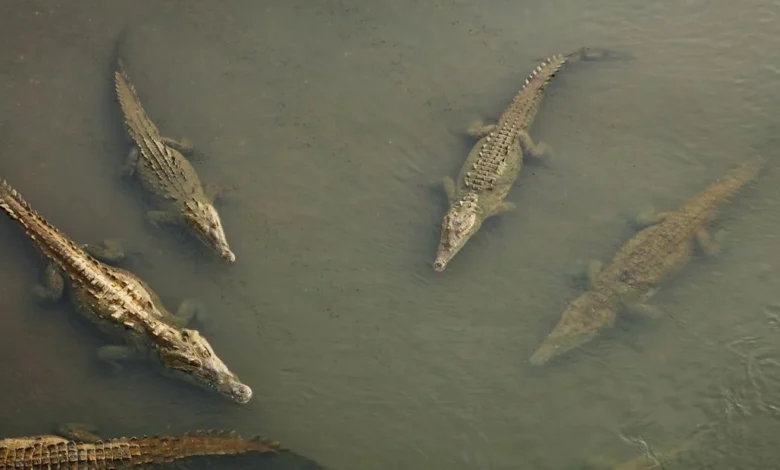
The Nile crocodile (Crocodylus niloticus) is one of the largest and most aggressive crocodilian species, native to freshwater habitats across Africa. Adult males can reach lengths of up to 20 feet (6 meters) and weigh over 1,600 pounds (730 kg). They are apex predators known for their powerful bite, ambush hunting techniques, and opportunistic feeding habits, posing a significant threat to humans. Their formidable reputation makes them a potent psychological deterrent, but also raises serious questions about the ethical implications of their captivity and potential interactions with humans, even at a distance.
Chronology of a Controversial Proposal
The timeline leading to the current public announcement reveals a concerted effort by Minister Ben-Gvir to push this controversial agenda:
- December 2023: Minister Ben-Gvir first publicly floated the idea of surrounding prisons for Palestinian detainees with crocodiles. At this stage, the proposal was met with considerable skepticism and even "mockery" from some officials within the Israel Prison Service (IPS) and other relevant bodies, according to reports from Israel’s Channel 13 television.
- Early 2024: Discussions and preliminary evaluations likely took place among various government agencies, including the Ministry of National Security, the Ministry of Environmental Protection, and the Israel Nature and Parks Authority (INPA). The INPA reportedly voiced initial opposition, primarily due to concerns about animal welfare, the potential ecological impact should the crocodiles escape into the wild, and the general unsuitability of weaponizing wildlife.
- May 2024: Ben-Gvir engages in other controversial actions, such as those involving the Global Sumud Flotilla, further cementing his hardline image.
- July 15, 2024 (Wednesday): Minister Idit Silman’s Ministry of Environmental Protection formally passes the regulation reclassifying crocodiles from "wild animals" to "captive-bred wildlife." This crucial administrative step effectively bypasses the primary legal hurdle that had previously prevented such a scheme from being considered. The regulation specifies that Nile crocodiles can be kept by "security bodies" under conditions established by the Director of the INPA, "to prevent the escape of the animals into the wild, and subject to the decision of the Minister of Environmental Protection that the possession of the animals is necessary for security purposes." This legislative maneuver underscores the government’s determination to advance the plan despite initial objections.
- Immediately Post-July 15: Minister Ben-Gvir publicly announces his approval and intention to proceed, utilizing social media to promote the crocodile deterrence strategy, complete with AI-generated imagery.
Targeting Ketziot Prison and Broader Context
Israeli media outlets have reported that Ben-Gvir’s immediate focus for the deployment of these crocodiles is Ketziot Prison, located in the Negev Desert in southern Israel. Ketziot is one of Israel’s largest detention facilities and has seen a significant increase in its inmate population, particularly after the October 7, 2023, attacks by Hamas, which triggered the ongoing conflict in the Gaza Strip. The prison currently houses a substantial number of militants and individuals suspected of security offenses captured during the conflict. The context of the post-October 7 security environment has intensified the government’s push for more stringent and unconventional security measures, and the crocodile plan is viewed by its proponents as a direct response to perceived heightened threats of escape.
The concern over prison breaks is not entirely unfounded in Israel’s recent history. A notable incident occurred in September 2021, when six Palestinian prisoners, including a prominent Fatah leader, successfully escaped from Gilboa Prison, a high-security facility in northern Israel, through a tunnel dug beneath their cell. This highly embarrassing incident for the Israeli prison system led to widespread security reviews and a renewed focus on preventing future escapes. For Ben-Gvir, the crocodile initiative offers a radical solution to such vulnerabilities, aiming to create an insurmountable physical and psychological barrier.
Official Responses and Lingering Opposition
While the plan has garnered ministerial approval, it has not been universally embraced. The Israel Nature and Parks Authority (INPA), initially a key opponent, has been brought into the regulatory framework, now tasked with setting conditions for the crocodiles’ welfare and containment. Their initial objections stemmed from a mandate to protect wildlife and ensure ecological balance. The INPA would have to navigate the complex ethical and practical challenges of ensuring the well-being of the crocodiles while also preventing their escape into the delicate desert ecosystem, where they could pose a threat to local wildlife and human populations.
The Israel Prison Service (IPS), which falls under Ben-Gvir’s ministerial purview, also reportedly exhibited initial skepticism. Channel 13 noted that Ben-Gvir’s proposal was "met with ridicule by a number of officials" within the IPS. Such internal resistance likely stemmed from the sheer novelty and logistical complexity of the idea. Managing a perimeter populated by large, dangerous reptiles would require specialized training for prison staff, dedicated infrastructure, specific feeding and veterinary care protocols, and robust measures to prevent the crocodiles themselves from escaping. These practical challenges, coupled with the inherent danger, raise questions about the feasibility and long-term sustainability of the plan.
Broader Implications and International Scrutiny
The proposal to use crocodiles as prison guards has immediately triggered a cascade of criticism from various quarters, setting the stage for significant international scrutiny:
- Human Rights Concerns: Human rights organizations, both within Israel and internationally, are expected to vehemently condemn this measure. Such a tactic could be viewed as a form of cruel, inhuman, or degrading treatment, potentially violating international humanitarian law and conventions governing the treatment of prisoners. The UN Standard Minimum Rules for the Treatment of Prisoners (the Nelson Mandela Rules) emphasize humane conditions and treatment, and the introduction of predatory animals as a deterrent could be seen as fundamentally incompatible with these principles. Critics argue that it dehumanizes prisoners and creates an environment of extreme psychological distress.
- Animal Welfare Ethics: Animal rights groups are likely to decry the plan as animal cruelty and an unethical weaponization of wildlife. Crocodiles, even if captive-bred, are wild animals with complex needs. Keeping them in an artificial, security-focused environment raises questions about their welfare, potential stress, and the ethical implications of using living beings as instruments of punishment or deterrence.
- International Image and Diplomatic Fallout: Israel’s international standing, already under intense scrutiny due to the ongoing conflict in Gaza and its treatment of Palestinians, could be further damaged. The image of crocodiles guarding prisoners is likely to be perceived globally as a barbaric and disproportionate measure, fueling condemnation from governments, international bodies, and advocacy groups.
- Legal Challenges: The legality of deploying predatory animals in such a capacity is likely to be challenged in Israeli courts by human rights lawyers and prisoner advocacy organizations. Arguments could focus on the potential for abuse, the violation of prisoners’ rights to humane treatment, and the safety risks posed by the animals themselves.
- Effectiveness vs. Symbolism: Beyond the ethical considerations, questions persist about the practical effectiveness of the plan. While crocodiles present a formidable psychological deterrent, their actual role in preventing determined escapes, especially in a large, modern prison complex, remains speculative. The logistical overhead, cost, and inherent risks might outweigh any practical security benefits, suggesting that the measure could be more symbolic – a stark display of Ben-Gvir’s hardline approach – than genuinely effective.
As Israel navigates the complex security landscape following the October 7 attacks, the crocodile initiative stands as a stark illustration of the extreme measures being considered by some factions within the government. While proponents argue it is a necessary, innovative deterrent in a high-stakes security environment, its implementation would undoubtedly provoke intense debate and likely face significant domestic and international opposition, challenging ethical boundaries and reshaping the discourse around prison security. The world watches to see if this controversial proposal will indeed move from concept to reality, setting a new and alarming precedent in correctional practices.