Singapore Airlines Pilot Hailed for Exceptional Airmanship During Hazardous Landing Attempt at Perth Airport

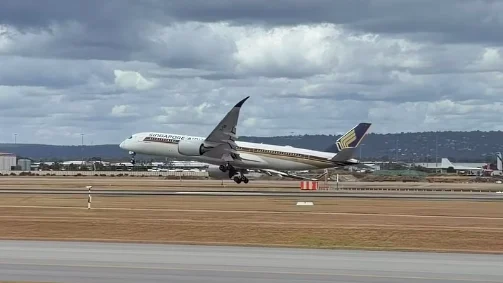
A Singapore Airlines pilot is being lauded by aviation experts and passengers alike following a harrowing flight maneuver at Perth International Airport, where extreme wind shear forced an emergency go-around. The incident, which occurred on October 31, 2026, involved a Singapore Airlines Airbus A350-900, flight SQ213, arriving from Singapore Changi Airport. Video footage of the event, which rapidly circulated on social media, captured the precise moment the aircraft’s wings banked sharply toward the tarmac as the pilot wrestled with unpredictable gusts, narrowly averting a potentially catastrophic landing.
The incident has reignited public interest in the rigorous training protocols maintained by premium carriers and the inherent challenges posed by the meteorological conditions unique to the Western Australian coastline. While no injuries were reported among the passengers or crew, the event serves as a poignant reminder of the critical importance of pilot decision-making in high-pressure aviation environments.
Chronology of the Incident
The flight, carrying a full complement of passengers and crew, was approaching Perth International Airport shortly after midday. Meteorological data from the Australian Bureau of Meteorology indicates that the region was experiencing significant atmospheric instability at the time. As the Airbus A350-900 initiated its final approach, it encountered severe crosswinds and turbulence, which are notorious in the Perth region due to its proximity to the Indian Ocean and the flat, open terrain surrounding the airport.
According to witness accounts and visual evidence provided by Chris Perry, who had a family member on board the flight, the aircraft was visibly struggling to maintain stability as it descended toward the runway. At an altitude of only a few hundred feet, the aircraft experienced a sudden and dramatic tilt to the right, causing the starboard wing to drop dangerously close to the runway surface.
Recognizing the instability and the inability to maintain a safe approach path, the pilot executed an immediate go-around—a standard but complex safety procedure. The pilot applied maximum thrust to the engines, retracted the landing gear, and climbed away from the runway to re-enter the holding pattern. After circling the airport to reassess the weather conditions and coordinate with air traffic control, the pilot performed a second, successful approach, eventually touching down safely at approximately 12:30 p.m. local time. The aircraft taxied to the gate without further incident, and all passengers disembarked safely.
The Science of the Go-Around
The procedure performed by the SQ213 flight crew, known in aviation terminology as a "go-around" or "missed approach," is a fundamental element of flight safety training. According to the United States Federal Aviation Administration (FAA), a go-around is a deliberate decision to abandon a landing attempt when the pilot determines that the aircraft is not in the correct configuration, or when external conditions—such as wind shear, runway incursions, or severe turbulence—pose a risk to the integrity of the landing.
Aviation safety experts emphasize that a go-around is not a sign of failure, but rather a demonstration of professional competence. In this instance, the pilot’s decision to abort the landing once the aircraft became destabilized prevented what could have been a "hard landing" or a runway excursion. The rapid transition from a descent to a climb requires precise coordination between the captain and first officer, as well as an immediate reconfiguration of the aircraft’s flight systems.
Meteorological Context and Operational Challenges
Perth International Airport is frequently subject to challenging weather conditions. On the day of the incident, the Australian Bureau of Meteorology recorded sustained wind speeds of 32 km/h, with intermittent gusts reaching 43 km/h. While these speeds may not appear excessive to a layperson, when combined with crosswind components, they can create significant aerodynamic challenges for large commercial aircraft like the Airbus A350-900.
Crosswinds force an aircraft to "crab"—or angle its nose into the wind—to maintain its track along the runway centerline. If a gust exceeds the structural or control limits of the aircraft during the flare (the final phase of landing), the pilot must decide within seconds whether to continue or abort. The Perth incident highlights the necessity of localized weather monitoring systems, which provide pilots with real-time updates on wind shear and microbursts during the critical final approach phase.
Public and Industry Reactions
The viral nature of the video, which captured the dramatic wing-dip, sparked a wave of appreciation from the global aviation community. On social media platforms, passengers and aviation enthusiasts commended the pilot’s calm demeanor and rapid response. One commentator, Yolanda Malojer, noted the proximity of the wing to the tarmac, describing the maneuver as a testament to the pilot’s skill in maintaining composure during a high-stakes emergency.
Frequent flyers also pointed to Singapore Airlines’ reputation for maintaining the highest standards in pilot recruitment and continuous training. Singapore Airlines utilizes advanced full-flight simulators that replicate extreme weather scenarios, ensuring that pilots are prepared for "unexpected" events long before they encounter them in real-world operations. The consensus among those analyzing the footage is that the pilot’s actions were textbook, prioritizing the lives of the passengers over the pressure to land on the first attempt.
Official Response from Singapore Airlines
In a formal statement, a spokesperson for Singapore Airlines confirmed that flight SQ213 encountered adverse weather conditions upon its approach to Perth. The airline underscored that the safety of passengers and crew remains its primary concern, and that all flight operations are governed by strict safety protocols that empower pilots to exercise their professional judgment in volatile situations.
"The pilot-in-command acted in accordance with our safety management systems by executing a go-around due to the prevailing wind conditions," the spokesperson stated. While the airline declined to disclose the identity of the flight crew, citing privacy and internal policy, they reiterated that the carrier remains committed to ensuring all pilots receive extensive training to handle complex weather phenomena. The airline also confirmed that the aircraft underwent a routine inspection post-flight and was cleared for continued service, reflecting no structural damage from the event.
Implications for Aviation Safety Standards
The Perth incident serves as a critical case study for flight training programs globally. As climate change continues to increase the frequency of extreme weather events, including erratic wind patterns, the aviation industry is placing renewed focus on manual handling skills. While modern flight management systems are highly automated, the ability of a pilot to take manual control and execute a safe maneuver under pressure remains an indispensable skill.
The event also highlights the role of transparency in aviation safety. By reviewing flight data recorders and incident reports, airlines can further refine their training modules. The success of the SQ213 crew reinforces the industry-wide mandate that there is no penalty for an aborted landing; rather, it is a protected safety maneuver that is fully supported by airline management and regulatory bodies.
Conclusion
The events of October 31, 2026, at Perth International Airport were a stark demonstration of the hazards of commercial aviation and the efficacy of modern safety protocols. Through the decisive actions of the Singapore Airlines flight crew, a potentially dangerous situation was resolved with the professionalism expected of one of the world’s leading carriers. As the aviation industry continues to navigate the complexities of weather and passenger safety, the "Perth incident" stands as a reminder of the vital importance of pilot training, the necessity of safety-first decision-making, and the unwavering commitment to protecting human life in the skies.
Related posts: