Inter Milan Stages Stunning Comeback to Defeat Udinese 5-3 in Eight-Goal Serie A Thriller at San Siro

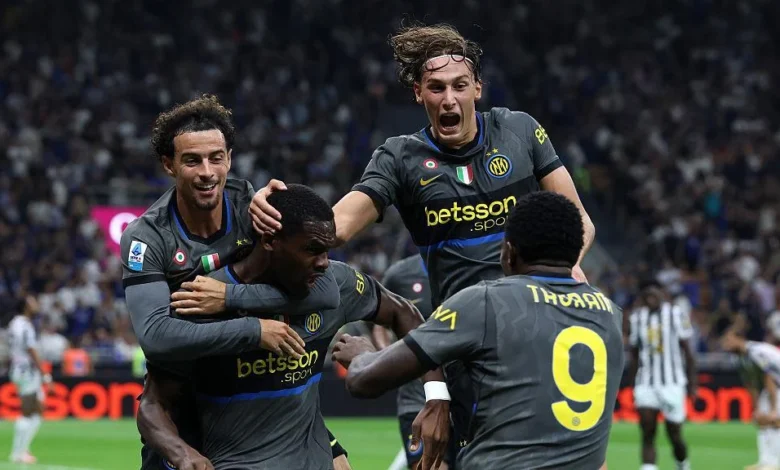
MILAN — In a breathtaking display of resilience, attacking prowess, and tactical adaptability, Inter Milan secured a remarkable 5-3 victory over Udinese in a high-octane Serie A fixture at the iconic Stadio Giuseppe Meazza. The match, which will undoubtedly be remembered as one of the most entertaining and chaotic encounters of the domestic campaign, saw the Nerazzurri overcome a shocking two-goal deficit early in the first half to ultimately overwhelm their resilient opponents and claim all three vital points in front of a roaring home crowd.
The fixture delivered eight goals, countless momentum shifts, and a masterclass in second-half adjustments from the Inter technical staff. With this thrilling triumph, the Milanese giants propelled themselves to second place in the fiercely contested Serie A standings, accumulating 12 points from their opening fixtures. Though they share an identical points tally with league leaders AS Roma, Inter currently sits behind the capital club strictly on goal difference. Meanwhile, Udinese’s early-season promise suffered a severe dent at the San Siro, leaving the Friulian outfit stationed in 13th place with a modest four points to their name.
A Shocking Start: Udinese Stuns the San Siro
The contest began in a manner that few inside the Giuseppe Meazza could have anticipated. Udinese, entering the match with a clear tactical plan to exploit spaces behind Inter’s heavily populated midfield, caught the hosts completely flat-footed.
The visitors drew first blood in the 9th minute when Unai Gomez engineered space on the flank to deliver a pinpoint, inviting cross into the penalty area. James Abankwah rose majestically above his marker, directing a powerful header past a helpless Josep Martinez, who was entirely wrong-footed by the trajectory of the effort. The early breakthrough galvanized the visiting side and silenced the traditionally boisterous home supporters.
Before Inter could regroup and establish any meaningful rhythm, Udinese struck again. In the 16th minute, powerful forward Keinan Davis demonstrated impressive upper-body strength to hold off defenders down the left channel. Davis managed to slide a clever pass into the path of Jurgen Ekkelenkamp. The Dutchman’s resulting shot took a slight, agonizing deflection off Martinez before trickling across the goal line, doubling Udinese’s advantage and plunging the Nerazzurri into a state of early crisis.
Trailing by two goals within the opening quarter of an hour, the pressure mounting on the home side was palpable. However, championship-caliber teams are frequently defined by their capacity to absorb adversity and respond with authority.
The Nerazzurri Awakening: First-Half Recovery
Rather than panicking, Inter gradually began to assert dominance in possession, tilting the pitch toward Udinese’s defensive third. The catalyst for the home side’s revival was a moment of sheer individual brilliance from wing-back Carlos Augusto in the 26th minute. Seizing upon a loose clearance, Augusto unleashed a ferocious, swerving strike from well outside the penalty area. The ball traveled like a tracer bullet, screaming into the top-left corner of Maduka Okoye’s goal, leaving the Udinese goalkeeper rooted to the spot. The spectacular effort breathed new life into the stadium and halved the deficit.
Buoyed by the momentum shift, Inter redoubled their attacking efforts. The tactical duel in midfield began to tilt decisively in favor of the hosts, spearheaded by the tireless running of Nicolo Barella. In the 35th minute, the Italian international completed the turnaround before the interval. Receiving a clever slide-rule pass from Marcus Thuram, Barella found himself under heavy pressure and off-balance inside the right side of the penalty area. Displaying remarkable physical coordination and tenacity, Barella shrugged off a defender, maintained his footing, and rifled an exquisite shot past Okoye into the back of the net.
The scoreline was leveled at 2-2, and as the referee blew the whistle for halftime, the psychological advantage had firmly shifted from the visitors to the hosts.
Second-Half Blitz: Inter Overwhelms Udinese
Whatever instructions were delivered in the Inter dressing room during the interval bore immediate fruit. The Nerazzurri emerged for the second period with increased intensity, sharp passing combinations, and devastating pace in transition.
In the 57th minute, Inter officially completed their comeback to take the lead for the first time in the match. Barella initiated the move with an exquisite, diagonal long-range pass that caught the Udinese defense napping. Andy Diouf chased down the ball on the right wing before delivering a sharp, low cutback directly into the path of Marcus Thuram. The French forward made no mistake, sweeping the ball home with composure to make it 3-2.
Sensing that their opponents were on the ropes, Inter pressed their advantage relentlessly. The fourth goal arrived in the 67th minute and stood as a testament to the fluid, modern attacking football orchestrated by the coaching staff. A series of intricate, rapid one-touch passes inside the penalty area left the Udinese backline completely disoriented. Piotr Zielinski provided a subtle, defense-splitting sodoran that liberated Francesco Pio Esposito from his marker. Esposito’s clever, low-driven effort completely deceived Okoye, nestling snugly into the net to extend Inter’s cushion to 4-2.
The procession continued in the 79th minute when substitute Ange-Yoan Bonny stamped his authority on the match. Following a chaotic scramble inside the box, Bonny pounced on a loose ball. Though his initial effort was bravely blocked by Okoye, Bonny showed incredible alertness to slide and prod the rebound home, driving the score to 5-3 and sending the San Siro into absolute raptures.
Udinese managed a late consolation in stoppage time (90+1 minute) when Idrissa Gueye capitalized on a defensive lapse to beat Martinez, but it proved to be nothing more than a minor footnote in a match overwhelmingly dominated by Inter’s second-half offensive masterclass.
Chronology of Key Match Events
- 9’: James Abankwah opens the scoring for Udinese with a precise header from an Unai Gomez cross (0-1).
- 16’: Jurgen Ekkelenkamp doubles Udinese’s lead after a deflection off goalkeeper Josep Martinez (0-2).
- 26’: Carlos Augusto ignites Inter’s comeback with a spectacular long-range drive into the top corner (1-2).
- 35’: Nicolo Barella demonstrates great balance and composure to equalize for Inter inside the box (2-2).
- 57’: Marcus Thuram converts an Andy Diouf cutback to give Inter their first lead of the match (3-2).
- 67’: Francesco Pio Esposito finishes a brilliant team passing sequence initiated by Piotr Zielinski (4-2).
- 79’: Ange-Yoan Bonny capitalizes on a rebound to extend Inter’s advantage further (5-3).
- 90+1’: Idrissa Gueye scores a late consolation goal for the visitors (5-3).
Team Lineups and Tactical Setup
Inter Milan Starting XI:
Josep Martínez; John Stones, Alessandro Bastoni, Manuel Akanji; Andy Diouf, Nicolò Barella, Piotr Zielinski, Henrikh Mkhitaryan, Carlos Augusto; Marcus Thuram, Francesco Pio Esposito.
Udinese Starting XI:
Maduka Okoye; Christian Kabasele, Enzo Ebosse, James Abankwah; Mérgim Vojvoda, Jesper Karlström, Lennon Miller, Hassane Kamara; Jurgen Ekkelenkamp, Unai Gómez; Keinan Davis.
Tactical Analysis and Broader Implications
This fixture offered a fascinating study in tactical resilience and squad depth. In the opening twenty minutes, Inter’s defensive structure was exposed by the direct running and high-intensity press of Udinese. The deployment of physical forwards like Keinan Davis caused substantial friction for Inter’s central defensive trio of John Stones, Alessandro Bastoni, and Manuel Akanji, particularly during transitional phases.
However, the structural adjustments made by the technical staff during the first half-hour proved decisive. By pushing the wing-backs higher up the pitch and demanding that midfielders Barella and Zielinski occupy the half-spaces more effectively, Inter choked off Udinese’s supply lines. The inclusion of dynamic attacking elements like Pio Esposito and Ange-Yoan Bonny later in the game highlighted the impressive squad depth available to the Nerazzurri this season.
For Udinese, the match serves as both an encouraging indicator of their attacking capabilities and a stark warning regarding defensive fragility under sustained pressure. Scoring three goals away from home against a Scudetto contender is no small feat, yet conceding five goals underscores the defensive vulnerabilities that manager and staff must address if the club wishes to climb out of the lower-middle tier of the table.
Looking ahead, this victory provides Inter Milan with immense psychological momentum. Trailing by two goals early in a high-stakes league fixture often breaks lesser teams, but the Nerazzurri’s ability to completely flip the script demonstrates the character required to mount a sustained challenge for the Serie A title. As the domestic campaign intensifies, performances characterized by such offensive firepower will undoubtedly cement Inter’s status as one of the premier forces in Italian football.