The Trans Luxury Hotel Surabaya Offers Unprecedented Luxury Staycation with Up to 40% Discount

Travelers seeking an opulent and amenity-rich accommodation experience in Surabaya now have an exceptional opportunity to indulge at The Trans Luxury Hotel. Situated strategically on Jalan Ahmad Yani, a pivotal artery within the bustling metropolis of Surabaya, this five-star establishment is currently extending a remarkable promotional offer, providing guests with discounts of up to 40 percent on its luxurious suites. This compelling initiative aims to attract both local residents and international visitors, positioning Surabaya as a premier destination for discerning travelers.
The introductory pricing for these exquisite rooms begins at an attractive rate of Rp 1,199,000 nett per night. This inclusive package not only guarantees a comfortable and sophisticated stay but also encompasses a delectable premium breakfast and unrestricted access to a comprehensive suite of the hotel’s premium facilities. This strategic pricing model, coupled with the allure of a world-class hotel, underscores a commitment to making luxury accessible and enhancing the overall visitor experience in Surabaya. The promotion is set to run until August 2026, offering a substantial window of opportunity for potential guests to capitalize on these advantageous rates.
A Symphony of Comfort and Entertainment
The Trans Luxury Hotel Surabaya promises more than just a comfortable place to rest; it offers an immersive experience designed to elevate any staycation. The hotel’s commitment to guest satisfaction is evident in its diverse array of amenities, meticulously curated to cater to a wide range of preferences and needs. From the culinary delights of its premium breakfast offerings to the sophisticated ambiance of the 28th Sky Beach Club, and the family-friendly entertainment of its dedicated kids’ club, every element is designed to create lasting memories.
The day at The Trans Luxury Hotel Surabaya can commence with the simple yet profound pleasure of savoring a freshly brewed cup of coffee alongside a gourmet breakfast. Guests are invited to enjoy these morning rituals while taking in the panoramic vistas of Surabaya’s dynamic cityscape from various vantage points within the hotel. This offers a unique perspective on the city, blending urban exploration with the serenity of a high-end retreat. The juxtaposition of the vibrant city below and the tranquil luxury of the hotel creates a captivating backdrop for the start of each day.
The Allure of the 28th Sky Beach Club
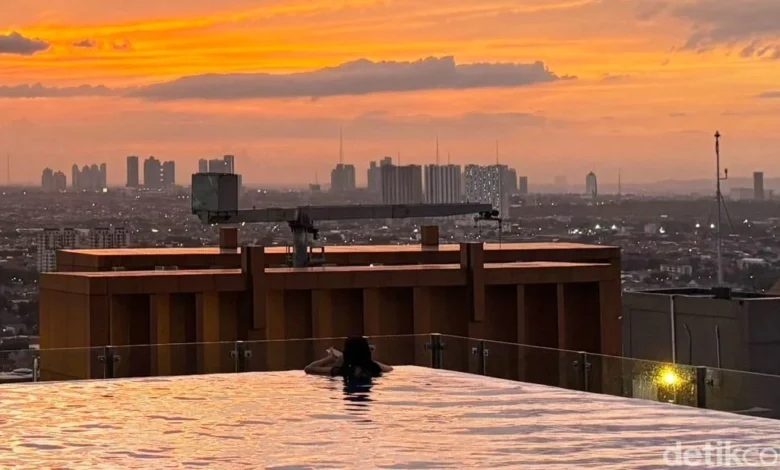
A standout feature of The Trans Luxury Hotel Surabaya is its exclusive 28th Sky Beach Club. This rooftop sanctuary offers a truly unique urban beach experience. Guests can immerse themselves in the novelty of a meticulously crafted artificial beach, complete with authentic Australian white sand. This distinctive amenity transforms the urban landscape into an unexpected oasis of relaxation and leisure.
Complementing the beach experience is the breathtaking sunset panorama. As the day draws to a close, the Sky Beach Club becomes the ideal vantage point to witness the sun dip below the horizon, casting a warm glow over the city. The silhouetted majesty of Mount Arjuna in the distance adds a dramatic and picturesque element to this daily spectacle, offering a moment of natural wonder amidst the urban environment. This fusion of man-made luxury and natural beauty creates an unparalleled atmosphere for guests to unwind and connect with their surroundings. The availability of such exclusive facilities underscores the hotel’s dedication to providing a holistic and memorable guest experience, distinguishing it from other accommodations in the region.
Unlocking Exclusive Savings: The Power of Partnerships
The current promotional offer, which provides substantial discounts of up to 40 percent, is particularly advantageous for those who are members of specific banking and payment platforms. This collaboration highlights a strategic approach to customer engagement and value creation. The special rates are exclusively available to holders of Bank Mega Credit Cards, Syariah Card by Bank Mega Syariah, and users of Allo PayLater. This partnership strategy is not uncommon in the hospitality industry, as it allows hotels to leverage the customer base of financial institutions, thereby driving bookings and increasing occupancy rates.
For these eligible customers, the promotional price of Rp 1,199,000 nett per night is a significant reduction from the standard rates. This price point includes not only the luxurious accommodation and access to premium facilities but also a complimentary premium breakfast for two individuals. Furthermore, guests availing themselves of this promotion will receive a host of additional exclusive benefits designed to enhance their stay. These perks are carefully chosen to add extra value and convenience, further solidifying the appeal of this limited-time offer.
A Strategic Investment in Surabaya’s Tourism Landscape
The Trans Luxury Hotel’s aggressive promotional strategy can be viewed as a significant investment in boosting Surabaya’s tourism sector. By offering such attractive discounts, the hotel aims to draw a larger volume of both domestic and international tourists to the city. Surabaya, as Indonesia’s second-largest city and a vital economic hub, possesses considerable potential for tourism growth, encompassing business travel, leisure, and cultural exploration.
The current promotional period, extending until August 2026, suggests a long-term vision for attracting visitors and building brand loyalty. This extended timeframe allows ample opportunity for individuals and families to plan their getaways, whether for short breaks or extended vacations. The hotel’s prime location on Jalan Ahmad Yani, a major thoroughfare, ensures easy accessibility for travelers arriving by various means, further contributing to its appeal.
The economic implications of such promotions are multifaceted. For the hotel, it translates to increased occupancy rates, enhanced revenue streams, and a strengthened market position. For the city of Surabaya, it means a potential influx of tourists, leading to increased spending in local businesses, including restaurants, shops, and entertainment venues. This ripple effect can contribute to local economic development and job creation. Furthermore, by showcasing its luxury offerings, The Trans Luxury Hotel plays a role in elevating Surabaya’s profile as a sophisticated travel destination, capable of competing with other major cities in the region.
Planning Your Luxurious Escape
For individuals or couples planning a memorable staycation, whether for a romantic getaway or a family adventure, the reservation process has been streamlined for convenience. Interested guests are encouraged to secure their bookings through the hotel’s dedicated WhatsApp channel, accessible at +62 811 1888 8055. Alternatively, reservations can be made directly via the official website of The Trans Hotel Surabaya, which can be found at https://thetranshotelsurabaya.com/.
It is important for potential guests to note that this special pricing is a promotional offer and will revert to the hotel’s standard rates once the campaign period concludes. This underscores the urgency and value of booking within the stipulated timeframe to take advantage of the significant discounts. The hotel’s commitment to transparency regarding pricing adjustments ensures that guests can make informed decisions about their travel plans.
Background and Context
The Trans Luxury Hotel brand is a well-established name in the Indonesian hospitality industry, known for its commitment to delivering world-class service and luxurious accommodations. The Surabaya property, as a key establishment within this network, aims to replicate the success and reputation of its sister properties. The strategic decision to launch such a substantial promotion in Surabaya reflects the city’s growing importance as a tourist and business destination.
Surabaya, the capital of East Java province, is a city with a rich history, a vibrant culture, and a dynamic economy. It is a major port city and a gateway to many of East Java’s attractions. The city itself offers a range of historical sites, modern shopping centers, and diverse culinary experiences, making it an appealing destination for a variety of travelers. The presence of a luxury hotel like The Trans Luxury Hotel further enhances the city’s appeal by providing world-class accommodation options that cater to the needs of discerning travelers.
The promotional initiative can also be seen in the context of the broader tourism recovery efforts post-pandemic. As travel restrictions ease and confidence in travel returns, hotels and tourism providers are actively seeking ways to attract visitors and stimulate demand. These promotions are a common and effective strategy in this regard, offering tangible incentives for travelers to book their trips. The collaboration with financial institutions further amplifies the reach and impact of these promotional efforts, tapping into existing customer bases and encouraging spending.
Future Implications and Market Analysis
The success of this promotional campaign could have several long-term implications for The Trans Luxury Hotel and the Surabaya tourism market. If the promotion proves successful in attracting a significant number of guests and generating positive reviews, it could set a precedent for future pricing strategies and marketing initiatives. It may also encourage other luxury hotels in Surabaya to consider similar promotional offers, thereby increasing competition and potentially benefiting consumers with more choices and better value.
From a market perspective, the emphasis on premium facilities like the 28th Sky Beach Club and the provision of a premium breakfast highlight a strategy to differentiate the hotel and appeal to guests seeking unique experiences. This focus on experiential travel is a growing trend globally, and hotels that can offer more than just a room are likely to gain a competitive edge. The inclusion of partnerships with financial institutions also suggests a forward-thinking approach to customer acquisition and loyalty programs.
The continued growth of Surabaya as a major urban center and a tourist destination is likely to be supported by initiatives like this. By providing high-quality accommodation and attractive pricing, The Trans Luxury Hotel is contributing to the city’s reputation as a desirable place to visit, both for leisure and business. The promotion, running for an extended period, also allows for a sustained impact on occupancy rates and revenue, contributing to the overall economic vitality of the region. The hotel’s commitment to offering luxury at a more accessible price point during this period could also cultivate a new segment of customers who might not have previously considered such a high-end establishment. This can lead to increased brand awareness and potentially foster long-term patronage. The strategic use of digital channels for reservations further aligns with modern consumer behavior, ensuring accessibility and ease of booking for a global audience.