ASUS Unveils XG Core Radeon RX 9060 XT LP 16GB: A Compact eGPU Balancing Portability with Power Constraints

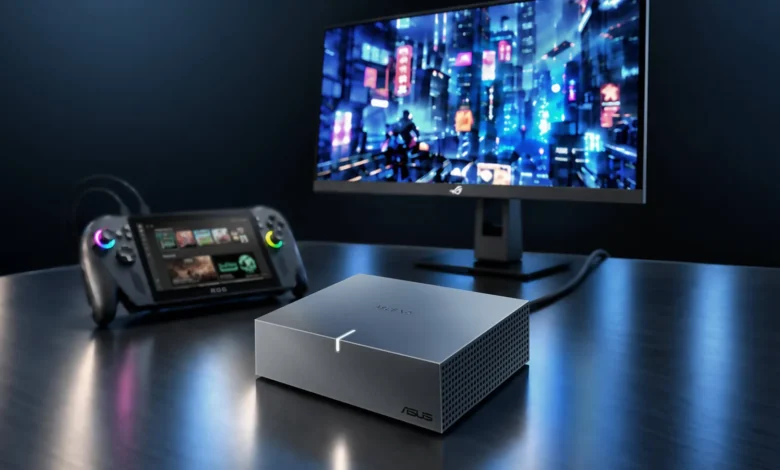
ASUS has officially expanded its ecosystem of external graphics solutions with the introduction of the ASUS XG Core Radeon RX 9060 XT LP 16GB, a uniquely designed, highly compact external GPU (eGPU) enclosure. Built to house a desktop-class graphics processing unit inside an exceptionally small chassis measuring just 144 × 117 × 39 mm, this new hardware aims to bridge the gap between ultra-portable computing setups and dedicated gaming performance. However, engineering a desktop GPU into such a restricted form factor requires significant structural and thermal compromises. Most notably, the device is capped at a strict power consumption limit of 75 watts, a constraint that directly affects the operating clock speeds of the integrated graphics processor, reducing them by nearly half compared to its desktop counterpart.
Understanding the Trade-Offs: Performance Restricted by a 75W Power Envelope
The core dilemma of the ASUS XG Core Radeon RX 9060 XT LP 16GB lies in the thermal and electrical limitations of its micro-enclosure. To ensure stability and prevent overheating within the 39mm-thick chassis, ASUS has significantly dialed back the operational frequencies of the card. In its standard operational mode, the eGPU features a base clock of 1,010 MHz and a boost clock of 1,600 MHz. Users seeking a minor performance uplift can activate the OC Mode via ASUS’s proprietary GPU Tweak III software, which marginally pushes the base clock to 1,030 MHz and the boost clock to 1,620 MHz.
These figures represent a dramatic reduction when compared against the standard, full-fat desktop version of the Radeon RX 9060 XT. The desktop variant typically boasts a robust boost clock reaching up to 3,130 MHz while drawing a total board power (TBP) of approximately 160 watts. By restricting the XG Core to a 75W budget—likely to align with standard power delivery parameters often associated with bus-powered or highly compact external power supplies—ASUS has deliberately chosen power efficiency and physical footprint over raw, unthrottled computing output.
Despite the heavy down-clocking, the fundamental architecture and core specifications of the GPU silicon remain intact. The XG Core retains its 2,048 Stream Processors, ensuring that the parallel processing pipeline is not physically disabled. Furthermore, the device is equipped with a generous 16GB of GDDR6 VRAM operating across a 128-bit memory bus with a memory speed of 20 Gbps. This generous frame buffer is a major selling point, as it provides ample memory headroom for modern high-resolution textures, complex assets, and memory-intensive professional applications.
Marketing Claims and Real-World Gaming Expectations
During the preliminary announcements, ASUS asserted that the XG Core Radeon RX 9060 XT LP 16GB is capable of delivering a smooth gaming experience in modern AAA titles at a 1440p resolution, consistently maintaining frame rates above 60 frames per second. While the company has not yet published exhaustive, transparent benchmarking data or detailed testing methodologies to substantiate these claims, industry analysts point out that the inclusion of 16GB of VRAM will certainly help mitigate stuttering in VRAM-heavy environments.
Nevertheless, the halved clock speeds mean that the GPU’s compute capability will face bottlenecks in processor-bound scenarios, making the actual real-world performance heavily dependent on the specific game engine, graphical settings, and CPU pairing of the host system. The preservation of the full memory subsystem, however, ensures that bandwidth-constrained tasks will not suffer as severely as pure compute-bound operations.
Connectivity, Versatility, and Hardware Integration
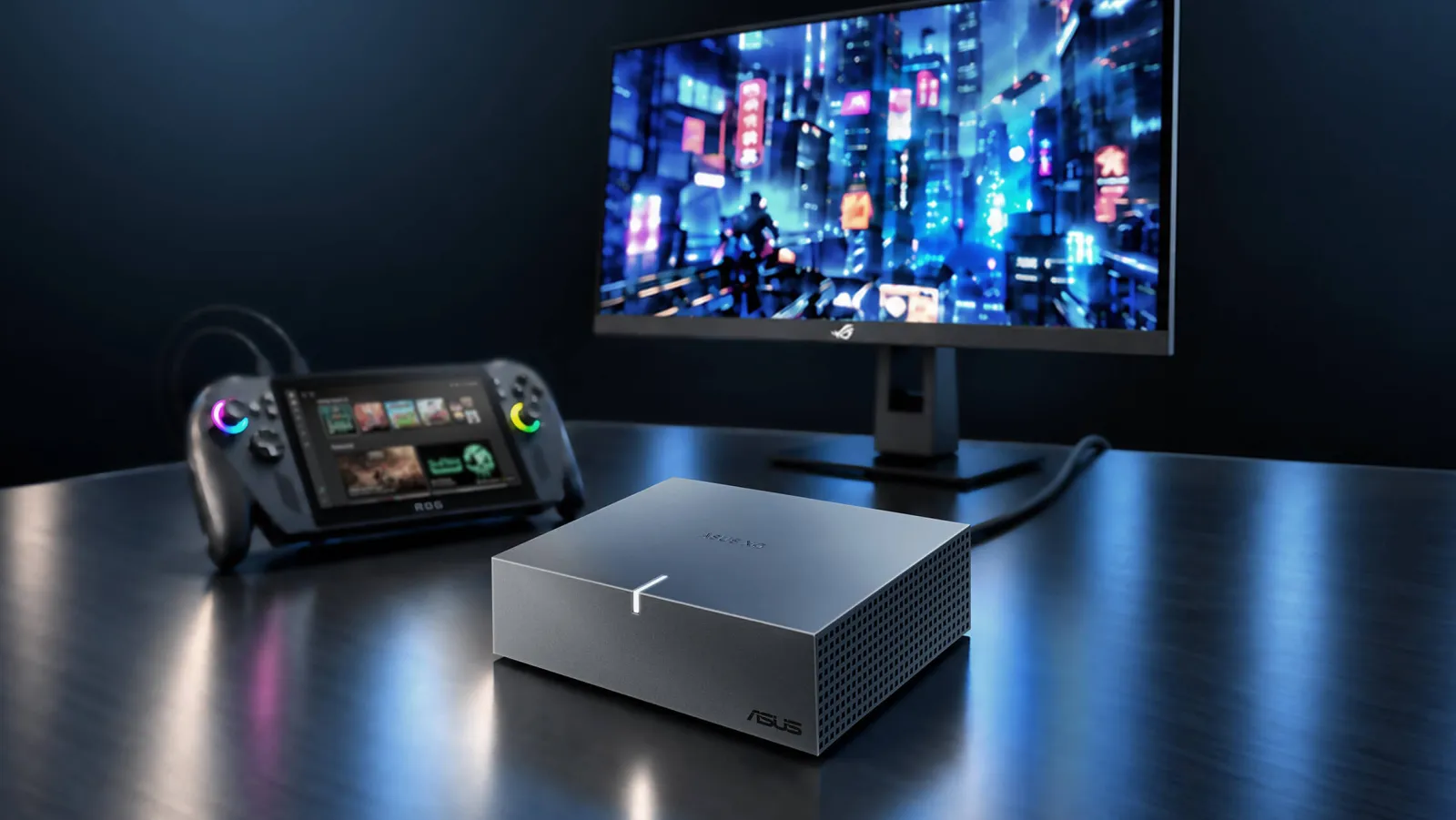
Designed specifically for users of ultra-portable computing devices—such as modern thin-and-light laptops, compact mini PCs, and handheld gaming consoles—the ASUS XG Core prioritizes versatile connectivity. The primary interface for the eGPU is a high-speed USB-C connection utilizing a 40Gbps bandwidth protocol, which ensures sufficient data throughput between the external dock and the host machine.

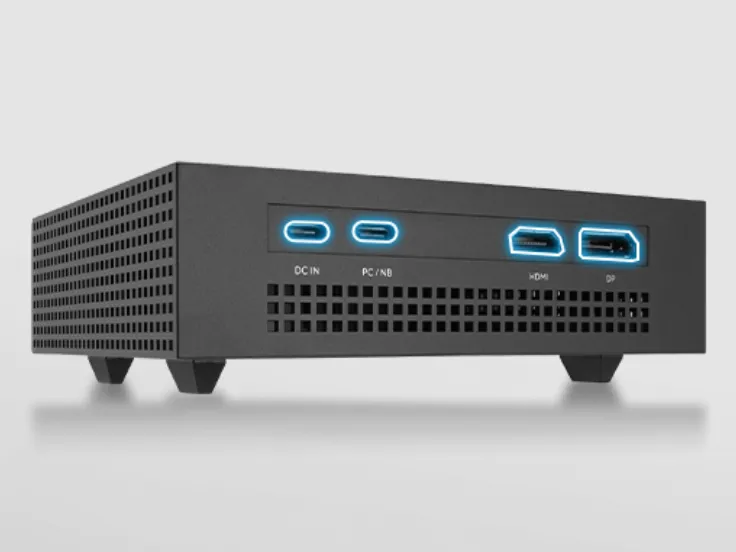
To power both the enclosure and maintain system integration, ASUS has incorporated a separate, dedicated USB-C power input port. For display output, the unit features both an HDMI 2.1b port and a DisplayPort 2.1a port. This display configuration enables the eGPU to drive up to two external monitors simultaneously, effectively transforming a portable workstation or handheld gaming device into a multi-display desktop command center.
Industry Background and the Evolution of External Graphics Docks
The launch of the XG Core series reflects a broader, ongoing trend within the PC hardware industry to make desktop-grade graphics accessible to mobile form factors without requiring massive, cumbersome eGPU chassis. Historically, external graphics enclosures—such as ASUS’s own ROG XG Mobile series or various Thunderbolt-enabled desktop GPU docks—have suffered from two major drawbacks: excessive physical bulk and high system cost.
By scaling down the physical dimensions to a mere 144 × 117 × 39 mm, ASUS is targeting a niche market segment of users who prioritize desk space and travel convenience. However, historical attempts to constrain high-performance desktop GPUs within tight thermal and electrical envelopes have yielded mixed market receptions. Consumers frequently weigh the convenience of a portable eGPU against the performance loss incurred by power throttling and interface bottlenecks inherent to external cabling standards.
Market Implications and Future Outlook
As of publication, ASUS has not yet disclosed official pricing details or a definitive global release date for the XG Core Radeon RX 9060 XT LP 16GB. Industry observers note that the ultimate commercial viability of the product will hinge entirely on its retail positioning.
If ASUS prices the eGPU competitively, it could serve as an attractive, space-saving upgrade path for owners of handheld consoles and mini PCs who require a substantial graphics boost and a large VRAM buffer without cluttering their workspaces. Conversely, if the pricing reflects that of a traditional, unthrottled desktop graphics card, consumers may question the value proposition of hardware operating at half its nominal clock speeds. As reviewers and consumers await hands-on benchmarks and official pricing announcements, the XG Core stands as an intriguing exercise in engineering compromises within the ever-expanding mobile gaming hardware landscape.
Related posts: