Lee Se Young Stuns Viewers as the Homewrecker in Shin Min Ah and Ju Ji Hoon Marriage Drama The Remarried Empress

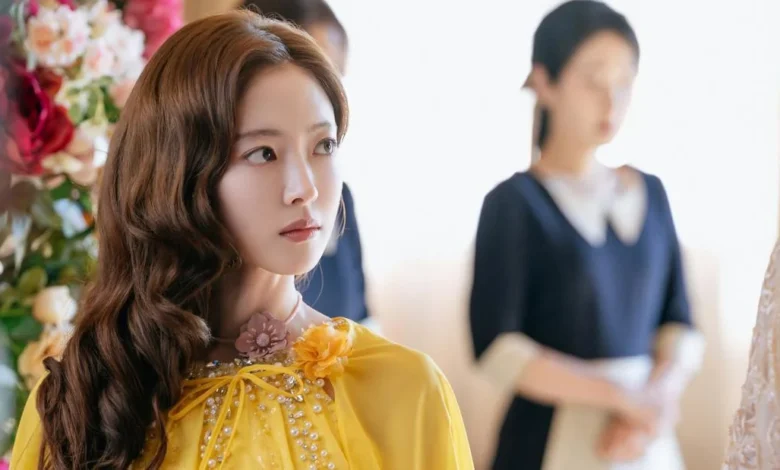
The landscape of South Korean television has once again been shaken by a masterclass in emotional manipulation and stellar acting, courtesy of actress Lee Se Young. In the highly anticipated drama series The Remarried Empress, streaming on Disney+ Hotstar, Lee has successfully elicited widespread fury and fascination from global audiences. Portraying the pivotal role of Rashta—the notorious concubine and third party in a high-stakes imperial romance—Lee stands toe-to-toe with Hallyu heavyweights Shin Min Ah and Ju Ji Hoon. Her compelling portrayal has not only driven viewer engagement to unprecedented heights but has also reignited passionate discourse across international fan communities regarding infidelity, power dynamics, and historical drama tropes in contemporary Hallyu media.
The narrative thrust of The Remarried Empress centers on a complex web of betrayal, societal hierarchy, and personal redemption within a fictionalized imperial court. At the epicentre of this storm is Empress Navier, portrayed with poised elegance by Shin Min Ah, whose steadfast dignity is challenged by the sudden influx of Rashta into the imperial palace. Ju Ji Hoon stars as Emperor Sovieshu, whose infatuation with the newcomer leads him down a treacherous path of marital betrayal and political miscalculation. Lee Se Young’s character enters the fray as an elusive runaway slave who, stripped of all earthly possessions, finds unexpected sanctuary under the protection of the Emperor, whose judgment is ostensibly clouded by her fragile facade and striking beauty.
Chronology of Transformation: From Fugitive Slave to Palace Concubine
The unfolding of Rashta’s character arc within the narrative provides a textbook study of rapid social elevation intertwined with moral corruption. In the opening episodes of the series, the audience is introduced to a desperate fugitive fleeing the brutal clutches of an abusive master. Having endured severe physical and psychological torment, Rashta’s introduction serves to evoke initial sympathy from the viewer. However, this foundational empathy is systematically dismantled as her circumstances undergo a dramatic one-eighty-degree shift following her fateful encounter with Emperor Sovieshu.
Upon entering the opulent confines of the imperial palace, Rashta is subjected to a life of extreme privilege, luxury, and unchecked royal indulgence. The chronological progression of her integration into the court highlights a stark contrast: a woman formerly accustomed to bondage is suddenly granted the power to wield influence over the highest authority in the land. The turning point of the series’ inaugural episode features Emperor Sovieshu casting aside his legal wife, Empress Navier, to dedicate his time, resources, and affection entirely to Rashta. This blatant disregard for imperial protocol and marital vows sets off a chain reaction of political instability and emotional turmoil.
The psychological complexity of Rashta is further illustrated through her dual-sided interactions within the palace walls. In private settings or directly in the presence of Emperor Sovieshu, she maintains a meticulously cultivated aura of absolute innocence, vulnerability, and naivety. This calculated persona effectively binds the Emperor to her cause, blinding him to her underlying ambitions. Conversely, when forced into direct confrontation with Empress Navier, Rashta drops the innocent guise, subtly yet deliberately asserting her newfound dominance and openly flaunting her status as the destabilizing force within the imperial marriage. This jarring duality has been cited by critics as a masterstroke in villain writing, allowing the audience to witness the calculated erosion of a traditional institution from the inside out.
Background Context and Industry Standing of Lee Se Young
While Lee Se Young’s performance as Rashta has felt revelatory to casual viewers, it is firmly rooted in a rich, decades-long career within the South Korean entertainment industry. Far from being a newcomer, Lee’s trajectory offers essential context to her current dramatic prowess. Having commenced her professional journey as a child actress in 1997 at the tender age of five, Lee has systematically built an extensive and versatile portfolio across both television and film. Her early exposure to the rigorous demands of broadcast sets cultivated a technical discipline that continues to inform her nuanced characterizations today.
Prior to securing her role in The Remarried Empress, Lee accumulated a formidable body of work that solidified her status as a leading lady capable of commanding diverse genres. Her notable credits include standout performances in fantasy-thriller fusion dramas such as A Korean Odyssey, time-bending crime thrillers like Kairos, critically acclaimed historical romances such as The Red Sleeve, and legal romantic comedies including The Law Cafe. This diverse resume demonstrates her acute capability to transition between historical and modern settings, a skill that undoubtedly prepared her for the intricate socio-political nuances required to bring a character as layered as Rashta to life.
Industry analysts note that casting an actress of Lee’s caliber in a polarizing antagonist role was a deliberate strategic choice by the production team. By utilizing an actress with immense audience goodwill and established dramatic credentials, the creators ensured that the character of Rashta would not merely register as a one-dimensional villain, but rather as a multi-layered catalyst for the overarching plot. This casting decision has paid dividends, as the emotional friction generated between Shin Min Ah’s dignified empress and Lee’s ambitious concubine forms the emotional bedrock of the series.
Production Insights and Distribution Impact via Disney+ Hotstar
The distribution strategy for The Remarried Empress, spearheaded by global streaming giant Disney+ Hotstar, has significantly amplified the reach of the series across international markets. By positioning high-production-value Korean dramas alongside western blockbusters, platforms of this scale have transformed regional period pieces into global cultural phenomena. Industry data indicates that fantasy-historical dramas featuring ensemble casts boasting household names consistently achieve high retention rates and intense social media discourse, metrics that Disney+ Hotstar aims to capture with this tentpole release.
Behind the scenes, the production of The Remarried Empress involved meticulous attention to detail, ranging from authentic period-accurate costume designs to expansive set constructions intended to replicate the grandeur of a fictionalized imperial court. The collaborative efforts between the director, screenwriters, and the principal cast members—Shin Min Ah, Ju Ji Hoon, and Lee Se Young—were designed to elevate the source material beyond standard soap opera tropes. By grounding the interpersonal conflicts in realistic power struggles and emotional vulnerabilities, the creative team successfully modernized the traditional historical romance framework.
While formal statements from the primary cast regarding specific fan reactions remain measured, industry commentary from production representatives highlights the intentionality behind the character dynamics. Sources close to the production have emphasized that the visceral emotional response from the audience—ranging from fierce loyalty to Empress Navier to intense frustration directed at Emperor Sovieshu and Rashta—indicates that the narrative objectives have been fully realized. The ability of the actors to evoke such strong antipathy toward fictional characters is widely regarded within the industry as a testament to exceptional craftsmanship rather than narrative misstep.
Broader Implications for K-Drama Tropes and Audience Engagement
The immense popularity and immediate cultural impact of The Remarried Empress point to a larger, ongoing evolution in how contemporary South Korean dramas handle female antagonists and complex marital dynamics. Historically, secondary female leads or "homewreckers" in period dramas were often relegated to simplistic, flat archetypes driven entirely by malice or desperation. However, the nuanced writing afforded to Rashta—combined with Lee Se Young’s layered physical and emotional execution—reflects a growing industry demand for multidimensional characters whose motivations, however toxic or destructive, are contextualized by their past trauma and societal subjugation.
Furthermore, the discourse surrounding the dynamic between Shin Min Ah’s Navier and Lee Se Young’s Rashta highlights shifting viewer expectations regarding female agency on screen. Modern audiences increasingly reject passive heroines in favor of complex figures who navigate institutional misogyny, political betrayal, and emotional resilience. Navier’s dignified composure in the face of public humiliation, contrasted with Rashta’s aggressive assertion of autonomy through manipulation, creates a compelling dichotomy that forces viewers to interrogate the systemic pressures placed upon women within patriarchal imperial structures.
As weekly episodes continue to roll out on Disney+ Hotstar, the cultural footprint of The Remarried Empress shows no signs of abating. The series has successfully galvanized a global fanbase whose active participation on social media, discussion forums, and reaction channels has turned the broadcast into an interactive communal experience. Through career-defining performances by established veterans like Shin Min Ah and Ju Ji Hoon, and a breakout, envelope-pushing antagonist turn by Lee Se Young, the drama has firmly secured its place as one of the most significant television events of the current broadcast calendar, setting a high benchmark for future historical fiction adaptations in the global market.
Related posts: