Jakarta – Prominent Indonesian businessman Tan Kian recently provided startling testimony before the Jakarta Anti-Corruption (Tipikor) Court, revealing that he felt extorted for SGD 5 million—equivalent to approximately IDR 55 billion—by Ferry Yanto Hongkiriwang, widely known as Ferry Boboho. According to Tan, the massive sum was handed over under extreme duress, driven by threats that he would be named a suspect in the sprawling corruption case involving state-owned insurer Jiwasraya.
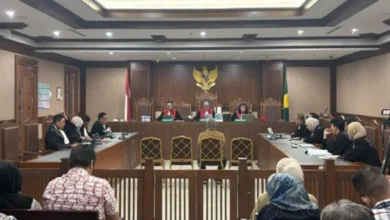
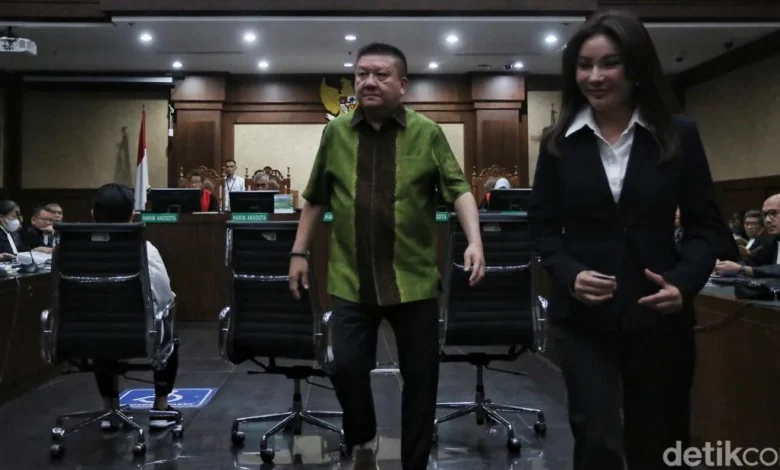
Despite suffering such a monumental financial loss through alleged extortion, Tan admitted that he intentionally chose not to report the crime to law enforcement authorities. The disclosure unfolded during an intense courtroom session held in the early hours of Tuesday, November 3, 2026. Tan took the stand as a crucial witness in a high-profile trial concerning extortion and money laundering (TPPU) centered around former Junior Attorney General for Special Crimes (Jampidsus) Febrie Adriansyah. Alongside Febrie, other co-defendants sitting in the dock included Don Ritto, also known as Idon, and Nurman Herin.
The explosive revelation emerged during cross-examination when the defense counsel representing Don Ritto pressed the businessman on why he kept silent instead of seeking legal recourse. The exchange exposed the precarious vulnerability of high-net-worth business figures operating within politically charged legal environments in Indonesia.
The Legal Proceedings and Core Allegations
The trial itself represents a seismic shock within Indonesia’s legal and prosecutorial landscape. Febrie Adriansyah, a once-formidable figure within the Attorney General’s Office (AGO), is facing serious criminal charges alleging that he orchestrated the extortion of Tan Kian to the tune of IDR 55 billion. Prosecutors contend that Febrie did not act alone, utilizing Ferry Yanto Hongkiriwang as an intermediary to execute the shakedown.
Beyond the specific extortion charges tied to Tan Kian, the indictment outlines a staggering broader financial conspiracy. Febrie and his co-defendants face cumulative money laundering charges amounting to IDR 346,743,821,282 (approximately IDR 346.7 billion) and USD 440,990 (roughly IDR 7.9 billion). Prosecutors detailed how the defendants allegedly sought to legitimize and conceal these illicit funds through complex asset acquisition strategies. During the investigative phase, law enforcement authorities raided and dismantled three secure safes belonging to the accused parties. Among the astonishing contents recovered was a massive hoard of physical gold weighing 74 kilograms. Furthermore, investigators presented evidence indicating that Febrie and Don Ritto utilized laundered capital to acquire commercial real estate, specifically purchasing a popular café that served as their frequent social hangout.
Why Tan Kian Remained Silent: Fear of Corporate Collapse
During the early morning court session, the legal strategy of Don Ritto’s defense team focused heavily on dismantling the credibility of the transaction and questioning Tan Kian’s passive stance. The courtroom fell silent as the defense attorney confronted the witness directly regarding his failure to report the extortion.
"Moving on, sir. Do you feel you were extorted by Ferry Boboho?" the defense lawyer for Don Ritto asked during the hearing.
"Yes," Tan answered firmly.
Intrigued by this admission, the defense counsel pushed further to uncover the underlying rationale for enduring a multi-billion- rupiah extortion scheme without alerting the National Police or the Corruption Eradication Commission (KPK).
"Why didn’t you report it to the police?" the lawyer pressed.
Tan’s response laid bare the immense collateral damage he feared would befall his commercial empire if the scandal leaked to the public domain.
"Well, if I reported it, my investors would all run away, sir," Tan explained.
Unsatisfied with this initial justification, the defense counsel challenged the logic, emphasizing the extraordinary scale of the financial demand. "Come on, how could they run away? You felt you were extorted for 5 million dollars, you know. That is a lot of money, sir."
Tan elaborated on the systemic risks threatening his corporate stability, noting that public exposure of a high-stakes legal investigation or extortion complaint would trigger immediate defensive maneuvers from financial institutions.
"Yes, but if I reported it, perhaps my credit lines and financial facilities would be revoked by the bank if it became a public spectacle," Tan stated.
Background Context: The Jiwasraya Shadow and Elite Vulnerability
To fully understand Tan Kian’s deep-seated apprehension, one must examine the broader context of the PT Asuransi Jiwasraya (Persero) financial scandal. The Jiwasraya collapse is widely recognized as one of the largest corporate financial scandals in modern Indonesian history, resulting in hundreds of trillions of rupiah in state losses and affecting hundreds of thousands of policyholders. The sheer scale of the investigation made the mere mention of a person’s name in connection with the case an immediate death sentence for corporate reputation and creditworthiness.
Business magnates and property developers who had commercial dealings touching upon Jiwasraya’s sprawling web of investments frequently found themselves navigating a minefield of regulatory scrutiny. For figures like Tan Kian, maintaining investor confidence and uninterrupted banking liquidity is paramount. The threat—real or perceived—of being dragged into a high-profile corruption probe as a suspect carries catastrophic implications. Access to credit facilities can freeze overnight, stock values can plummet, and international or domestic institutional partners can sever ties instantly to mitigate their own compliance risks.
Consequently, Tan’s decision to quietly absorb a multi-million-dollar financial blow rather than trigger a public legal battle highlights a dark underbelly of elite business survival strategies. In environments where the lines between regulatory enforcement and targeted coercion blur, silence and appeasement are sometimes calculated as safer business decisions than institutional whistleblowing.
Chronology of the Investigation and Prosecution
The unfolding of the case against Febrie Adriansyah and his associates marks a dramatic chapter in internal accountability within Indonesia’s law enforcement apparatus. Historically, investigators and prosecutors within the Attorney General’s Office hold immense discretionary power over the initiation, continuation, or closure of major corruption probes.
- Initial Inquiries and Discovery: Investigative bodies began unearthing financial irregularities and suspicious asset flows tied to high-ranking officials within the Jampidsus office. As forensic accountants traced the movement of funds, links emerged connecting intermediary actors like Ferry Yanto Hongkiriwang to elite targets.
- Asset Seizures and Raids: Prosecutors executed targeted raids, uncovering substantial physical wealth hidden away from conventional banking systems. The discovery of 74 kilograms of gold inside seized safes provided tangible proof of illicit wealth accumulation that far exceeded official civil servant incomes.
- Formal Indictment and Arrests: Formal charges were laid against Febrie Adriansyah, Don Ritto, Nurman Herin, and other affiliated figures. The indictment detailed extensive counts of extortion under the guise of legal leverage, alongside sophisticated money laundering operations.
- Trial Phase and Witness Testimonies: The trial commenced at the Jakarta Anti-Corruption Court, featuring testimonies from high-profile victims and witnesses such as Tan Kian. The proceedings have continuously drawn intense media scrutiny due to the unprecedented nature of prosecuting a senior law enforcement official for extortion and money laundering on this scale.
Implications for the Indonesian Legal and Financial Sectors
The revelations from Tan Kian’s testimony carry profound implications for both the business community and the nation’s ongoing anti-corruption campaigns. First, it underscores the systemic vulnerability of wealthy entrepreneurs to predatory practices by rogue elements within law enforcement agencies. When individuals tasked with upholding the law allegedly leverage their positions to exact private tolls, the foundational trust required for a healthy investment climate is severely eroded.
Second, Tan’s admission regarding his refusal to report the crime highlights a critical structural flaw in corporate protection mechanisms. Business leaders who fear banking retaliation and capital flight more than they trust the protective mechanisms of the justice system demonstrate a lack of institutional confidence. If victims of extortion believe that seeking legal protection will result in the destruction of their corporate credit lines rather than the punishment of the perpetrators, criminal networks will continue to operate with impunity.
Finally, the prosecution of figures like Febrie Adriansyah serves as a dual-edged sword. On one hand, it signals a commendable willingness within the judicial system to purge corrupt actors from within the highest ranks of law enforcement. On the other hand, the details emerging from the courtroom reveal how deeply entrenched these corrupt practices were, involving tens of billions of rupiah in extortion and hundreds of billions in laundered assets.
As the trial progresses at the Jakarta Anti-Corruption Court, legal observers, investors, and the public await further testimonies that may shed additional light on the mechanics of elite-level corruption and the measures required to safeguard Indonesia’s financial architecture from predatory exploitation.