MentariTV Fest Ceria 2026: Little Heroes Part 2 Brings Edu-tainment to New Heights in Jakarta

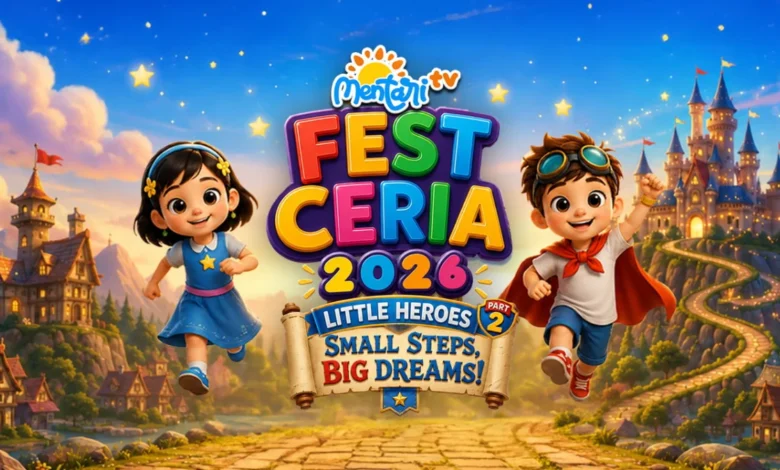
MentariTV, the leading Indonesian children’s television network, has officially announced the return of its signature event, MentariTV Fest Ceria 2026: Little Heroes Part 2, scheduled for September 26–27, 2026, at Pluit Village Mall, North Jakarta. This highly anticipated festival marks the sixth iteration of the event since its inception in 2023, solidifying its position as a cornerstone of family-oriented entertainment in the Indonesian capital.
The event, centered around the theme "Small Steps, Big Dreams!", is designed to provide an interactive platform for children to cultivate creativity, build self-confidence, and explore their latent talents. By merging educational content with high-energy entertainment, MentariTV continues to bridge the gap between television engagement and real-world experiential learning.
A Chronology of Growth: From 2023 to 2026
Since its inaugural launch in 2023, the MentariTV Fest has experienced exponential growth in both scale and public reception. The festival was conceptualized as an offline extension of the network’s popular programming, aiming to provide "Sahabat MentariTV" (the channel’s loyal audience) with an opportunity to engage with their favorite animated characters and personalities in a live setting.
The trajectory of the festival has been marked by significant milestones:
- 2023: The launch year saw modest gatherings that quickly gained traction due to the high demand for accessible, high-quality family weekend activities in Jakarta.
- 2024: The event expanded its footprint, incorporating more interactive zones and diversifying the participation of celebrity guests.
- 2025: A pivotal year for the brand, with cumulative attendance across the fifth edition reaching over 200,000 visitors. This record-breaking success solidified the event’s status as a premier destination for families, influencing the organizers to scale up their logistics and programming for the 2026 calendar.
- 2026: The current edition, "Little Heroes Part 2," represents the network’s most ambitious effort to date, focusing on long-term engagement and holistic child development.
Strategic Programming and Educational Focus
The core philosophy of this year’s festival is rooted in the belief that children learn best through play. The event is strategically partitioned into various zones, each catering to different developmental stages and interests.
The "Warna Ceria" (Cheerful Colors) and "Kreasi Ceria" (Cheerful Creations) sections serve as hubs for artistic expression, while "Aktif Ceria" (Cheerful Active) and "Gaya Ceria" (Cheerful Style) encourage physical movement and self-expression. Perhaps the most innovative addition is the "Little Baby Heroes Area," which features professional baby massage services—a direct response to the growing parental interest in early-childhood wellness and sensory development.
Furthermore, the "Family Zone," "Playground," and "Water Splash" areas serve to foster social interaction between parents and children. By integrating these physical activities with the presence of animated mascots, MentariTV creates a cohesive environment where the fantasy of television is grounded in the reality of community building.
Official Statements and Industry Perspective
Harsiwi Achmad, Director of EMTEK Media, highlighted the importance of maintaining a balance between high-production entertainment and educational value. "MentariTV Fest Ceria 2026 is a manifestation of our gratitude toward the community’s unwavering support," Achmad stated. "Our objective has always been to provide a fresh and impactful experience. With over 200,000 attendees in our previous outing, we recognize the responsibility to provide content that not only entertains but also leaves a lasting positive impression on the development of our young participants."
The inclusion of the D’Academy 7 (DA7) Universe—including stars such as Melly Lee, Ama, and Andi Syaqirah—acts as a strategic draw for the audience. The involvement of public figures like Abang L, Papa Billar, and Bunda Lesti provides a relatable touchstone for families, further humanizing the event and strengthening the emotional connection between the brand and its viewers.
Broader Socio-Economic Implications
The success of such festivals in urban centers like Jakarta reflects a broader shift in consumer behavior regarding family leisure. As urbanization increases and public green spaces become limited, organized events within controlled environments like shopping malls (e.g., Pluit Village Mall) have become essential infrastructure for urban families.
Industry analysts note that "edu-tainment" events have become a lucrative and necessary sector of the media industry. For networks like MentariTV, these events are not merely marketing tools; they are vital for sustaining brand loyalty in an era where digital content often isolates the viewer. By transforming a television network into a physical destination, EMTEK Media successfully monetizes brand equity while providing a tangible service to the public.
Furthermore, the "free and open to the public" policy adopted by MentariTV is a significant factor in the event’s high attendance figures. In a climate where family outings can be prohibitively expensive, providing high-quality, free, and educational entertainment is a notable contribution to the local community. It democratizes access to professional child development activities that might otherwise be gated behind high entry fees.
Event Logistics and Attendee Information
For those planning to attend, the event will take place from Saturday to Sunday, September 26–27, 2026, commencing at 10:00 AM WIB. The choice of location, Pluit Village Mall, is strategic due to its accessibility and capacity to handle large crowds, which is essential given the anticipated turnout.
Prospective attendees are encouraged to monitor the official social media channels, specifically the Instagram account @mentaritv_fest and the TikTok account @mentaritv_festceria, for real-time updates, performance schedules, and safety guidelines.
Conclusion: The Future of Family Engagement
MentariTV Fest Ceria 2026 serves as a case study for how modern media conglomerates can remain relevant by diversifying their touchpoints. By prioritizing the "Little Heroes" theme, the network reinforces its commitment to nurturing the next generation of Indonesian youth.
As the event approaches, the focus remains on ensuring that the logistical execution matches the high expectations set by previous years. The integration of technology, live performance, and specialized childcare services suggests a mature, well-researched approach to event planning. If the previous attendance figures are any indication, the 2026 festival is poised to once again prove that in the realm of family entertainment, small steps—when taken with purpose and community support—truly do lead to big dreams.
For parents seeking further guidance, the event organizers have partnered with platforms such as theAsianparent to provide expert-led parenting resources, ensuring that the support provided at the festival extends beyond the weekend and into the daily lives of families. Through this multi-faceted approach, MentariTV is not just airing content; it is actively shaping the landscape of family engagement in Indonesia.