The Top 5 Wealthiest Countries in the Middle East and Their Economic Transformation Strategies

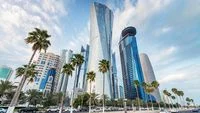
The economic landscape of the Middle East is currently undergoing one of the most significant structural transformations in modern history, moving away from a century-long reliance on hydrocarbons toward diversified, technology-driven, and investment-heavy models. While the region has long been synonymous with vast oil reserves and "crazy rich" lifestyles, recent data from the International Monetary Fund (IMF) and various global economic outlooks for 2024 and 2025 reveal a more nuanced reality of fiscal resilience and strategic growth. Contrary to popular perception, which often places Saudi Arabia at the pinnacle of individual wealth due to its sheer size and influence, the title of the wealthiest nation per capita belongs to smaller, high-output states that have mastered the art of maximizing natural resource yields while aggressively courting international capital.
As of the April 2025 World Economic Outlook projections, the hierarchy of wealth in the Middle East is defined by Purchasing Power Parity (PPP), a metric that adjusts for cost-of-living differences and inflation rates to provide a more accurate comparison of living standards. This shift toward non-oil revenue streams—spanning tourism, aviation, renewable energy, and financial services—is no longer a theoretical goal but a documented reality. The following analysis explores the five wealthiest nations in the region, their economic drivers, and the strategic frameworks they have implemented to secure their financial futures.
1. Qatar: The Unrivaled Leader in Per Capita Prosperity
Qatar continues to hold its position as the wealthiest country in the Middle East and one of the richest globally. According to IMF projections for April 2025, Qatar’s Gross Domestic Product (GDP) per capita based on PPP is estimated at $121,610 (approximately Rp1.98 billion). This extraordinary figure is the result of a unique combination of a relatively small indigenous population and a massive output of Liquefied Natural Gas (LNG).
The backbone of Qatar’s wealth is its North Field, the world’s largest non-associated natural gas field. As the global energy market shifts toward gas as a "bridge fuel" for the energy transition, Qatar has accelerated its North Field Expansion (NFE) project. This initiative aims to increase the country’s LNG production capacity from 77 million tons per annum (mtpa) to 126 mtpa by 2027.
Beyond energy, Qatar has utilized its sovereign wealth fund, the Qatar Investment Authority (QIA), to diversify its holdings globally. The QIA manages assets estimated at over $450 billion, including significant stakes in Volkswagen, Barclays, and prestigious real estate in London and New York. Domestically, the legacy of the 2022 FIFA World Cup continues to drive the economy, as the country pivots toward becoming a hub for sports, diplomacy, and high-end tourism. The government’s focus on "Vision 2030" ensures that energy revenues are systematically funneled into education, healthcare, and infrastructure, creating a sustainable ecosystem that does not rely solely on market fluctuations of gas prices.
2. United Arab Emirates: The Benchmark for Economic Diversification
The United Arab Emirates (UAE) ranks as the second wealthiest nation in the region, with a projected GDP per capita (PPP) of approximately $82,000 (Rp1.34 billion). While its nominal GDP per capita remains robust at $51,290, the UAE’s true strength lies in its status as a global crossroads for trade and innovation.
Economic forecasts from Reuters and regional analysts suggest the UAE economy will grow by 4.9% in 2025. This growth is increasingly decoupled from oil prices. In Dubai, for instance, the oil sector contributes less than 1% to the emirate’s GDP. Instead, the UAE has built a world-class infrastructure for tourism, aviation (led by Emirates and Etihad), and financial services (centered in the Dubai International Financial Centre and Abu Dhabi Global Market).
The UAE’s strategy involves the implementation of "Free Zones" that allow 100% foreign ownership and provide tax exemptions, making it a magnet for multinational corporations. Furthermore, the "D33" Dubai Economic Agenda aims to double the size of Dubai’s economy over the next decade and position it among the top three global cities. The introduction of long-term residency through "Golden Visas" has also stabilized the real estate market and attracted global talent in the fields of Artificial Intelligence (AI) and coding, ensuring that the UAE remains a competitive player in the fourth industrial revolution.
3. Saudi Arabia: The Giga-Project Revolution
Saudi Arabia, the largest economy in the Arab world, holds the third position with a GDP per capita (PPP) of $61,920 (Rp1.01 billion). While the Kingdom remains the world’s leading oil exporter, its economic narrative is currently dominated by "Vision 2030," an ambitious blueprint spearheaded by Crown Prince Mohammed bin Salman to reduce oil dependence.
The scale of Saudi Arabia’s transformation is unprecedented. The Public Investment Fund (PIF), which has grown into one of the world’s most influential sovereign wealth funds, is the primary vehicle for this change. The Kingdom is currently developing several "Giga-projects," including NEOM—a $500 billion futuristic city powered entirely by renewable energy—and the Red Sea Project, which aims to turn the Saudi coastline into a luxury tourism destination comparable to the Maldives.
Data from the IMF indicates that while the oil sector remains a major contributor to the treasury, the non-oil sector is growing at a record pace, driven by manufacturing, mining, and a burgeoning entertainment industry. Saudi Arabia’s recent successful bid to host the 2034 FIFA World Cup and the 2030 World Expo in Riyadh further underscores its commitment to international integration. Analysts note that the Kingdom’s challenge lies in managing the massive capital expenditure required for these projects while maintaining fiscal stability, a balance it has so far managed through high oil prices and increasing foreign direct investment (FDI).
4. Kuwait: The Pioneer of Sovereign Wealth Management
Kuwait ranks fourth with a GDP per capita (PPP) of $50,960 (Rp831 million). Kuwait’s wealth is rooted in its massive oil reserves—estimated to be the sixth-largest in the world—and a deeply entrenched culture of long-term financial planning.
Kuwait was a pioneer in the region for establishing the Kuwait Investment Authority (KIA) in 1953, the world’s first sovereign wealth fund. The KIA manages the Future Generations Fund, into which 10% of all state oil revenue is automatically deposited every year. This fund is designed to provide a safety net for when oil reserves are eventually depleted.
Despite its vast wealth, Kuwait faces unique challenges compared to its neighbors. Political gridlock between the executive branch and the parliament has occasionally slowed the pace of economic reform and diversification. However, the country’s high "break-even" oil price and substantial foreign assets allow it to maintain one of the strongest balance sheets in the world. Recent government initiatives have focused on the "Northern Gulf Gateway" project, aiming to transform Kuwait into a regional logistics and financial hub, though the speed of implementation remains a point of observation for global economists.
5. Bahrain: The Financial and Industrial Alternative
Rounding out the top five is Bahrain. Despite having the smallest oil reserves among the Gulf Cooperation Council (GCC) nations, Bahrain has maintained its status as a wealthy nation by being an early adopter of economic diversification. On the first quarter of 2024, Bahrain’s real GDP grew by 3.3% year-on-year, with the non-oil sector now accounting for a staggering 85.9% of the total economy.
Bahrain’s wealth is driven by its financial services sector, which is the oldest and most established in the region. Manama remains a major hub for Islamic finance and fintech. Additionally, the country has a robust industrial base, led by Aluminium Bahrain (Alba), one of the largest aluminum smelters in the world.
The Bahraini government has been proactive in creating a "business-friendly" environment, offering some of the lowest operating costs in the region. By focusing on niche markets such as cloud computing—evidenced by Amazon Web Services (AWS) choosing Bahrain for its first regional data center—the Kingdom has successfully compensated for its limited natural resources with a highly skilled workforce and strategic positioning.
Chronology of Wealth: From Oil Discovery to Post-Oil Planning
The trajectory of wealth in the Middle East can be divided into three distinct eras:
- The Discovery Era (1930s–1970s): The discovery of massive oil fields in Saudi Arabia, Kuwait, and the UAE transformed these nations from pearl-diving and trading societies into global energy players.
- The Accumulation Era (1980s–2010s): High oil prices allowed these nations to build modern cities, infrastructure, and massive sovereign wealth funds. During this time, the focus was on state-led development and the establishment of welfare systems for citizens.
- The Transformation Era (2015–Present): Triggered by the 2014-2016 oil price crash and the global shift toward green energy, Middle Eastern nations accelerated their "Vision" programs. This era is defined by privatization, the introduction of taxes (such as VAT in the UAE and Saudi Arabia), and a focus on technology and sustainability.
Implications and Future Outlook
The rise of these five nations as global financial powerhouses has significant implications for the world economy. First, the Middle East is no longer just a source of energy; it is a major source of global capital. Sovereign wealth funds from this region are now the "investors of last resort" for global tech startups, sports franchises, and infrastructure projects in the West and Asia.
Second, the competition between these five nations—particularly between the UAE and Saudi Arabia—is driving a "race to the top." As they compete to attract the best companies and talent, the region is seeing rapid improvements in legal frameworks, social liberalization, and digital infrastructure.
However, risks remain. The region’s wealth is still tied to global energy demand. If the global transition to electric vehicles and renewable energy happens faster than these countries can diversify, their fiscal buffers could be tested. Furthermore, geopolitical tensions in the region remain a constant variable that can impact investor confidence.
In conclusion, while Qatar, the UAE, Saudi Arabia, Kuwait, and Bahrain have built their fortunes on the bedrock of natural resources, their current wealth is increasingly a product of sophisticated financial management and visionary economic planning. As they navigate the complexities of the 21st-century global economy, their ability to transform "black gold" into "digital gold" will determine whether they remain at the top of the global wealth rankings for generations to come.