Joint Security Forces Destroy 18-Hectare Cannabis Farm in North Aceh and Arrest Three Suspects

In a major blow against illicit narcotics production in Indonesia, a joint security operation successfully dismantled and burned an expansive 18-hectare cannabis plantation nestled deep within the plantation hills of North Aceh Regency. The large-scale raid, executed on Monday, November 2, 2026, also resulted in the apprehension of three local residents suspected of owning and managing the illegal cultivation site. This high-profile crackdown highlights the ongoing, rigorous efforts by Indonesian law enforcement agencies to eradicate drug production at its grassroots level, targeting not just distribution networks, but the agricultural epicenters of illegal substance manufacturing in the archipelago.
Chronology of the Operation
The targeted operation was the result of weeks of meticulous intelligence gathering, surveillance, and inter-agency coordination. The joint task force consisted of personnel from the Directorate of Narcotics Crime of the Indonesian National Police’s Criminal Investigation Agency (Bareskrim Polri), the National Narcotics Agency (BNN), and the local jurisdiction of the Lhokseumawe Resort Police (Polres Lhokseumawe).
Intelligence reports had previously flagged suspicious agricultural activities in the rugged and secluded terrain of Dusun Alue Garut, located within the jurisdiction of Teupin Ruseb Village in the Sawang District of North Aceh. The geographical isolation of the area—characterized by steep slopes, dense secondary forests, and limited access roads—had historically made it an attractive location for illicit cultivators attempting to evade law enforcement detection.
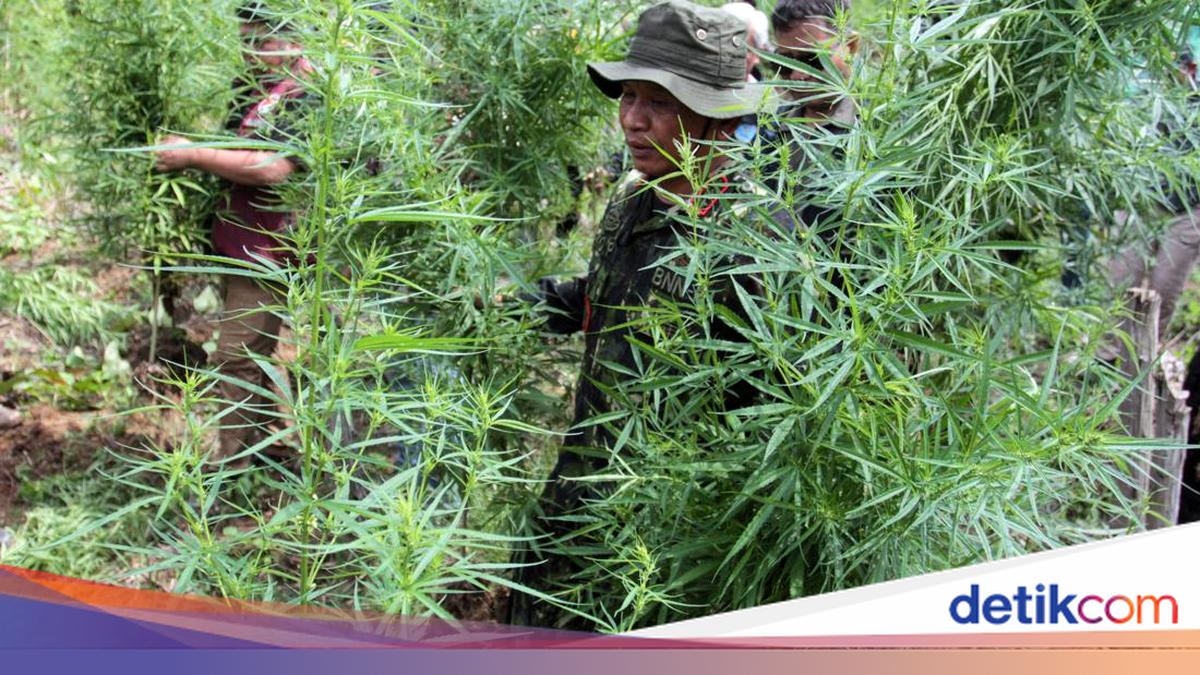
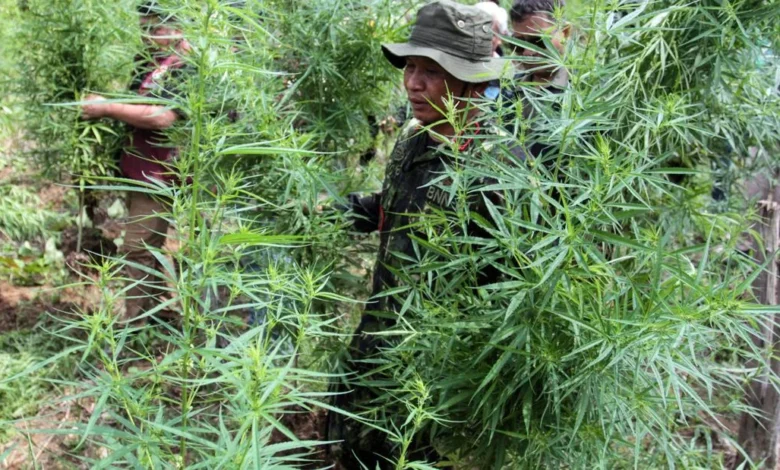
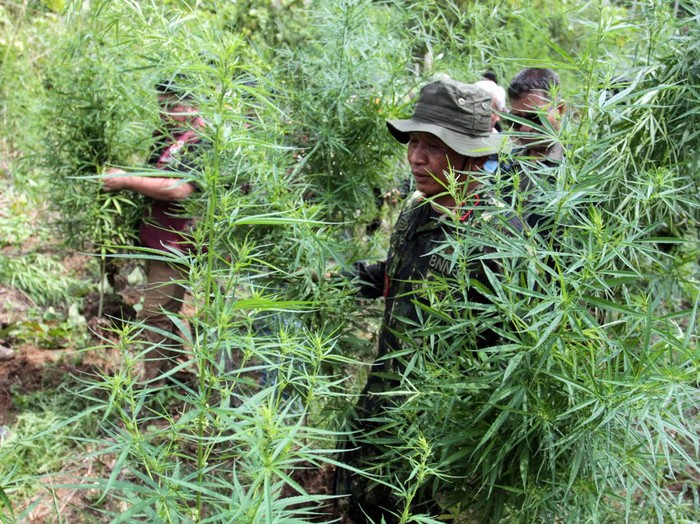
On the morning of November 2, 2026, heavily armed personnel mobilized to infiltrate the mountainous terrain. Traversing difficult geography on foot, the joint task force successfully surrounded the targeted plantation before the cultivators could detect their approach. Upon securing the perimeter, officers discovered an astonishing 18 hectares of lush, mature cannabis plants ready for immediate harvesting.
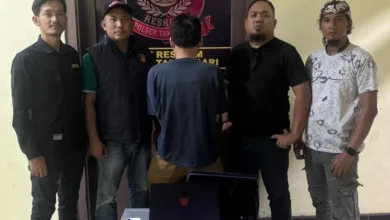
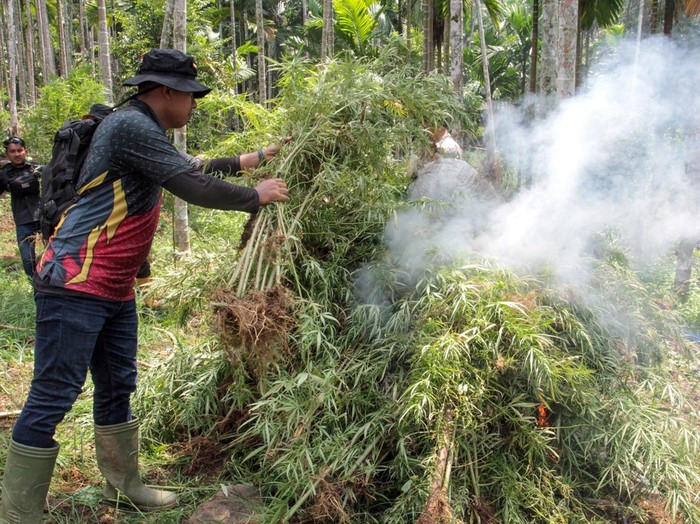
Rather than transporting the massive volume of illicit flora—which would have posed logistical challenges—the task force systematically uprooted the plants and stacked them on-site. In accordance with standard law enforcement protocols for eradicating large-scale agricultural narcotics, the entire harvest was burned to ashes. Beyond destroying the crop, tactical teams swept the surrounding camps and apprehended three individuals identified as the primary owners and operators of the plantation. The suspects were quickly secured and transferred out of the remote area under heavy guard.
Suspect Profiles and Legal Ramifications
During the operation, law enforcement authorities successfully detained three local men suspected of masterminding and laboring on the illicit farm. According to preliminary data released by the joint task force, the suspects have been identified by their initials: L (35), T (42), and W (32). All three individuals are local residents of North Aceh.
Initial interrogations indicate that the suspects played direct roles in land clearance, planting, maintenance, and the impending harvest of the cannabis crops. The suspects now face severe legal consequences under Indonesian narcotics legislation. Specifically, they are expected to be charged under the Republic of Indonesia Law No. 35 of 2009 on Narcotics. Under this strict legal framework, individuals convicted of cultivating, planting, possessing, or producing Class I narcotics—a category that explicitly includes cannabis—face extraordinary penalties, ranging from lengthy prison sentences of up to 20 years to life imprisonment, and in severe cases involving massive commercial quantities, the death penalty.
Investigators are currently expanding their inquiries to determine whether L, T, and W are acting as independent operators or if they are tied to larger, syndicated narcotics trafficking rings operating across Sumatra and potentially supplying domestic markets in major Indonesian cities such as Medan and Jakarta. Financial tracing is also expected to be deployed to confiscate any assets or wealth generated from the illegal enterprise.
Background and Context of Cannabis Cultivation in Aceh
The bust in North Aceh is part of a long-standing, generational struggle between Indonesian authorities and illegal cannabis cultivators in the province. Historically, the fertile volcanic soil and microclimate of the Gayo highlands and surrounding mountainous regions in Aceh have made the region notorious for illicit cannabis cultivation.
During the decades-long civil conflict in Aceh, cannabis production occasionally flourished due to the breakdown of state authority and the lack of economic alternatives for impoverished rural communities. Even following the historic 2005 Helsinki Peace Agreement and the subsequent rebuilding of the region, eradicating cannabis farming has remained an uphill battle for law enforcement. Many impoverished farmers in remote enclaves are repeatedly lured into cultivating the cash crop by criminal brokers who promise high payouts compared to legal agricultural commodities like coffee, rubber, or palm oil.
In response, federal and regional law enforcement agencies have institutionalized periodic eradication campaigns. Bareskrim Polri and the BNN routinely deploy satellite surveillance, drone technology, and human intelligence networks to locate hidden plantations. Despite hundreds of hectares being destroyed annually, the sheer profitability of the illicit trade ensures that new, deeply hidden plots continue to emerge in remote pockets of the Acehnese hinterlands.
Law Enforcement Strategy and Broader Implications
The successful raid in Teupin Ruseb Village underscores a strategic shift in Indonesia’s war on drugs: targeting the supply chain at its very genesis. While street-level interdictions and major seaport busts are vital for disrupting distribution, halting production at the farm level prevents millions of doses from ever entering the illicit market.
The involvement of high-level national agencies such as Bareskrim Polri alongside the BNN and local police forces demonstrates a unified, inter-institutional resolve to tackle the narcotics problem comprehensively. Law enforcement analysts note that destroying an 18-hectare farm deals a devastating financial blow to local criminal networks, disrupting seasonal cash flows and forcing syndicates to reconsider the risks associated with large-scale agricultural production in the region.
However, security analysts and socio-economic experts consistently emphasize that law enforcement eradication campaigns alone are insufficient to permanently solve the region’s cannabis problem. A sustainable resolution requires robust alternative development programs. Government agencies, non-governmental organizations, and local agricultural ministries must collaborate to provide rural farmers in remote areas like Sawang District with viable, legal economic alternatives. By introducing subsidized seeds, modern farming equipment, infrastructure improvements, and guaranteed market access for legal crops such as patchouli, coffee, or horticulture, the state can disincentivize farmers from cooperating with drug syndicates.
As the investigation into suspects L, T, and W continues, authorities have signaled that operations of this scale will persist. Law enforcement agencies have urged local communities to report suspicious agricultural activities and refrain from participating in illicit cultivation networks, warning that zero-tolerance policies will be strictly enforced across the province to protect the younger generation from the devastating impacts of drug abuse.