MUI Urges National Police Chief to Conduct Thorough Investigation into Illegal Wiretapping of President Prabowo Subianto

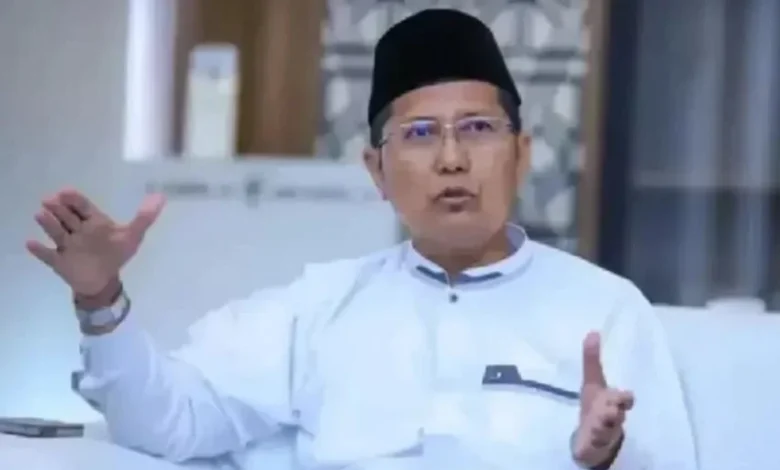
The Indonesian Ulema Council (MUI) has formally called upon the Chief of the Indonesian National Police (Polri), General Suyudi Ario Seto, to spearhead a comprehensive and transparent investigation into the unauthorized wiretapping of President Prabowo Subianto and several prominent public figures. The demand, voiced by MUI Deputy Chairman KH M. Cholil Nafis on Friday, November 13, 2026, underscores growing national concern regarding potential breaches of state security and the integrity of the country’s highest leadership.
The call for an exhaustive inquiry follows reports suggesting that high-ranking officials, including those within the police force itself, may be implicated in a clandestine surveillance operation. As the investigation unfolds, the political landscape in Jakarta is bracing for the potential fallout of a scandal that touches upon the very foundations of state sovereignty and the stability of the current administration.
The Genesis of the Surveillance Scandal
The investigation into the illegal interception of communications came to the forefront of national discourse after preliminary findings suggested that a high-ranking police officer, identified with the rank of Brigadier General, was allegedly involved in the operation. This revelation has sent shockwaves through the Indonesian security apparatus, raising urgent questions regarding the chain of command, the security protocols protecting the President, and the potential for internal subversion.
While the specifics of the surveillance methods remain under wraps due to the ongoing nature of the investigation, the scale of the operation appears to be sophisticated. Intelligence experts suggest that such wiretapping, if conducted without legal warrants or oversight by authorized state agencies, constitutes a grave violation of the Law on Information and Electronic Transactions (UU ITE) and the Law on Intelligence.
Chronology and Initial Findings
The timeline of the investigation began to take shape earlier this month when security teams detected irregularities in the communication networks surrounding the Presidential Palace. Swift forensic analysis confirmed that the signals had been compromised by sophisticated equipment capable of intercepting encrypted data.
Following the initial discovery, President Prabowo ordered a high-level review of all communication security protocols. On November 10, 2026, the National Police launched a formal internal investigation. By November 12, the probe reached the upper echelons of the police force, leading to the identification of the Brigadier General now suspected of playing a central role in the breach.
The National Police Chief, General Suyudi Ario Seto, has since pledged full transparency. In a brief statement following the disclosure of the suspect’s rank, the Chief of Police emphasized that no individual, regardless of their rank or position within the force, would be shielded from the legal consequences of their actions if found guilty of compromising the President’s security.
MUI’s Stance: A Call for Accountability
The intervention by the Indonesian Ulema Council serves as a moral and civic call for accountability. KH M. Cholil Nafis, speaking on behalf of the MUI and supported by leaders of various Islamic mass organizations, framed the incident as more than a mere technical security lapse. He characterized the unauthorized surveillance as a potential act of treason.
"We provide our full support to the Chief of the National Police to investigate this case to the roots. It must be transparent," Cholil Nafis stated. "If this wiretapping is linked to an intent to commit treason (makar), it is an act of betrayal against the sovereignty and dignity of the Unitary State of the Republic of Indonesia (NKRI)."
The MUI’s firm stance reflects a broader sentiment among national leaders that the sanctity of the Presidency must remain inviolable. By calling for a public-facing investigation, the MUI aims to mitigate the risk of public distrust in state institutions and to ensure that the rule of law is applied uniformly.
Implications for State Security and Governance
The implications of this wiretapping scandal are profound. First, it highlights a critical vulnerability in the country’s cyber-defense infrastructure. In an era where digital espionage has become a standard tool of geopolitical maneuvering, the ability of domestic actors—or potentially foreign interests working through domestic proxies—to tap the communications of a Head of State indicates an urgent need for an overhaul of secure communication protocols.
Second, the involvement of a senior law enforcement officer suggests a deep-seated institutional rot or the existence of factional interests within the security services. Political analysts warn that if the investigation is not handled with absolute impartiality, it could trigger a crisis of confidence in the National Police. The public is watching to see whether the investigation will stop at the Brigadier General or if it will uncover a wider network of conspirators.
Finally, the mention of "makar" (treason) by religious leaders adds a significant political dimension. Under Indonesian law, treason is a serious criminal offense that carries heavy penalties. The authorities must now distinguish between unauthorized surveillance for commercial or personal gain and surveillance aimed at undermining the political stability of the nation.
Protecting National Stability
In his remarks, Cholil Nafis also urged all stakeholders, from political elites to the general public, to maintain national stability during this volatile period. "National stability and the authority of the state must be maintained together against all forms of internal and external interference that could damage the order of our nation-state," he noted.
The government’s ability to navigate this scandal will likely determine the short-term trajectory of the Prabowo administration. Maintaining the "wibawa" (authority) of the state requires not only catching the perpetrators but also demonstrating that the institutions meant to protect the nation are capable of self-correction.
Supporting Data and Legislative Context
Legal experts point out that the illegal interception of communications is strictly prohibited under the 2008 Law on Electronic Information and Transactions, as amended in 2016 and 2024. Article 31 of the law specifically criminalizes the interception of information not intended for the public. Furthermore, the 2011 Law on Intelligence stipulates that any intelligence operation must be conducted under strict legal oversight and with clear authorization, typically reserved for counter-terrorism or national security threats.
If the suspects are found to have violated these laws, they could face up to 10 years of imprisonment and significant fines. However, if the charge of treason is successfully proven, the legal consequences could escalate to life imprisonment or, in extreme cases, the death penalty, depending on the severity of the threat posed to the state.
Conclusion: The Path Forward
As the investigation proceeds, the Indonesian public expects clear answers. The National Police are currently conducting forensic audits of the devices used in the operation and interrogating the identified suspect. The findings of these interrogations are expected to be presented to the President and the public in the coming weeks.
The role of the MUI and other civil society organizations in monitoring this case is vital for maintaining transparency. By advocating for a "root-and-branch" investigation, these organizations are ensuring that the government remains accountable to the people.
Ultimately, this scandal serves as a wake-up call for the Indonesian state. Whether it leads to a purge of corrupt elements within the police or a total restructuring of how the Presidency secures its communications, one thing remains clear: the integrity of the state depends on the swift and uncompromising application of justice. The nation now waits for the National Police to deliver on its promise of a thorough and transparent resolution to this breach of national security.