The atomic bombing of Hiroshima on August 6, 1945, remains the most devastating event in the history of human warfare, a singular moment that forever altered the trajectory of geopolitical relations and scientific ethics. Recent investigations into the flight logs of the Enola Gay—the B-29 Superfortress that carried the "Little Boy" uranium bomb—have unveiled a chilling, cryptic observation recorded by the aircrew: "cloud gone." While the phrase appears unassuming, it has become the focal point of a new, rigorous scientific analysis that suggests the aftermath of the explosion may have been far more catastrophic than previously understood, reinforcing the terrifying reality of the "nuclear winter" theory.
The Shadow of Atmospheric Ignorance
Long before the B-29 pilot Paul Tibbets commanded the mission over Japan, the scientific team behind the Manhattan Project was gripped by a singular, paralyzing fear. Led by J. Robert Oppenheimer, the physicists working in the deserts of New Mexico were not merely concerned about the explosive yield of their weapon; they were haunted by the possibility of an existential catastrophe.
The concern was rooted in the potential for a runaway nuclear reaction. Calculations suggested that if the temperature generated by an atomic explosion were high enough, it could potentially trigger a fusion reaction in the nitrogen of the Earth’s atmosphere. If the atmosphere were to ignite, it would have resulted in the incineration of all life on the planet. Physicist Arthur Compton famously recalled these discussions in 1959, noting that the extreme temperatures of an atomic bomb could theoretically act as a catalyst for hydrogen fusion, much like the processes that fuel the sun. Oppenheimer, in his deliberations, extended this fear to the hydrogen present in seawater and the stability of atmospheric nitrogen, questioning whether human technology had inadvertently crafted a "kill switch" for the biosphere.
The Hiroshima Mission: A Chronicle of Destruction
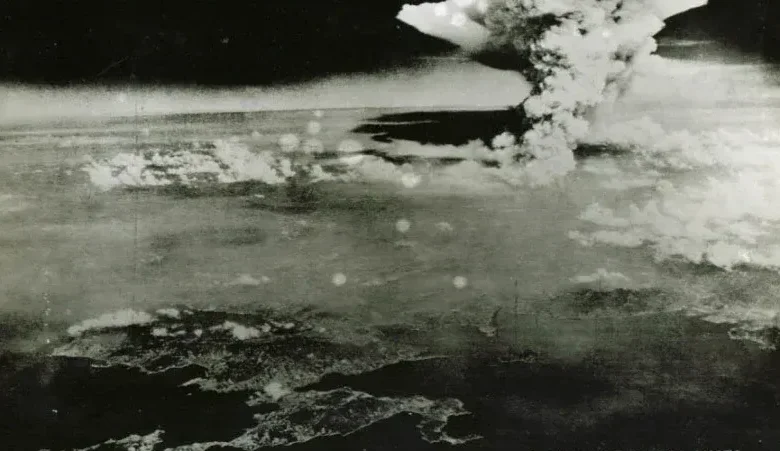
On August 6, 1945, at 08:15 local time, the United States dropped "Little Boy" over Hiroshima. The explosion detonated approximately 1,900 feet above the city, unleashing a force equivalent to 15 kilotons of TNT. The immediate impact was catastrophic, flattening the city and creating a firestorm that consumed everything in its path.
The Enola Gay, followed by two observation aircraft, lingered in the area to assess the damage and capture data. The testimony of the crew provides a visceral, haunting account of the scene below. George Caron, the tail gunner, described the city as being covered by a "roiling, churning mass," likening it to "boiling molasses" that spread toward the foothills. As the firestorm took hold, Caron observed tongues of flame piercing through the thick layer of smoke and debris.
It was during this period of observation, at 10:52 a.m., that the cryptic entry "cloud gone" was logged. At the time, the aircraft was positioned roughly 750 to 765 kilometers away, at an altitude of approximately 7.6 kilometers. For decades, this note was considered a minor logistical observation, but modern researchers have utilized this data point to calculate the true scale of the atmospheric disturbance caused by the blast.
Reconstructing the Vertical Column
To understand the significance of "cloud gone," a team of researchers recently conducted a massive computational study, running 100,000 simulations using historical weather data from 1945. The goal was to determine the height of the smoke column based on the light refraction patterns experienced by the flight crew.
The study, published in the Geophysical Research Letters, sought to address how the smoke plume interacted with the atmosphere. By modeling various scenarios of light refraction, the team established a 95% confidence interval for the height of the plume. Their findings were staggering: the smoke column reached an altitude of at least 11.3 kilometers, with a median estimate suggesting the plume surged to over 12.1 kilometers into the troposphere and lower stratosphere.
The observation of the "cloud disappearing" from the perspective of the crew at 10:52 a.m. suggests that the plume had reached such an immense height that it drifted beyond the visual horizon or became obscured by the complex optical properties of the upper atmosphere. Crucially, the researchers noted that this observation does not provide a ceiling for the plume’s height; it could have reached even higher, potentially injecting soot and particulates into the upper layers of the atmosphere where they remain for extended periods.
Implications: The Specter of Nuclear Winter
The findings are directly linked to the theory of "nuclear winter," a climatic phenomenon where the injection of massive amounts of soot and ash into the stratosphere blocks sunlight, leading to a global drop in temperatures and the subsequent collapse of agricultural systems. Hiroshima is uniquely significant in this discourse because it remains the only nuclear attack to have triggered a sustained, city-wide firestorm.
While the Nagasaki bombing resulted in a massive blast, it did not produce the same scale of firestorm as Hiroshima. Consequently, the data from Hiroshima serves as a grim template for what a larger-scale nuclear exchange might look like. If a single weapon could propel a column of smoke past 12 kilometers, a modern exchange involving hundreds or thousands of warheads would likely loft enough material into the atmosphere to trigger a multi-year period of global cooling.
The researchers conclude that their model is consistent with the conditions necessary for a nuclear winter. Although the study relies on historical assumptions, the evidence suggests that the atmospheric impact of the Hiroshima blast was significantly more profound than the immediate, localized devastation suggested by early post-war reports.
Historical and Scientific Context
The transition from the Manhattan Project’s theoretical fears to the reality of the Cold War nuclear arms race was marked by a steady escalation in yield. "Little Boy" was a crude device compared to the thermonuclear weapons—hydrogen bombs—that would be developed in the 1950s. The fears Oppenheimer harbored regarding the ignition of the atmosphere were ultimately debunked by subsequent calculations, which showed that the energy required to sustain such a reaction would be far beyond what a man-made device could provide. However, the secondary environmental impact—the cooling of the planet—remains a credible and catastrophic threat.
The "cloud gone" notation serves as a reminder that the atomic age did not start with a simple explosion, but with a complex interaction between human invention and the delicate balance of the planet’s atmosphere. As the world navigates contemporary tensions, the data derived from the Hiroshima flight logs remains a vital piece of evidence in understanding the potential for collective extinction.
Conclusion: A Legacy of Risk
The investigation into the Enola Gay’s flight logs provides more than just a footnote to history; it offers a quantitative look at the environmental legacy of the atomic age. By confirming that the smoke from the Hiroshima firestorm reached altitudes capable of long-term atmospheric disruption, researchers have provided further empirical weight to the warnings long issued by climatologists and policy analysts.
The scientific consensus today is that the risk of nuclear conflict is not limited to the immediate blast radius or the fallout of radiation. The global reach of the atmosphere means that any major nuclear event has the potential to affect the survival of the human species. As the world continues to grapple with the existence of nuclear arsenals, the "cloud gone" entry stands as a silent, technical testament to the day humanity crossed a threshold from which there is no return—a realization that the power to destroy the world was not just a theoretical concept, but a tangible, documented reality.