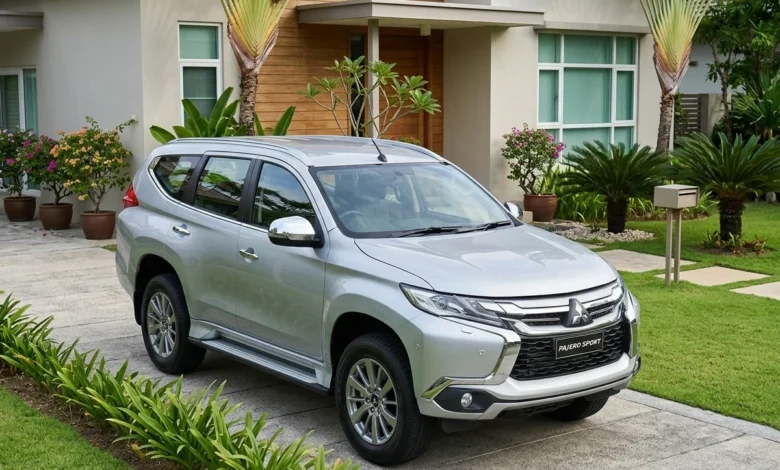
The Mitsubishi Pajero Sport Exceed 2015 continues to maintain a significant presence in the Indonesian pre-owned vehicle market, appealing to consumers who prioritize rugged utility, mechanical longevity, and the distinct aesthetic of a traditional ladder-frame SUV. As the automotive industry shifts toward electrified powertrains and unibody crossovers, the 2015 Exceed model serves as a benchmark for the durability of the second-generation Pajero Sport platform. Despite being over a decade old, its consistent demand reflects a consumer preference for robust diesel engineering and the prestige associated with the Pajero nameplate.
Historical Context and Evolution of the Second Generation
The second-generation Mitsubishi Pajero Sport, known internally by the code PB/PC, was introduced to the Indonesian market in 2009. By 2015, the model was reaching the final stages of its lifecycle before the arrival of the more aerodynamic "Dynamic Shield" third-generation model in 2016. The 2015 Exceed variant represents the refinement of this platform, incorporating years of feedback from Southeast Asian road conditions.
During its tenure, the Pajero Sport faced stiff competition from the Toyota Fortuner, which was also built on a ladder-frame chassis. While the Toyota Fortuner often led in terms of brand residual value and parts availability, the Pajero Sport gained a reputation among enthusiasts for superior suspension handling and a more engaging driving dynamic, largely due to its sophisticated chassis tuning.
Technical Specifications and Engineering Philosophy
At the heart of the 2015 Mitsubishi Pajero Sport Exceed lies the venerable 2.5-liter 4D56 DI-D Common Rail turbocharged diesel engine. Unlike the Dakar trim of the same era, which utilized a Variable Geometry Turbo (VGT) system to squeeze out higher horsepower, the Exceed variant opted for a traditional turbo-intercooler setup.
The 4D56 engine is legendary in the automotive world for its ability to withstand high mileage with basic maintenance. In the Exceed configuration, this engine produces approximately 136 horsepower and 314 Nm of torque. This power is transmitted through a four-speed automatic transmission. While some critics argue that the four-speed gearbox feels dated compared to the five-speed units found in the Dakar trim, owners often praise the transmission for its simplicity and ease of repair, which contributes to the lower cost of ownership over extended periods.
The vehicle’s construction relies on a heavy-duty ladder-frame chassis. This architecture is essential for the SUV’s identity, providing the torsional rigidity required for off-road excursions and towing, while offering a higher seating position that enhances driver visibility in dense urban traffic.
Performance Analysis and Fuel Efficiency
A primary concern for potential buyers of older diesel SUVs is fuel consumption. The 2015 Pajero Sport Exceed performs respectably given its curb weight of approximately 1.9 tons. In urban environments, where stop-and-go traffic is frequent, owners report an average fuel consumption of approximately 8 to 9 kilometers per liter. On highway stretches, where the turbocharger can operate at optimal efficiency, this figure often improves to 11 to 12 kilometers per liter.
These figures are highly dependent on the quality of diesel fuel used. Mitsubishi engineers have long cautioned against the use of low-cetane fuel, which can lead to premature clogging of the common-rail injectors. Modern high-quality diesel fuels with lower sulfur content are strongly recommended to ensure that the 4D56 engine continues to operate within factory specifications.
Maintenance and Long-Term Reliability
For the prospective buyer, the 2015 model year offers a unique advantage: an established ecosystem of independent mechanics and third-party parts suppliers. Because the Pajero Sport shares many components with the Mitsubishi L200 (Triton), parts are widely available across Indonesia.
Common maintenance items to consider for a unit of this age include:
- Suspension Bushings: Due to the weight of the vehicle, the rubber components in the suspension may require replacement after 100,000 kilometers.
- Turbocharger Health: While the 4D56 turbo is durable, owners should check for oil leaks and ensure the wastegate operates smoothly.
- Cooling System: As with any diesel engine, the integrity of the radiator and cooling fans is paramount to preventing thermal degradation of the engine block.
Market Positioning and Price Trends
In the current secondary market, the Pajero Sport Exceed 2015 typically commands a price range between IDR 200 million and IDR 250 million, depending on the vehicle’s condition, mileage, and service history. This price point positions the vehicle as a direct competitor to mid-range MPVs or entry-level crossovers, yet it offers the physical presence and capability of a premium SUV.
Data from recent automotive trade platforms suggests that the Exceed trim remains popular among families who require a seven-seater vehicle that can handle both paved highways and uneven rural roads. Unlike newer electronic-heavy vehicles, the 2015 Exceed is often viewed as a "mechanical" car, which appeals to buyers who prefer a vehicle that can be diagnosed and repaired without complex computer software.
The Broader Impact of Rugged SUV Demand
The enduring popularity of the 2015 Pajero Sport underscores a broader trend in the Indonesian automotive market: the "SUV-ification" of consumer demand. Even as manufacturers push for fuel-efficient, small-displacement turbocharged petrol engines, the market for large-displacement diesel SUVs remains resilient. This is attributed to the geographical reality of the region, where infrastructure in remote areas often necessitates high ground clearance and robust drivetrain components.
Industry analysts observe that vehicles like the 2015 Pajero Sport represent the "Golden Era" of diesel SUVs—a time before stringent emission standards (such as Euro 4 and beyond) mandated the use of complex Diesel Particulate Filters (DPF) and AdBlue systems. The relative simplicity of the 2015 model means it is less prone to sensor-related failures, which significantly enhances its appeal for buyers who operate in areas where specialized dealership equipment may not be readily available.
Expert Perspective and Ownership Advice
Industry experts advise that when purchasing a used 2015 Pajero Sport Exceed, the service record is more indicative of long-term reliability than the odometer reading. A vehicle with 150,000 kilometers that has been serviced at authorized Mitsubishi workshops every 10,000 kilometers is generally a better investment than a vehicle with 80,000 kilometers and no documented maintenance history.
Furthermore, buyers are encouraged to perform a professional pre-purchase inspection that includes a "blow-by" test of the engine. Excessive blow-by in a diesel engine is a primary indicator of worn piston rings, which would necessitate an expensive top-end or full engine overhaul.
Conclusion: A Legacy of Utility
The Mitsubishi Pajero Sport Exceed 2015 stands as a testament to the longevity of well-engineered mechanical platforms. By balancing the rugged requirements of a ladder-frame SUV with the practical needs of a family vehicle, it has secured its place as a staple of the Indonesian used car market. While it lacks the advanced safety suites and infotainment systems of contemporary models, its core value proposition—durability, reliability, and capability—remains unchallenged by many modern counterparts. For those seeking a vehicle that bridges the gap between a workhorse and a family cruiser, the 2015 Exceed continues to be a compelling, pragmatic choice in an ever-evolving automotive landscape.