The recent reports of projectile impacts on Qeshm Island, a strategically vital landmass situated in the Strait of Hormuz, have sent shockwaves through regional geopolitical circles. As international observers monitor the situation, the intersection of conflicting reports from local Iranian news outlets and the dismissive stance of the United States military highlights the precarious nature of the maritime and aerial corridors that serve as the world’s primary artery for oil and natural gas transit. The incident, characterized by reports of two missile strikes followed by claims of a downed American MQ-9 Reaper drone, serves as a poignant reminder of the simmering hostilities between Tehran and Washington.
Chronology of Reported Events
The sequence of events began early in the day when residents of Qeshm Island, a major Iranian territory extending into the strategic Strait of Hormuz, reported hearing loud explosions. Shortly thereafter, the state-run Islamic Republic News Agency (IRNA) and the semi-official Tasnim News Agency corroborated reports from local inhabitants, specifically identifying the "Susa area" of the island as the site of two distinct projectile impacts.
While initial confusion clouded the origins of these projectiles, the narrative quickly shifted when the Islamic Republic of Iran Broadcasting (IRIB) issued a military statement claiming that Iranian air defense systems had successfully intercepted and destroyed a United States MQ-9 Reaper drone in the airspace above the island. This claim created a direct link between the reported explosions and a kinetic engagement between Iranian defensive assets and American aerial hardware. By midday, while Iranian media outlets continued to provide updates on the localized security alert, the United States Central Command (CENTCOM)—the military authority responsible for American operations in the Middle East—issued a brief statement characterizing the situation in the vicinity of Qeshm as "relatively calm," effectively denying that any offensive strikes or significant combat engagements had occurred.
Geographical and Strategic Significance of Qeshm Island
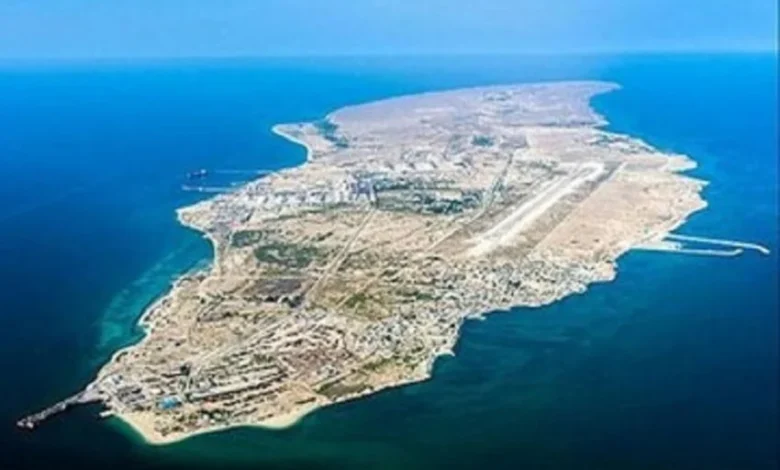
To understand the gravity of these reports, one must analyze the strategic importance of Qeshm Island. Located at the narrowest point of the Strait of Hormuz, Qeshm is not merely a piece of Iranian territory; it is a critical observation and defensive outpost. The Strait of Hormuz is arguably the most important maritime chokepoint on the planet, through which approximately 20% of the world’s total petroleum consumption passes daily.
Any military activity on or near Qeshm is viewed by global markets as a direct threat to international energy security. The island is heavily militarized, hosting advanced radar arrays, coastal missile batteries, and facilities designed to monitor maritime traffic. Because of its proximity to the main shipping lanes, any report of kinetic activity—whether a missile strike or the downing of an aircraft—triggers immediate volatility in global crude oil prices and insurance premiums for commercial shipping vessels operating in the Persian Gulf.
The MQ-9 Reaper: A Focus of Regional Friction
The claim regarding the downing of an MQ-9 Reaper drone adds a layer of technological complexity to the incident. The MQ-9 is a sophisticated, long-endurance, medium-altitude remotely piloted aircraft used by the United States for intelligence, surveillance, and reconnaissance (ISR). These drones are equipped with advanced sensors capable of monitoring maritime movements, communication signals, and military deployment patterns.
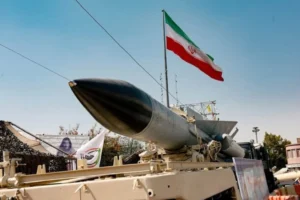
If the Iranian military successfully engaged such a platform, it would suggest a significant advancement in their integrated air defense capabilities or, alternatively, a breach of standard operating procedures by the drone’s operators. Historically, Iran has utilized its air defense systems, such as the indigenous Khordad-3 or the Russian-supplied S-300, to maintain a strict "red line" regarding its airspace. The downing of an American surveillance asset in this specific region would represent a substantial escalation, echoing the 2019 incident where an American RQ-4 Global Hawk was shot down by an Iranian surface-to-air missile, an event that brought both nations to the precipice of direct conventional warfare.
Official Responses and Diplomatic Silence
The discrepancy between the Iranian media reports and the CENTCOM response represents a classic challenge in contemporary information warfare. When state-controlled media outlets like IRNA and Tasnim report on kinetic engagements, they are often signaling a shift in policy or a demonstration of defensive capability to their domestic audience. Conversely, the United States military’s tendency to classify such events as "non-events" or "relatively calm" is a strategic effort to avoid escalating tensions and to prevent the validation of narratives that could embolden regional proxies.
As of the current reporting, no official diplomatic channels from the United States State Department or the Iranian Ministry of Foreign Affairs have released detailed communiqués. The lack of detailed commentary from provincial authorities in Iran suggests that the incident may be under investigation or that the military-political leadership in Tehran is carefully calibrating its response. In diplomatic terms, this silence often serves as a "cooling-off" mechanism, allowing both parties to avoid a public escalation that would necessitate a kinetic response.
Analytical Implications for Regional Stability
The incident on Qeshm Island cannot be analyzed in a vacuum. It follows a period of heightened friction characterized by maritime seizures, shadow wars in the cyber domain, and the persistent presence of foreign naval task forces in the Persian Gulf.
- The Risk of Miscalculation: The primary danger in the Strait of Hormuz is the potential for accidental escalation. When two highly capable, opposing military forces operate in close proximity, a single misinterpretation of radar data or an overly aggressive patrol maneuver can lead to an unintended clash.
- Energy Market Volatility: Markets are highly sensitive to news from the Strait of Hormuz. Even unsubstantiated reports of missile strikes can cause immediate spikes in Brent and WTI crude oil benchmarks. The energy sector remains the most vulnerable component of the global economy to localized conflict in this region.
- Technological Deterrence: Both the United States and Iran are engaged in a continuous technological arms race. The reported downing of a drone serves as a demonstration of "denial of access" capabilities. For Iran, proving the ability to neutralize high-tech Western assets is a core component of its deterrence strategy against perceived external threats.
- Information Warfare: The reliance on social media and semi-official news agencies for real-time reporting during potential crises creates a volatile information environment. The rapid dissemination of unverified reports complicates the ability of international stakeholders to assess risks accurately, often forcing them to rely on delayed official military confirmations.
The Path Forward
The situation surrounding Qeshm Island remains fluid. While the United States military insists on the relative calm of the theater, the persistence of local reports regarding projectile impacts warrants continued vigilance. Historically, such incidents have served as early indicators of deeper, underlying shifts in the regional balance of power.
International maritime organizations and energy analysts are expected to maintain heightened monitoring of shipping traffic through the Strait of Hormuz. Future developments will depend heavily on whether further evidence—such as satellite imagery, radar logs, or recovered wreckage—emerges to corroborate the claims made by Iranian media. Should the downing of the MQ-9 be verified by independent sources or acknowledged by the Pentagon, the diplomatic fallout would likely lead to a new round of sanctions and a cooling of the already fragile security architecture in the Persian Gulf.
For now, the international community remains in a state of watchful waiting. The events on Qeshm Island illustrate that in the modern era of asymmetrical warfare, the line between peace and conflict is increasingly defined by how information is reported, verified, and contested by the major actors involved. As the world continues to rely on the maritime arteries of the Middle East, the stability of islands like Qeshm will remain a focal point of global strategic interest, demanding high-level diplomatic engagement to ensure that minor incidents do not catalyze major regional conflagrations.