The landscape of long-distance land transportation in Indonesia has undergone a seismic shift over the past half-decade, transitioning from basic transit to a luxury-focused industry that rivals short-haul air travel. As travelers increasingly prioritize comfort, productivity, and privacy during extended journeys, the emergence of premium vehicle configurations—specifically the sleeper bus and the suites class—has sparked considerable interest. While these terms are often used interchangeably in casual conversation, they represent distinct engineering philosophies, regulatory compliance requirements, and passenger experiences.
The Evolution of Premium Road Travel
The transformation of the Indonesian bus industry began in earnest around 2019, when operators realized that the "middle-class" demographic was willing to pay a premium for overnight travel if it meant arriving at their destination rested. Prior to this, the industry was dominated by standard reclining seats, which often left passengers fatigued after journeys exceeding eight hours.
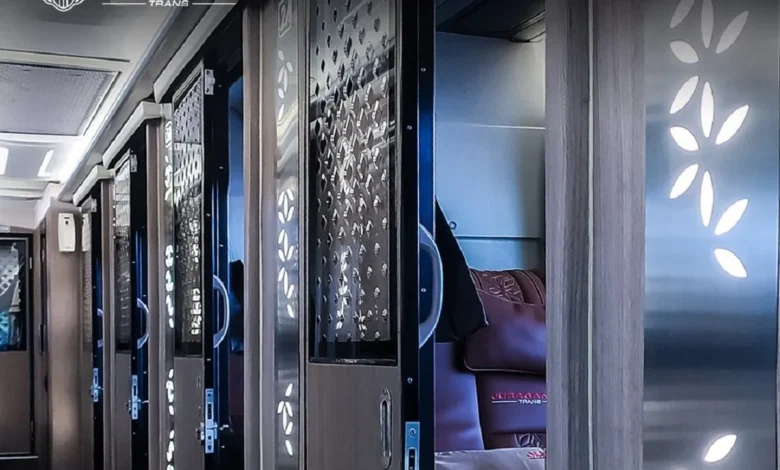
The introduction of the sleeper bus concept, pioneered by innovators like PO Kencana and Juragan99 Trans, marked a departure from traditional seating. By utilizing the vertical space within the bus cabin, manufacturers created private compartments that allowed passengers to lie completely flat. Conversely, the suites class evolved from the luxury airline "lie-flat" model, focusing on an enclosed, semi-private cabin that offers a high degree of recline without necessarily requiring a fully horizontal sleeping position.
Defining the Technical Differences
To understand the divergence between these two premium categories, one must examine the interior architecture and mechanical constraints of the bus chassis.
A sleeper bus is fundamentally designed for horizontal rest. The cabin layout typically involves a bunk-bed-style configuration, often arranged in a staggered pattern to maximize the use of the bus’s interior volume. Each passenger is provided with a dedicated "pod" or cabin. These pods are equipped with flat mattresses, integrated lighting, entertainment systems, and, in many cases, charging ports and privacy curtains. The primary design goal here is horizontal ergonomics, allowing the passenger to sleep in a position that mimics a standard bed.
In contrast, the suites class is an evolution of the "executive" seat. While it mimics the privacy of a sleeper bus, it is structurally distinct. The seats in a suites class bus generally offer a recline angle of 140 to 150 degrees. While this is significantly more comfortable than a standard bus seat, it does not achieve the 180-degree horizontal alignment found in true sleeper units. The suites class emphasizes a "living room on wheels" experience, often featuring larger seats with more robust lumbar support and headrests, designed for both resting and seated activity such as working or watching films.
Regulatory and Safety Implications
The transition to these high-end configurations has brought the Indonesian Ministry of Transportation’s safety regulations under the spotlight. Passenger safety in a vehicle that is essentially a mobile hotel requires rigorous engineering.
The primary concern regarding sleeper buses has historically been the efficacy of seat belts. In a traditional seated position, a three-point seat belt is highly effective at preventing passenger injury during a collision. However, in a horizontal sleeper configuration, the physics of deceleration changes. Regulatory bodies have mandated that any vehicle converted into a sleeper or suites class must undergo strict Type Approval (Sertifikasi Uji Tipe) to ensure that the cabin structure, seating mounts, and passenger restraint systems meet national safety standards.

Safety experts argue that the integration of these features must not compromise the structural integrity of the bus body. As operators like Sinar Jaya and Litha & Co expand their fleets, they are required to prove that the added interior weight and the placement of sleeping berths do not negatively affect the bus’s center of gravity or handling characteristics.
Chronology of Market Expansion
- 2019–2020: Early adoption of "lie-flat" seats begins in major corridors, particularly between Jakarta and Central Java.
- 2021: The COVID-19 pandemic inadvertently boosts demand for private, enclosed cabin configurations, as passengers seek to minimize contact with others during travel.
- 2022–2023: Major industry players officially launch "Suites Class" branding, standardizing the service with amenities like personalized meal service, Wi-Fi, and amenity kits.
- 2024: The exhibition of advanced sleeper models at GIICOMVEC (Gaikindo Indonesia International Commercial Vehicle Expo) signals that these configurations are no longer niche, but a core component of the modern fleet.
- 2025–2026: Market saturation begins to stabilize, with operators focusing on route optimization and the integration of luxury terminals to support the premium experience.
Industry Perspectives and Operational Reality
From an operational standpoint, the investment required to outfit a bus with sleeper or suites-class interiors is substantially higher than standard fleets. A premium unit requires specialized upholstery, advanced climate control, and superior sound insulation to ensure passenger privacy.
Operators have noted that the maintenance of these units is also more labor-intensive. For instance, the hygiene standards for sleeper pods must be higher than those for standard seats, requiring deep cleaning of bedding and enclosed surfaces after every trip.
"The shift toward luxury is a response to a more discerning passenger base," explains an industry analyst specializing in logistics and transportation. "When a passenger can choose between a five-hour train ride or a ten-hour luxury bus trip, they look for the ‘experience’ factor. A well-designed suites class bus is not just transport; it is a time-saver because it allows the passenger to conduct business or rest effectively while in transit."
Broader Economic and Societal Impact
The rise of the sleeper and suites class has significant implications for the tourism and hospitality sectors. By bridging the gap between budget travel and premium comfort, these buses have made long-distance inter-island travel more accessible for the middle class. The route from Yogyakarta to Denpasar, served by operators like Tami Jaya, is a prime example of how luxury buses have transformed regional tourism, allowing travelers to reach vacation hubs without the logistical hurdles of airport security or flight delays.
Furthermore, this trend has forced the traditional airline industry to re-evaluate its short-haul pricing strategies. When a premium bus ticket offers competitive comfort at a fraction of the cost of a business-class flight, the market balance shifts.
Conclusion: Future Trends
As we look toward the remainder of the decade, the distinction between sleeper buses and suites class will likely continue to evolve. Technological advancements in vibration damping and cabin air filtration will further enhance the experience. While safety remains the paramount priority for the Ministry of Transportation, the market trend is clearly moving toward even more personalized, secure, and comfortable travel modules.
Ultimately, whether a passenger chooses the horizontal orientation of a sleeper bus or the semi-reclined luxury of a suites class, the beneficiary is the Indonesian traveler. The competition between these operators is driving innovation, forcing higher standards of service, and ensuring that road travel remains a viable and attractive alternative for domestic mobility in an increasingly fast-paced society. As operators continue to refine their offerings, the line between "transit" and "hospitality" will continue to blur, setting a new global benchmark for luxury land transportation.