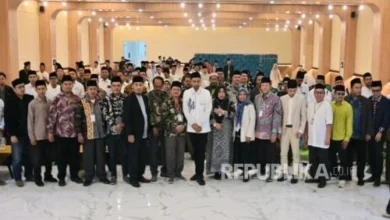
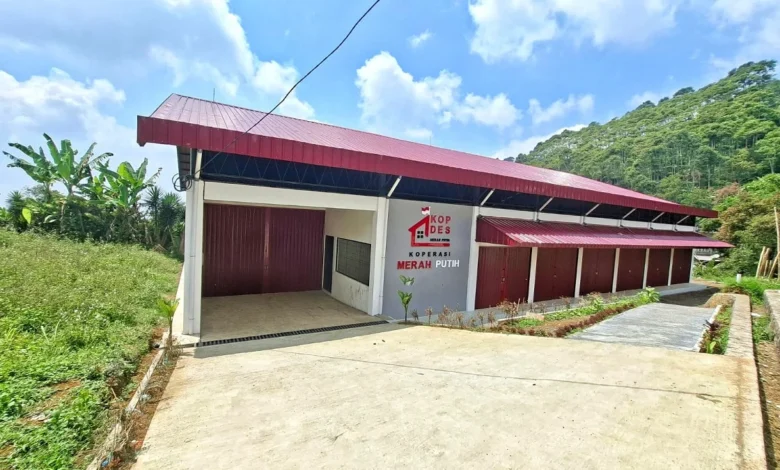
The Koperasi Desa/Kelurahan Merah Putih (KDKMP) initiative officially commenced its nationwide operations today, October 1, 2026, marking a significant milestone in Indonesia’s rural economic infrastructure. As of the end of September 2026, the program has successfully completed the physical construction of 26,661 outlets, creating a massive distribution network designed to stabilize food prices, empower local cooperatives, and streamline the supply chain for essential commodities across the archipelago.
This ambitious state-led project, spearheaded by PT Agrinas Pangan Nusantara (Persero) in collaboration with various ministries, aims to integrate rural economic units into the national food security framework. By establishing a formalized, state-backed cooperative presence in every village and sub-district, the government intends to reduce logistics costs, eliminate predatory middlemen, and ensure that basic goods remain affordable for rural populations.
The Evolution of the KDKMP Initiative
The concept of Koperasi Desa/Kelurahan Merah Putih was conceptualized as a strategic response to volatile food prices and supply chain inefficiencies that have historically plagued remote regions. Throughout early 2026, the government accelerated the procurement and construction phases, viewing the project as a cornerstone of the national food sovereignty agenda.
The pilot phase of this program served as the critical stress test for the nationwide rollout. Initiated in mid-2026, the pilot project focused on East Java, a province known for its robust agricultural productivity and dense population. The success of these initial units, which began operating in May 2026, provided the operational blueprint for the 26,661 units now opening their doors today.
According to the official data provided by the Ministry of Cooperatives and SMEs, the construction phase followed a rigorous timeline. By the end of Q1 2026, feasibility studies and site selections were completed, followed by a massive logistical mobilization in Q2 to supply the necessary infrastructure and inventory management systems. By the conclusion of Q3 2026, the government confirmed that the physical infrastructure had reached a 100% completion rate for the first wave of targeted outlets.
Operational Performance and Economic Impact
The operational data from the East Java pilot serves as a compelling indicator of the potential impact of the KDKMP network. Joao Angelo De Sousa Mota, the President Director of PT Agrinas Pangan Nusantara (Persero), highlighted that the 1,081 pilot outlets in East Java—which were formally inaugurated by the President earlier this year—have already begun generating significant economic activity.
"As of May 2026, we saw the initial launch of 1,081 cooperatives in East Java. Today, we are seeing daily transactions reaching approximately Rp31 billion from that initial group alone," Mota stated. This figure suggests that even at a regional scale, the KDKMP units are successfully capturing retail demand that was previously fragmented or controlled by informal supply chains.
The broader implication of this transaction volume is twofold. First, it demonstrates that the KDKMP units are effectively serving as accessible hubs for rural consumers. Second, it provides the government with real-time data on consumption patterns, allowing for more precise inventory planning and agricultural subsidies. If this performance scales linearly across the 26,661 newly opened outlets, the KDKMP could potentially become one of the largest retail and distribution networks in Southeast Asia, fundamentally altering the rural consumer landscape.
Addressing Structural Economic Challenges
The KDKMP initiative is not merely a retail venture; it is a structural intervention in the Indonesian economy. Historically, rural cooperatives in Indonesia have struggled with capital access, management quality, and market integration. By positioning PT Agrinas Pangan Nusantara (Persero) as the operational "parent" or aggregator, the government is introducing professional management standards, centralized procurement, and standardized digital accounting systems to these local entities.
Experts note that this model addresses the "last mile" problem in the Indonesian logistics sector. By providing a reliable distribution channel, the KDKMP helps stabilize the price of essential commodities—such as rice, cooking oil, and sugar—by reducing the number of intermediaries between the producer and the end consumer.

Furthermore, the KDKMP network acts as a collection point for local agricultural produce. While the primary function is distribution, the secondary goal is to facilitate the sale of local village products into the wider national market, thereby boosting the income of local farmers and small-scale producers. This dual-functionality is critical to the long-term sustainability of the cooperatives, as it ensures they serve as both a point of consumption and a point of production.
Official Response and Implementation Challenges
The launch today has been met with positive signals from economic observers, though analysts caution that the challenge now shifts from construction to operational management. Maintaining 26,661 units requires a sophisticated supply chain management system, skilled human resources at the village level, and strict governance to prevent potential mismanagement or corruption.
Government officials have stated that the monitoring of these units will be facilitated through an integrated digital dashboard, allowing for real-time tracking of inventory and financial performance. PT Agrinas Pangan Nusantara (Persero) has committed to providing ongoing technical assistance and training for local cooperative managers to ensure that the outlets remain profitable and compliant with national standards.
In his statement, Mota emphasized the significance of the 26,661 units being "100 percent complete." This implies that the government has moved past the logistical hurdles of procurement and site acquisition. The focus is now on ensuring that the inventory supply chain remains consistent. This involves coordinating with state-owned logistics companies and private agricultural firms to ensure that no outlet faces a shortage of essential goods during the initial launch phase.
Broader Economic Implications for 2026 and Beyond
The opening of these cooperatives comes at a crucial time for the Indonesian economy. With global inflationary pressures affecting the cost of living, the KDKMP serves as a social safety net, providing a mechanism for the government to stabilize prices at the local level.
The impact of this program will likely be reflected in the national inflation data, particularly regarding food-related inflation (volatile food prices). If the KDKMP can successfully dampen the price fluctuations of staple items, it will increase the purchasing power of rural households, which make up a significant portion of the Indonesian population.
Moreover, the KDKMP program aligns with the national objective of strengthening domestic food security. By decentralizing the food distribution network, the government reduces its reliance on large urban-based wholesale markets, making the national food supply more resilient to localized disruptions.
Future Outlook and Expansion
Looking ahead, the success of the KDKMP will be judged by its long-term financial viability and its ability to serve as a catalyst for village-level entrepreneurship. The government has signaled that if the current 26,661 outlets meet their performance targets over the next six to twelve months, there is potential for further expansion to reach even more remote villages.
Additionally, the integration of digital financial services, such as mobile payments and micro-lending, into the KDKMP outlets could transform them into rural financial hubs. This would provide villagers with access to banking services that are often geographically distant, further promoting financial inclusion in rural Indonesia.
As of the morning of October 1, 2026, the focus remains on the operational stability of these thousands of new outlets. For the millions of Indonesians living in rural and sub-district areas, the KDKMP represents a new era of access to goods and services, a tangible result of the government’s commitment to building the economy from the village level upwards.
The coming weeks will be critical as the government observes the initial flow of goods, the response of local markets, and the effectiveness of the central management system. With the physical infrastructure now fully in place, the KDKMP is officially transitioning from a developmental project into a permanent fixture of the Indonesian rural economy. The success of this transition will be a defining factor in the country’s economic stability for the remainder of 2026 and into the following year.