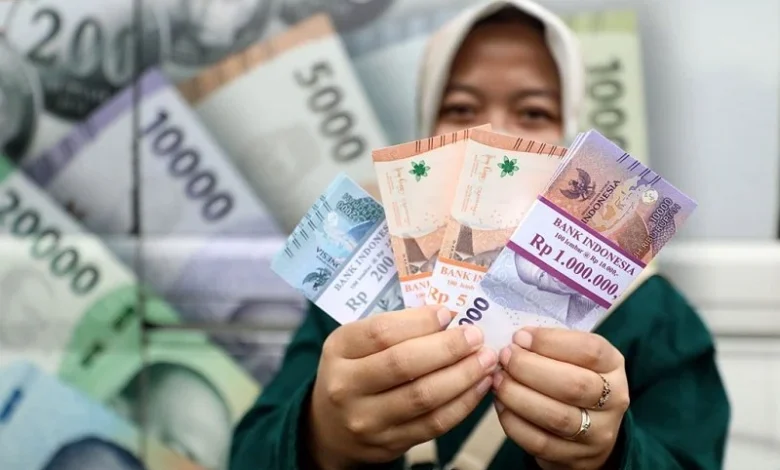
The Indonesian government has officially commenced the distribution of the third phase of its social assistance programs for the 2026 fiscal year, targeting millions of underprivileged families across the archipelago. As of mid-September 2026, the Ministry of Social Affairs has accelerated the disbursement of the Program Keluarga Harapan (PKH) and the Bantuan Pangan Non-Tunai (BPNT), commonly referred to as the Sembako assistance. Eligible beneficiaries are set to receive payments reaching up to Rp600,000, a critical financial cushion designed to mitigate the impact of ongoing economic fluctuations on household purchasing power.
The disbursement process, which covers the July–September 2026 period, is being conducted through a multi-channel distribution network. Recipients can access their funds via state-owned banks—collectively known as Himbara (Himpunan Bank Milik Negara)—or through designated post offices, depending on their regional registration status. With the digital transformation of social security administration, the government has urged citizens to utilize official verification portals to confirm their eligibility status, ensuring that the aid reaches those who are most vulnerable.
Understanding the Social Assistance Framework in 2026
The Indonesian social safety net is anchored by two primary pillars: the Program Keluarga Harapan (PKH) and the Bantuan Pangan Non-Tunai (BPNT). PKH is a conditional cash transfer program that provides financial aid to poor families based on specific criteria, such as the presence of pregnant women, children, elderly family members, or persons with disabilities. The program’s primary goal is to encourage behavioral changes in health and education, thereby breaking the intergenerational cycle of poverty.
Conversely, the BPNT program, often referred to as the "Sembako" (staple food) assistance, is designed to improve nutritional standards. While historically distributed as food vouchers or electronic credits for specific essential goods, the system has evolved to provide greater flexibility to KPMs (Keluarga Penerima Manfaat/Beneficiary Families). In the current cycle, the combination of these programs results in a total disbursement of up to Rp600,000 for qualifying households, effectively serving as a quarterly injection of liquidity to support basic living requirements.
Chronology and Disbursement Schedule
The 2026 social assistance roadmap was established earlier this year as part of the National Budget (APBN) allocation for poverty alleviation. The distribution is segmented into four distinct stages throughout the calendar year:
- Stage I: January–March 2026.
- Stage II: April–June 2026.
- Stage III: July–September 2026 (Current active phase).
- Stage IV: October–December 2026.
By entering the third phase, the government aims to ensure that funds are fully utilized by the end of the third quarter to stabilize local demand. The Ministry of Social Affairs has coordinated closely with regional administrations and the Ministry of Communication and Informatics to ensure that the data integrated into the Data Terpadu Kesejahteraan Sosial (DTKS)—the Integrated Social Welfare Data—remains accurate and reflects the current socio-economic reality of the applicants.
Step-by-Step Guide: How to Verify Eligibility
To ensure transparency and reduce administrative bottlenecks, the Ministry of Social Affairs has streamlined the verification process. Beneficiaries are encouraged to verify their status independently before visiting financial institutions. The procedure is as follows:
- Access the Official Portal: Navigate to the official website at cekbansos.kemensos.go.id.
- Input Regional Data: Select the province, regency/city, sub-district, and village where the KPM is registered.
- Enter Identity Details: Input the full name as it appears on the official Resident Identity Card (KTP).
- Security Verification: Enter the captcha code displayed on the screen to confirm human interaction.
- Search Results: Click the "Cari Data" button. The system will then display the status of the applicant, confirming whether they are listed as a recipient for the current period and the type of assistance they are entitled to receive.
Alternatively, users can download the "Cek Bansos" application from the official Google Play Store. This mobile-first approach was designed to bridge the digital divide in remote areas, allowing for real-time updates and notifications regarding disbursement schedules.

Official Stance and Administrative Oversight
The Ministry of Social Affairs has emphasized that the distribution of these funds is subject to strict audit protocols. By utilizing the Himbara network (Bank BRI, Bank Mandiri, Bank BNI, and Bank BTN), the government ensures that the transfer of funds is traceable and direct, minimizing the risks of leakage or misappropriation.
"The efficiency of our distribution network is paramount," a representative from the Ministry noted in a recent briefing. "By integrating the KTP-based identification system with the national banking infrastructure, we can ensure that the funds are directly credited to the accounts of the rightful beneficiaries without unnecessary intermediaries."
Furthermore, the government has established an emergency grievance mechanism. KPMs who find that their status is listed as active but have not received funds are encouraged to report the issue through the local social services office (Dinas Sosial) or the national toll-free hotline provided by the Ministry. This feedback loop is essential for maintaining the integrity of the DTKS database, which is updated monthly to account for changes in residency, household mortality, or improvement in economic status.
Economic Implications and Societal Impact
The injection of Rp600,000 per household, while seemingly modest on an individual scale, creates a significant multiplier effect when aggregated across the millions of recipients nationwide. Economists observe that social assistance programs act as a "floor" for domestic consumption. In periods of inflationary pressure—particularly concerning food prices—this assistance prevents the most vulnerable segments of society from falling deeper into poverty.
However, the program also faces long-term challenges. Critics and policy analysts argue that while cash transfers are effective for short-term relief, they must be paired with vocational training and entrepreneurship programs to ensure that KPMs eventually "graduate" from the assistance cycle. The Ministry of Social Affairs has acknowledged this, stating that the 2026 initiatives include stronger ties to local economic empowerment programs, where KPMs are provided with basic business training and micro-credit access to foster self-sufficiency.
Ensuring Fair Distribution and Data Accuracy
Data accuracy remains the primary hurdle for the success of these social programs. The transition from manual data collection to AI-assisted data validation has reduced the occurrence of "inclusion errors" (people receiving aid who do not qualify) and "exclusion errors" (people who qualify but are not registered).
In September 2026, the government has intensified its collaboration with local village heads to conduct field verifications. This "bottom-up" approach ensures that the data in the DTKS is not merely a static digital record but a dynamic representation of local conditions. The requirement for a KTP for every transaction serves as the final authentication layer, ensuring that the person receiving the money is the same person identified in the national database.
Conclusion and Future Outlook
As the third phase of the 2026 social assistance distribution continues throughout September, the government remains committed to its goal of poverty reduction. By providing timely financial support, the state aims to maintain social stability and support the purchasing power of low-income families.
For the beneficiaries, the key to accessing these benefits lies in proactive verification through the official government channels. As the fiscal year approaches its final quarter, the focus will likely shift from distribution to evaluating the efficacy of the 2026 programs, with an eye toward further digital integration and the potential expansion of services to address more granular needs within the impoverished population. Citizens are encouraged to remain vigilant against fraudulent messages or websites claiming to offer "expedited" assistance, as all official processes are conducted exclusively through the Ministry of Social Affairs’ verified platforms.