Ketua Kadin Anindya Temui Menko Airlangga, Bahas Ekspor hingga Investasi RI : Okezone Economy

JAKARTA – In a significant move to bolster Indonesia’s economic resilience and global trade footprint, Chairman of the Indonesian Chamber of Commerce and Industry (Kadin) Anindya Bakrie held a high-level meeting with Coordinating Minister for Economic Affairs Airlangga Hartarto on Friday, July 24, 2026. The pivotal discussion, held at the Minister’s official residence in Widya Chandra, Jakarta, centered on strategies to enhance Indonesia’s export performance and cultivate a more attractive national investment climate. This collaborative engagement underscores the government’s steadfast commitment to fostering a robust partnership with the private sector to navigate global economic complexities and achieve ambitious growth targets.
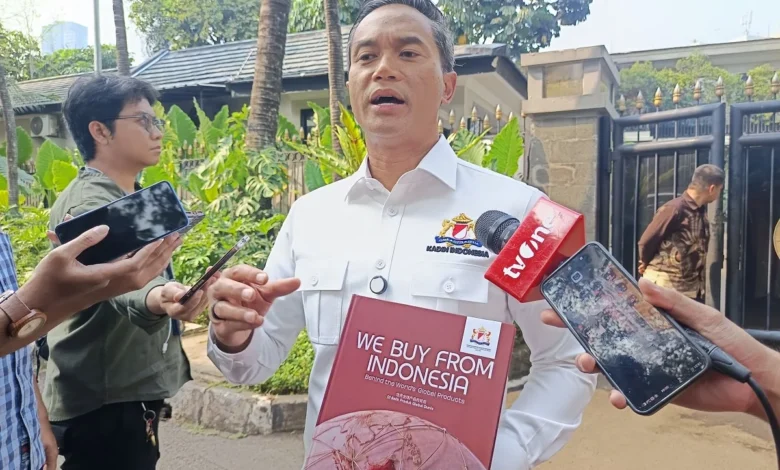
The meeting served as a crucial platform for Kadin Indonesia, the nation’s primary business umbrella organization, to present its strategic vision and actionable initiatives aimed at diversifying export commodities beyond traditional raw materials and empowering small and medium-sized enterprises (SMEs) to access international markets. Central to this presentation was the official introduction of Kadin’s innovative strategic book, ‘We Buy from Indonesia,’ an initiative poised to revolutionize how Indonesian non-oil and gas commodities and SME products are marketed globally.
The ‘We Buy from Indonesia’ Initiative: A Strategic Leap for Exports
Anindya Bakrie formally handed over the ‘We Buy from Indonesia’ strategic book to Minister Hartarto, symbolizing a concerted effort to forge a stronger strategic synergy among Kadin, the broader business community, and key government stakeholders. This initiative is designed not merely as a promotional catalog but as an advanced marketing instrument integrated with digital technology, aimed at significantly boosting the export volume and value of non-oil and gas products, particularly those originating from Indonesia’s vibrant micro, small, and medium enterprises (MSMEs).
Elaborating on the initiative, Bakrie emphasized its interactive nature and its sophisticated digital integration capabilities. "The ‘We Buy from Indonesia’ book is more than just a publication; it’s a dynamic, digitally-enhanced platform designed to map the involvement of our domestic industries within global supply chains," Bakrie stated. He further added, "We sought input and sincerely requested the support of Minister Airlangga for this product, recognizing its potential as a powerful marketing tool and a wellspring of inspiration to elevate our trade performance on the international stage." The digital component is expected to provide real-time data, facilitate B2B connections, and offer comprehensive profiles of Indonesian producers, thereby enhancing transparency and trust for international buyers.
The rationale behind ‘We Buy from Indonesia’ is deeply rooted in the imperative to shift Indonesia’s export profile from predominantly raw commodities to higher value-added manufactured goods and services. This strategic pivot aligns seamlessly with President Joko Widodo’s administration’s long-term vision of industrial downstreaming and economic diversification. By showcasing the depth and breadth of Indonesian manufacturing capabilities, from high-quality textiles and footwear to processed foods, handicrafts, and sophisticated components, the initiative seeks to broaden Indonesia’s market access and reduce its susceptibility to fluctuations in global commodity prices.
Indonesia’s Export Landscape and Growth Ambitions
During the discussions, Anindya Bakrie provided an insightful overview of Indonesia’s current export performance, highlighting both its strengths and areas for strategic growth. He noted that Indonesia’s total export value hovered around USD 300 billion in the preceding period. A significant portion, approximately USD 60 billion, was attributed to traditional primary commodities such as coal, crude palm oil, and ferro alloy. While these commodities remain vital contributors to the national economy, Bakrie underscored the immense potential residing in the remaining USD 240 billion, which encompasses a diverse array of sectors. This includes the burgeoning output from MSMEs, a wide range of textile products, footwear, and garments, as well as an expanding portfolio of manufactured goods and creative economy products.
The focus on the USD 240 billion segment is critical for Indonesia’s long-term economic sustainability. MSMEs, in particular, represent the backbone of the Indonesian economy, contributing significantly to employment and regional development. However, many MSMEs face considerable challenges in scaling up production, meeting international quality standards, and accessing global markets due to limited marketing resources and lack of information on international trade requirements. The ‘We Buy from Indonesia’ initiative aims to bridge these gaps by providing a structured, digitally-enabled platform to connect these enterprises with potential international buyers and investors.
The government, through the Coordinating Ministry for Economic Affairs, has consistently championed policies aimed at boosting non-oil and gas exports. Initiatives such as streamlining export procedures, providing trade financing, and negotiating preferential trade agreements with key partners globally have been instrumental. The synergy between Kadin’s private-sector-led initiatives and the government’s policy framework is expected to create a more fertile ground for Indonesian products to thrive in competitive global markets. This includes leveraging Indonesia’s participation in regional trade blocs like ASEAN and broader agreements such as the Regional Comprehensive Economic Partnership (RCEP), which offers vast market access opportunities.

Enhancing the National Investment Climate: A Dual Focus
Beyond exports, the improvement of Indonesia’s national investment climate formed another cornerstone of the high-level meeting. Both Minister Hartarto and Chairman Bakrie acknowledged that a conducive investment environment is paramount for sustainable economic growth, job creation, and technological transfer. Indonesia has made considerable strides in recent years to attract both domestic and foreign direct investment (FDI), implementing a series of landmark reforms.
Key among these reforms is the Omnibus Law on Job Creation, enacted to simplify complex regulations, streamline licensing processes, and provide greater legal certainty for investors. This law, alongside the establishment of Special Economic Zones (SEZs) and industrial parks offering various incentives, has significantly enhanced Indonesia’s appeal as an investment destination. Data from the Investment Coordinating Board (BKPM) indicates a steady increase in FDI inflows, particularly into manufacturing, infrastructure, and digital sectors, diversifying beyond traditional resource-based investments. Major source countries for FDI include Singapore, China, Japan, and the United States, reflecting global confidence in Indonesia’s long-term economic prospects.
However, challenges persist. Investors often cite issues such as bureaucratic hurdles at regional levels, occasional policy inconsistencies, and infrastructure disparities in certain remote areas. Kadin, acting as the voice of the business community, plays a crucial role in identifying these pain points and advocating for further reforms. Their recommendations often center on enhancing regulatory predictability, ensuring transparency in land acquisition, and developing a skilled workforce that meets the demands of modern industries. The discussion between Bakrie and Hartarto likely touched upon these ongoing efforts, with Kadin offering practical insights from its members on how to refine existing policies and implement new measures to overcome these obstacles. The ‘We Buy from Indonesia’ initiative, by fostering deeper integration of local industries into global supply chains, can also indirectly attract investment by signaling a robust and interconnected domestic manufacturing base.
Official Responses and Broader Implications
While specific detailed statements from Coordinating Minister Airlangga Hartarto regarding the ‘We Buy from Indonesia’ initiative were not immediately released, it is logically inferred that the Minister expressed strong support for Kadin’s proactive approach. The government has consistently emphasized the critical role of the private sector in driving economic growth and innovation. Minister Hartarto is known for his pragmatic approach to economic policy, often stressing the importance of public-private dialogue and collaborative problem-solving. His endorsement would signify a strategic alignment between Kadin’s vision and the government’s national economic agenda, particularly in the areas of export diversification, value-added industrialization, and MSME empowerment.
Economists and trade analysts view such high-level engagements and initiatives like ‘We Buy from Indonesia’ as positive indicators for Indonesia’s economic trajectory. Dr. Sari Dewi, a senior economist specializing in international trade at a prominent Jakarta-based think tank, commented, "Kadin’s initiative, particularly its digital integration, is a timely and necessary step. In an increasingly competitive global marketplace, simply producing goods is not enough; effective marketing and seamless integration into global value chains are paramount. This book, if executed well, could significantly enhance the visibility and credibility of Indonesian products, particularly for our MSMEs who often struggle with international market access." She further added, "The government’s active engagement with Kadin on both export and investment fronts demonstrates a mature approach to economic governance, recognizing that sustained growth requires a truly collaborative ecosystem."
The broader implications of this meeting and the ‘We Buy from Indonesia’ initiative are multi-faceted. For MSMEs, it represents a potential gateway to global markets, offering a structured platform to showcase their products, understand international standards, and forge direct business relationships. This could lead to increased production, job creation, and improved livelihoods for millions of Indonesians. For the national economy, a successful push for non-oil and gas exports means greater economic diversification, reduced reliance on volatile commodity markets, and enhanced resilience against external shocks. Furthermore, a more robust and predictable investment climate will continue to attract high-quality FDI, bringing in capital, technology, and management expertise crucial for industrial upgrading and long-term competitiveness.
Looking Ahead: Implementation and Sustained Collaboration
The meeting between Anindya Bakrie and Airlangga Hartarto marks another important chapter in the ongoing collaboration between the Indonesian government and its private sector. The success of the ‘We Buy from Indonesia’ initiative, and indeed the broader efforts to improve exports and investment, will ultimately depend on effective implementation, consistent policy support, and sustained engagement from all stakeholders. This includes not only Kadin and the Coordinating Ministry for Economic Affairs but also other relevant ministries, local governments, and the entire business community.
Future efforts will likely focus on several key areas: expanding the digital reach and capabilities of the ‘We Buy from Indonesia’ platform, providing training and capacity building for MSMEs to meet international market demands, actively promoting Indonesian products in key global trade fairs and B2B forums, and continuously refining investment policies to ensure they remain competitive and responsive to global economic trends. The commitment to such a holistic and collaborative approach positions Indonesia favorably to achieve its ambitious economic goals and solidify its standing as a major player in the global economy.