President Prabowo Subianto convened a comprehensive three-and-a-half-hour limited cabinet meeting (ratas) at the Presidential Palace in Jakarta on Thursday, July 23, 2026, to address a multifaceted agenda ranging from grassroots economic empowerment to the mitigation of global geopolitical shocks. The high-level session brought together coordinating ministers, technical ministry heads, and senior law enforcement officials to finalize the operational framework for the Koperasi Desa/Kelurahan Merah Putih (KDMP) and the Koperasi Nelayan Merah Putih. Beyond domestic economic structures, the President also prioritized the national response to escalating conflicts in the Middle East, which threaten global energy supply chains and necessitate an accelerated transition to domestic biofuel alternatives.
The meeting underscores the Prabowo administration’s commitment to a "bottom-up" economic model where village-level cooperatives serve as the primary vehicle for government intervention and subsidy distribution. By integrating the Merah Putih Cooperatives into the national logistical framework, the government aims to eliminate middleman inefficiencies and ensure that state aid reaches the most vulnerable populations directly. Furthermore, the administration addressed critical financial obligations concerning PT Agrinas Pangan Nusantara, signaling a move toward fiscal transparency and the stabilization of state-owned banking liquidity.
Strengthening the Merah Putih Cooperative Framework
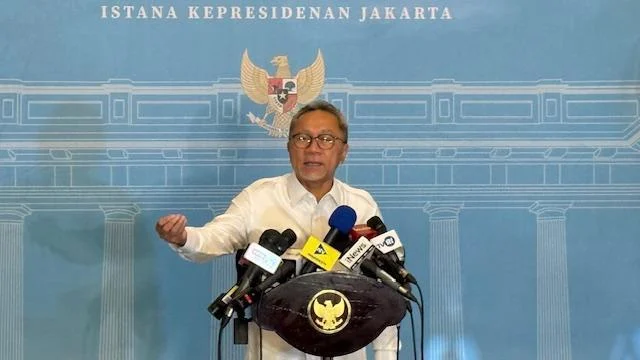
A central pillar of the discussions was the formalization of the Koperasi Desa/Kelurahan Merah Putih (KDMP) and its maritime counterpart, the Koperasi Nelayan Merah Putih. Minister of Food Coordination, Zulkifli Hasan, clarified that the President has issued a direct mandate for all ministries, government agencies, and the security apparatus—specifically the Indonesian National Armed Forces (TNI) and the National Police (Polri)—to provide unwavering support for these entities.
The KDMP is envisioned not merely as a local business unit but as a vital component of the national infrastructure. Under the new directive, these cooperatives will function as the primary "off-takers" and distributors for all government-subsidized goods. This includes the distribution of subsidized fertilizers, rice under the SPHP (Stabilization of Food Supply and Prices) program, and specialized assistance for low-income households. By utilizing cooperatives as the "last mile" delivery mechanism, the government hopes to leverage the local knowledge and social capital inherent in village structures.
The involvement of the TNI and Polri is particularly significant. President Prabowo’s strategy involves utilizing the military’s territorial command structure (Babinsa) and the police’s community officers (Bhabinkamtibmas) to ensure that cooperative operations are secure, transparent, and free from local cartels. This "total defense" approach to economic security reflects the President’s long-standing belief that national stability is inextricably linked to food and energy sovereignty at the village level.
Financial Settlement of PT Agrinas Pangan Nusantara
The limited meeting also served as a forum to resolve pressing financial bottlenecks within the food sector. Specifically, the President addressed the outstanding obligations of PT Agrinas Pangan Nusantara to the Association of State-Owned Banks (Himbara), which includes Bank Mandiri, BRI, BNI, and BTN. These debts are scheduled to reach maturity in September 2026.
Minister Zulkifli Hasan announced that the Ministry of Finance, under the President’s instruction, will facilitate the full settlement of these claims. However, the disbursement of funds is contingent upon a rigorous audit process. To ensure accountability and prevent the misappropriation of state funds, the government has set a strict timeline for verification.
"The process of verification and validation of all KDMP-related claims will be expedited through the Finance and Development Supervisory Agency (BPKP) throughout August," Hasan stated. Once the BPKP provides a clean bill of health and validates the figures, the Ministry of Finance will transfer the necessary liquidity to the Himbara banks. This move is designed to maintain the health of the national banking sector while ensuring that PT Agrinas can continue its role in the national food supply chain without the burden of impending default.
Geopolitical Volatility and the Shift to B50 Biodiesel
As global eyes remain fixed on the volatile situation in the Middle East, the Prabowo administration is taking proactive steps to shield the Indonesian economy from potential energy price spikes. Coordinating Minister for Infrastructure and Regional Development, Agus Harimurti Yudhoyono (AHY), highlighted that the meeting dedicated significant time to analyzing the impact of regional wars on global oil production and shipping lanes.
Indonesia, despite being a resource-rich nation, remains vulnerable to fluctuations in global crude oil prices due to its status as a net oil importer. To mitigate this risk, the government is accelerating its energy diversification strategy. A key component of this plan is the implementation of the B50 program—a fuel blend consisting of 50% palm oil-based biodiesel.
"Current world events necessitate a robust energy security posture," AHY explained. "Diversification and the adoption of B50 are no longer just environmental goals; they are strategic necessities to insulate our domestic economy from external shocks."
However, the shift to B50 presents a complex challenge: the "food vs. fuel" dilemma. Since palm oil is a primary ingredient for both cooking oil and biodiesel, the government must carefully manage supply to ensure that an increase in biofuel production does not lead to a domestic shortage of affordable food products. The President has instructed the Ministry of Agriculture and the Ministry of Industry to synchronize their data to ensure that the expansion of the B50 program does not cannibalize the national food security budget or lead to domestic inflation.
Chronology of the Limited Meeting
The deliberations on July 23, 2026, followed a structured progression that reflects the administration’s focus on integrated governance:
- 09:00 AM – 10:00 AM: Opening remarks by President Prabowo Subianto, emphasizing the urgency of the "Merah Putih" economic initiative and the need for inter-ministerial synergy.
- 10:00 AM – 11:30 AM: Technical presentation by the Coordinating Ministry for Food regarding the operationalization of KDMP. This session included a deep dive into the logistics of subsidy distribution and the legal framework for involving the TNI and Polri in economic oversight.
- 11:30 AM – 12:15 PM: Financial review led by the Ministry of Finance and BPKP regarding PT Agrinas Pangan Nusantara. The discussion focused on the audit timeline and the impact of debt settlement on the 2026 state budget.
- 12:15 PM – 01:00 PM: Strategic briefing by the Coordinating Ministry for Infrastructure on the Middle East crisis. This included simulations of oil price scenarios and the technical readiness of the nation’s refineries to handle the B50 transition.
- 01:00 PM – 01:30 PM: Closing directives from the President, establishing deadlines for the BPKP audit and the rollout of the cooperative pilot programs.
Supporting Data and Economic Context
The push toward a cooperative-based economy is backed by significant domestic data. As of early 2026, Indonesia has over 130,000 active cooperatives, yet their contribution to the GDP has historically hovered around 5%. The "Merah Putih" initiative seeks to double this contribution by 2030.
In terms of energy, Indonesia’s palm oil production remains the highest in the world, with an estimated output of over 50 million tons annually. By moving to B50, the government expects to reduce foreign exchange outflows for oil imports by an estimated $10 billion to $15 billion annually, depending on global price points. However, experts note that for B50 to be sustainable, palm oil yields must increase by at least 20% to avoid domestic supply crunches for the food industry.
Broader Implications and Strategic Analysis
The outcomes of this limited meeting signal a definitive shift in Indonesia’s developmental trajectory under President Prabowo. By positioning cooperatives as "government infrastructure," the administration is effectively nationalizing the distribution of essential goods through a decentralized, community-owned network. This reduces the power of private distributors and gives the state more direct control over inflation.
The involvement of the military in these economic activities is a hallmark of the current administration’s "Integrated National Security" doctrine. While critics often raise concerns about the blurring of lines between civil and military roles, the administration argues that in a country as geographically fragmented as Indonesia, the military is the only institution with the logistical reach to ensure equity in remote regions.
On the international stage, the accelerated B50 program positions Indonesia as a leader in biofuel technology, but it also increases the nation’s reliance on a single commodity—palm oil. The success of this strategy will depend on the government’s ability to navigate international trade pressures, particularly from the European Union regarding deforestation regulations, while simultaneously managing the domestic price of cooking oil.
The settlement of PT Agrinas’s debts also reflects a cleanup of the "Food Estate" legacy. By bringing these debts into the light and subjecting them to BPKP validation, the government is attempting to distance itself from the transparency issues that plagued earlier agricultural mega-projects.
In conclusion, the July 23rd meeting was a pivotal moment for the Prabowo presidency. It mapped out a future where the village cooperative is the heart of the economy, the military is the guarantor of distribution, and palm oil is the bedrock of energy independence. As the September deadline for debt settlement and the August window for BPKP validation approach, the effectiveness of this "Merah Putih" strategy will face its first major test. For the Indonesian public, the hope remains that these high-level maneuvers will translate into lower prices at the market and a more resilient national economy in an increasingly uncertain world.