Pertamina Fuel Prices for July 22, 2026 See Reductions for Premium Grades, While Subsidized Fuels Remain Stable

JAKARTA – State-owned energy giant Pertamina has implemented a downward adjustment for several of its non-subsidized fuel products, effective July 1, 2026, at 00:00 WIB. This move by Pertamina Patra Niaga, the commercial and trading sub-holding of Pertamina, has seen prices for Pertamax Turbo, Pertamina Dex, and Dexlite decrease, offering some relief to consumers utilizing these higher-octane and higher-cetane fuels. The decision comes amidst a dynamic global oil market and Pertamina’s regular evaluation of pricing structures, aiming to balance market realities with national economic considerations.
Immediate Price Adjustments for Premium Fuels
According to official announcements from Pertamina Patra Niaga, the price of Pertamax Turbo, a high-performance gasoline with a Research Octane Number (RON) of 98, has been lowered significantly. Consumers will now pay Rp19,300 per liter, a notable reduction from its previous price of Rp20,750 per liter. This decrease of Rp1,450 per liter is expected to benefit owners of vehicles requiring higher-octane fuel for optimal performance.
Similarly, diesel fuel variants have also seen substantial price cuts. Pertamina Dex, the premium diesel fuel designed for modern diesel engines, has experienced a considerable drop from Rp24,800 per liter to Rp21,150 per liter, marking a decrease of Rp3,650 per liter. Dexlite, another popular diesel option positioned between subsidized solar and premium Pertamina Dex, has also become more affordable, with its price falling to Rp19,700 per liter from the earlier Rp23,000 per liter, a reduction of Rp3,300 per liter. These adjustments reflect a concerted effort by Pertamina to respond to market signals and provide competitive pricing for its non-subsidized portfolio.
Stability in Subsidized and Key Non-Subsidized Fuels
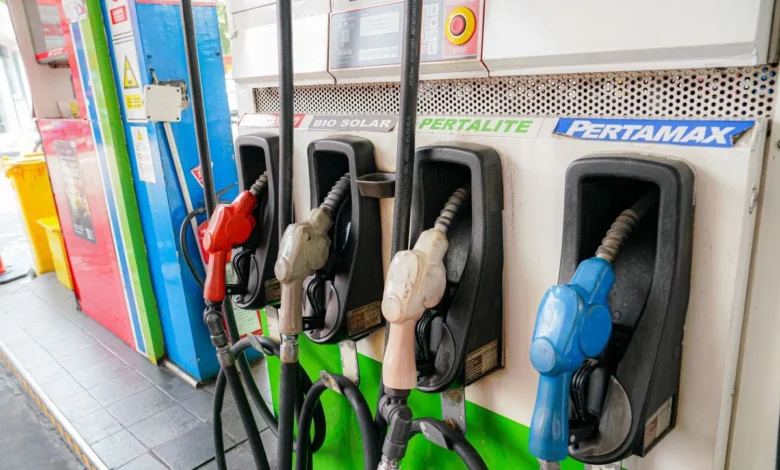
In contrast to the price reductions for premium fuels, Pertamina has opted to maintain the prices of several other key fuel products, including the widely used non-subsidized Pertamax (RON 92) and Pertamax Green, as well as the heavily subsidized Pertalite (RON 90) gasoline and Biofuel (B30) diesel.
The price of Pertamax has remained steady at Rp16,250 per liter, a price point that has been in effect since its last adjustment on June 10, 2026. Pertamax Green, an environmentally friendlier option, also holds its ground at Rp17,000 per liter. This stability for Pertamax is particularly significant as it represents a large segment of non-subsidized fuel consumption in urban areas.
Crucially, the government’s commitment to stabilizing prices for essential subsidized fuels continues. Pertalite, the most consumed gasoline type, remains fixed at Rp10,000 per liter. Similarly, subsidized Biofuel, primarily used by public transportation and commercial vehicles, maintains its price at Rp6,800 per liter. This steadfastness in subsidized fuel prices underscores the government’s priority to shield the broader public and vulnerable economic sectors from global price fluctuations, ensuring affordability and minimizing inflationary pressures on daily necessities.
Context of Global Oil Market Dynamics
The decision to adjust fuel prices by Pertamina Patra Niaga is intrinsically linked to the volatile dynamics of the global oil market. The period leading up to July 2026 saw a series of fluctuating crude oil prices, primarily driven by a confluence of geopolitical factors, shifting supply-demand balances, and global economic outlooks.
In late June 2026, international benchmark crude prices, such as Brent and West Texas Intermediate (WTI), experienced a moderate downward trend. Brent crude, which hovered around USD 90-92 per barrel in early June, softened to approximately USD 85-87 per barrel by the end of the month. Similarly, WTI futures saw a corresponding dip. This decline was largely attributed to several factors: an unexpected increase in crude oil inventories in major consuming nations, signs of a slight slowdown in global manufacturing activity impacting demand forecasts, and a perceived easing of certain geopolitical tensions that had previously fueled supply concerns. Furthermore, increased production from non-OPEC+ countries, particularly in North America, contributed to a more balanced supply outlook, tempering price surges.
Pertamina’s pricing mechanism for non-subsidized fuels, as mandated by government regulations, typically involves a review every two weeks or monthly, benchmarking against the Mean of Platts Singapore (MOPS) prices for refined products and considering the prevailing exchange rate of the Indonesian Rupiah against the US Dollar. The Rupiah had shown relative stability against the US Dollar in June, trading in the range of Rp15,800-Rp16,000, which also played a role in the final price calculations, mitigating upward pressure from currency depreciation.
Pertamina’s Pricing Mechanism and Policy
Kitty Andhora, Vice President Corporate Communication of Pertamina Patra Niaga, emphasized that these price adjustments are part of a regular, systematic evaluation process. "The adjustment of non-subsidized BBM prices is conducted in accordance with prevailing regulations and mechanisms, taking into account global oil market dynamics," Andhora stated in Jakarta. She further highlighted that these decisions are made with careful consideration of various factors, including global crude oil prices, refinery processing costs, distribution expenses, and the government’s fiscal policies, alongside an assessment of public purchasing power and the overall health of the national economy.
Pertamina, as the primary state-owned energy company, plays a crucial role in Indonesia’s energy security. Its mandate extends beyond mere commercial operations to include public service obligations, particularly in distributing subsidized fuels across the vast archipelago. The distinction between subsidized and non-subsidized fuel pricing reflects a deliberate government strategy to manage energy costs. Subsidized fuels like Pertalite and Biofuel are primarily regulated by the government, with prices often set through presidential decrees or ministerial regulations, and any gap between market price and selling price covered by the state budget. Non-subsidized fuels, conversely, have more flexibility in pricing, though they are still subject to government oversight to prevent excessive volatility.
Government and Industry Perspectives
The Ministry of Energy and Mineral Resources (ESDM) typically monitors Pertamina’s pricing decisions for non-subsidized fuels. While specific statements regarding this particular adjustment were not immediately available, officials from ESDM have consistently reiterated the government’s policy of allowing market mechanisms to influence non-subsidized fuel prices while maintaining a safety net for subsidized variants. This approach aims to foster a competitive energy market while ensuring energy access for all segments of society. The coordination between Pertamina and the government is crucial, as any significant price change, even for non-subsidized products, can have ripple effects across the economy.
Consumer advocacy groups, while welcoming the price reductions for premium fuels, often underscore the importance of price stability for subsidized fuels. "Any reduction in fuel prices is positive for consumers, especially those who rely on higher-grade fuels for their vehicles," commented a representative from the Indonesian Consumers Association (Yayasan Lembaga Konsumen Indonesia – YLKI), hypothetically. "However, the consistent pricing of Pertalite and Biofuel remains paramount for the majority of the population and for controlling overall inflation." These groups frequently call for transparency in pricing formulas and robust monitoring to ensure fair practices.
From an industry perspective, lower prices for premium fuels can translate to reduced operational costs for businesses that utilize them, such as certain logistics companies or specialized transport services. The airline industry, in particular, stands to gain significantly from the reduction in avtur prices.
Broader Economic Implications
The recent fuel price adjustments by Pertamina carry several important economic implications for Indonesia. The reduction in prices for Pertamax Turbo, Pertamina Dex, and Dexlite is expected to have a marginal but positive impact on certain sectors. Businesses relying on these specific fuels for their operations, such as high-performance logistics, heavy equipment, or certain industrial processes, may see a slight decrease in their input costs. This could potentially translate into improved profit margins or, in some competitive markets, even a slight reduction in service costs for end-users.
More broadly, the stability of Pertamax, Pertalite, and Biofuel prices is a key factor in managing Indonesia’s inflation rate. With transportation costs being a significant component of the Consumer Price Index (CPI), keeping the prices of mass-consumed fuels steady helps to temper inflationary pressures. This stability provides predictability for households and businesses, allowing for better financial planning and reducing the risk of a widespread increase in goods and services prices. The government’s decision to maintain these prices, despite global market fluctuations, indicates a continued commitment to protecting the purchasing power of the general public, especially those in lower and middle-income brackets.
However, maintaining subsidized fuel prices comes at a fiscal cost. The government’s budget must absorb the difference between the market price and the subsidized selling price, which can amount to trillions of rupiah depending on global oil prices and consumption volumes. While this protects consumers, it can strain the state budget and potentially divert funds from other developmental priorities. The Ministry of Finance continuously monitors this fiscal burden, balancing social welfare objectives with fiscal sustainability.
Impact on Aviation Sector
Beyond road transportation fuels, Pertamina also announced a reduction in the price of aviation fuel (avtur) effective July 1, 2026. The price of domestic aviation fuel (before tax) at Soekarno-Hatta International Airport, Indonesia’s busiest airport, decreased from Rp22,190 per liter in June to Rp19,190 per liter in July 2026. This substantial drop of Rp3,000 per liter is a significant development for the Indonesian aviation sector.
A reduction in avtur prices directly impacts airline operating costs, which are heavily influenced by fuel expenses. Lower fuel costs can lead to several positive outcomes:
- Reduced Airfares: Airlines may pass on some of the savings to consumers through lower ticket prices, making air travel more affordable.
- Increased Passenger Traffic: More affordable air travel can stimulate demand, boosting domestic and international tourism and business travel.
- Improved Airline Profitability: Lower operational costs can enhance the financial health of airlines, allowing them to invest in fleet modernization, service improvements, or network expansion.
- Economic Stimulus: A revitalized aviation sector can have a multiplier effect on the broader economy, benefiting tourism-related businesses, airports, and supporting industries.
Kitty Andhora reiterated Pertamina’s commitment not only to competitive pricing but also to product quality. "In addition to offering competitive prices, we continue to ensure product quality meets specifications, so that the public obtains optimal benefits, both in terms of vehicle performance and fuel efficiency," she stated. This emphasis on quality ensures that even with price adjustments, consumers and industries continue to receive reliable and efficient fuel products.
Looking Ahead: Market Volatility and Energy Policy
The recent price adjustments highlight the continuous balancing act Pertamina and the Indonesian government must perform in managing the nation’s energy supply and pricing. Global oil markets are inherently unpredictable, influenced by a myriad of factors ranging from geopolitical tensions in major oil-producing regions to global economic growth forecasts and the decisions of OPEC+ alliances.
Indonesia’s long-term energy policy aims for energy security, affordability, and sustainability. While managing immediate price fluctuations for fossil fuels, the government is also pushing for a transition towards renewable energy sources. However, conventional fuels will continue to play a dominant role in the foreseeable future, making Pertamina’s pricing strategies critical for economic stability. The regular review and adjustment mechanism for non-subsidized fuels, coupled with the strategic stabilization of subsidized prices, represents a pragmatic approach to navigate these complex challenges, ensuring energy access while adapting to global market realities. As the country moves deeper into 2026, stakeholders will continue to closely monitor global oil prices and Pertamina’s responses, understanding their profound implications for both individual consumers and the national economy.