7 Nama yang Pernah Disematkan untuk Indonesia Sebelum Merdeka, Nomor Terakhir dari Jepang!

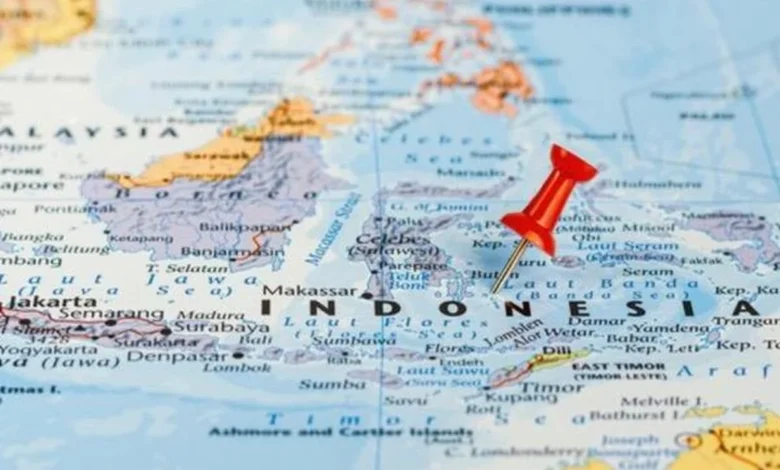
The archipelago now recognized as the sovereign nation of Indonesia has undergone a profound transformation in nomenclature over the course of its complex history. Before the modern identity of Indonesia was solidified in the early 20th century, the region was identified by various titles, each reflecting the shifting political, cultural, and geopolitical tides of the era. Understanding these historical designations is essential to grasping the evolutionary trajectory of a nation that was shaped by ancient empires, colonial interests, and international strategic shifts.
The Historical Evolution of Nusantara
The concept of a unified archipelago did not emerge spontaneously; rather, it was the result of centuries of interaction between indigenous powers and external civilizations. From the Sanskrit-infused records of ancient Indian traders to the administrative designations of the 20th-century colonial powers, the names assigned to this territory serve as markers of its historical significance on the global stage.
1. Dwipantara: The Sanskrit Legacy
The earliest references to the Indonesian archipelago are often found in ancient Indian texts, where the term Dwipantara was frequently utilized. Derived from the Sanskrit words "dwipa" (island) and "antara" (beyond or outer), the term literally translates to "the islands beyond." Historically, this nomenclature highlights the region’s position relative to the Indian subcontinent. Indian merchants and scholars, who maintained extensive maritime trade routes with the region during the early centuries of the Common Era, used this term to define the vast cluster of islands that served as a crucial hub for the spice trade.
2. Nusantara: The Majapahit Unification
As indigenous power centers grew in sophistication, the name Nusantara emerged as a symbol of regional cohesion. During the 14th century, the Majapahit Empire—the last of the great Hindu-Buddhist empires in the region—formalized this term. The most iconic historical record of this name appears in the Pararaton and the Nagarakretagama, specifically linked to the Sumpah Palapa (Palapa Oath) taken by Patih Gajah Mada in 1336.
Gajah Mada pledged not to partake in worldly pleasures until he had unified the "Nusantara," a term which, in the Majapahit context, referred to the islands outside the main power base of Java that the empire sought to bring under its hegemony. Today, the term retains a deeply patriotic connotation, often used to refer to the entirety of the Indonesian archipelago, representing a historical ideal of unity and sovereignty.
The Colonial and Global Naming Convention
As the archipelago became the epicenter of the global spice trade, European powers and regional neighbors introduced their own terminology, often stripping away the indigenous identifiers in favor of labels that emphasized economic potential or geographic coordinates.
3. The East Indies (Oost-Indië)
With the arrival of European colonial powers, most notably the Dutch, the region became known globally as the East Indies. This name was a direct result of the Age of Discovery, as European explorers sought to find an alternative route to the "Indies" (India). By adding "East," the Dutch East India Company (VOC) delineated their sphere of influence from the Portuguese and Spanish interests. For over three centuries, this name served as the official administrative designation for the Dutch colonial administration, effectively erasing the local identity in favor of a colonial construct.
4. The Malay Archipelago
In the 19th century, European cartographers and geographers increasingly adopted the term "Malay Archipelago." This naming convention was largely influenced by the widespread use of the Malay language as a lingua franca across the region. While it described the geography, it was a broad, ethnolinguistic term that failed to account for the immense diversity of the indigenous populations residing within the islands.

5. Insulinde
During the late 19th and early 20th centuries, as the nationalist movement began to stir, some intellectuals—including the famous novelist Multatuli—popularized the term "Insulinde." This poetic, Latin-derived name was intended to replace the sterile, colonial-sounding "Dutch East Indies." While it gained some traction among the European literati and early Indonesian nationalists, it remained an intellectual construct rather than a widely adopted name among the general populace.
The Modern Identity and the Influence of Japan
The shift toward the name "Indonesia" itself is a fascinating study in academic and political development. The term was coined in 1850 by English ethnologist James Richardson Logan and later popularized by German geographer Adolf Bastian. However, it was the Indonesian nationalist movement of the 1920s, specifically through the Perhimpunan Indonesia (Indonesian Association), that turned the geographic label into a potent political symbol for independence.
6. Hindia Belanda (Netherlands East Indies)
Throughout the early 20th century, the official administrative name remained Nederlandsch-Indië (Netherlands East Indies or Hindia Belanda). This was the name utilized in all legal documents, maps, and international treaties until the Japanese occupation. It represented the peak of colonial bureaucracy and the rigid hierarchy that characterized the final decades of Dutch rule.
7. To-Indo: The Japanese Occupation Designation
The final major shift in nomenclature occurred during World War II with the arrival of the Imperial Japanese Army. In 1942, as the Dutch surrendered, the Japanese occupying forces sought to dismantle the colonial Dutch identity. They began referring to the region as "To-Indo," which translates to "The Eastern Indies" in the Japanese language.
The Japanese administration’s use of this term was highly strategic. By removing the Dutch prefix ("Netherlands"), the Japanese aimed to portray themselves as "liberators" of Asia, fostering a sense of pan-Asianism under their "Greater East Asia Co-Prosperity Sphere." While the term was short-lived, it was significant because it served as a bridge between the colonial era and the birth of the Republic. It forced the local populace to conceive of their land without the European identifier, inadvertently clearing the path for the adoption of the name "Indonesia" upon the declaration of independence on August 17, 1945.
Implications and Historical Significance
The evolution of these seven names is not merely a linguistic curiosity; it represents a broader struggle for self-definition. Each name carried the power to either subjugate or empower the people of the archipelago.
From the Sanskrit roots of Dwipantara that linked the islands to the broader Asian civilization, to the imperial ambitions of Nusantara, and finally to the administrative erasure of the East Indies, the naming of the territory reflects the changing power dynamics of the region. The transition to the name "Indonesia" was the final step in a long process of decolonization, signaling that the people of the archipelago were no longer merely subjects of an empire, but citizens of a unified, sovereign nation.
In the contemporary era, scholars continue to analyze how these historical labels have shaped current national policies. The revival of the term "Nusantara" as the official name for the new national capital city is a testament to the enduring influence of pre-colonial history. It demonstrates that while the nation has moved forward, it remains anchored to the identity that predates both the colonial era and the modern global order. By studying these seven historical names, citizens and historians alike gain a clearer perspective on the resilience of the Indonesian identity in the face of centuries of foreign influence.